

















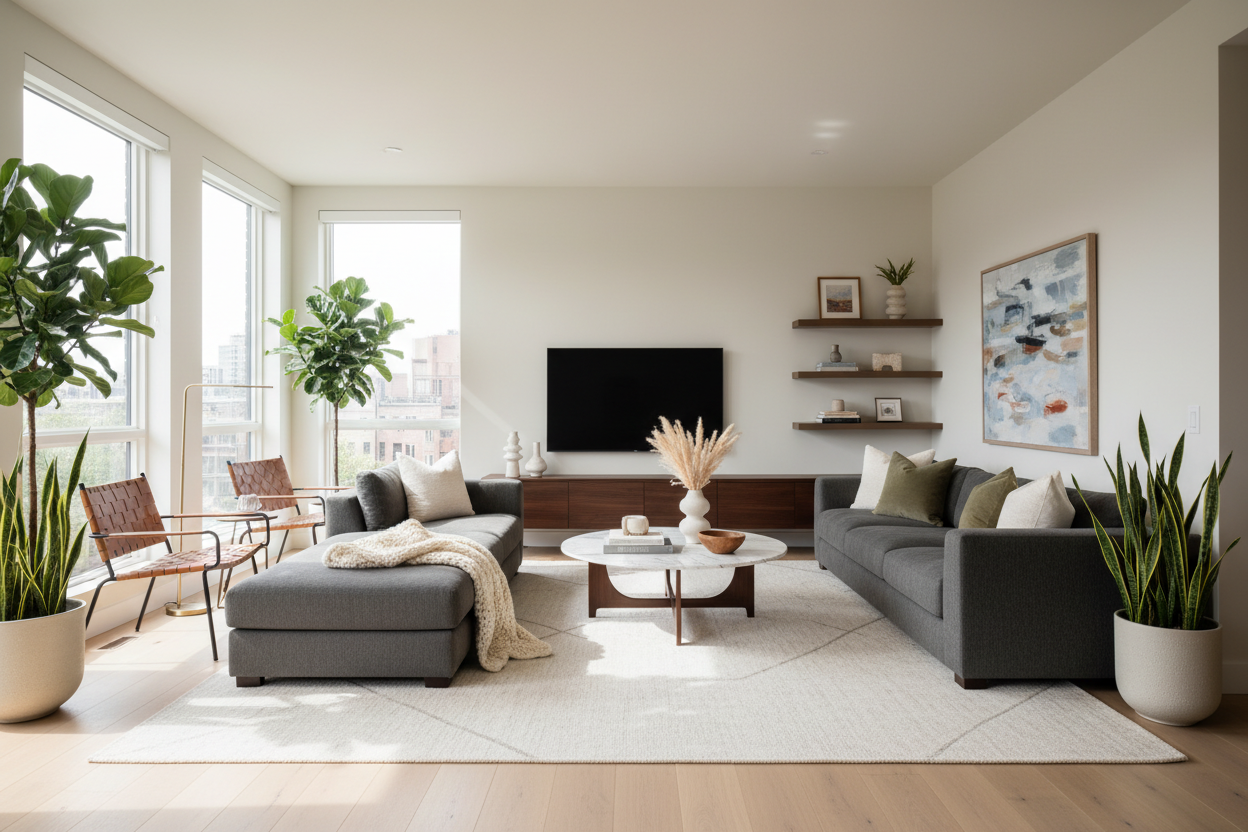
We have all seen it happen: a room that feels swallowed whole by a piece of furniture that looked significantly smaller on the showroom floor. The sectional is often the undisputed heavyweight champion of upholstery, offering unparalleled lounging capacity. However, integrating it seamlessly requires a strategic eye. When designed correctly, living rooms with sectionals anchor the home, creating a sophisticated focal point rather than a spatial obstacle. This guide will walk you through the ergonomics, aesthetics, and structural considerations required to make this substantial investment work for your architecture.
Quick Decision Guide: Key Features to Look For
Before committing to a purchase, review these critical specifications to ensure the piece serves your lifestyle and floor plan.
- Orientation & Modularity: Determine if you need 'Right-Arm Facing' (RAF), 'Left-Arm Facing' (LAF), or a reversible modular design for future flexibility.
- Suspension System: Look for 8-way hand-tied springs or sinuous springs (S-springs) made of heavy-gauge wire for longevity.
- Seat Depth: Standard depth is 21–24 inches; deep-seated lounging styles (25+ inches) require more floor space and may be harder to exit for older guests.
- Upholstery Rub Count: For high-traffic areas, insist on fabrics with a double-rub count of at least 30,000 (Wyzenbeek test) to prevent premature wear.
- Frame Construction: Kiln-dried hardwood frames prevent warping and creaking over time compared to plywood or particleboard.
Mastering the Layout and Flow
The primary challenge with large upholstery is circulation. In living rooms with sectional sofas, you must preserve a minimum of 30 to 36 inches of walkway space around the perimeter. If the back of the sofa faces a dining area or entryway, consider a low-profile silhouette to maintain sightlines.
Floating vs. Anchoring
In open-concept homes, floating the sectional away from the walls is often the superior choice. This creates a dedicated "room within a room." To anchor this arrangement, place a console table behind the longest section. This not only hides the back of the sofa but offers surface area for ambient lighting and decor, softening the visual bulk of the furniture.
Choosing the Right Material and Texture
The fabric you select dictates the room's formality and maintenance level. A living room with sectional couch configurations often involves a lot of fabric surface area, meaning the color and texture will dominate the palette.
Performance vs. Aesthetics
For a sophisticated, tactile experience, boucle or velvet offers depth and catches the light beautifully, breaking up the monotony of a large form. However, if you are designing for a household with children or pets, look for Crypton or high-performance weaves that resist staining without sacrificing the hand-feel. Avoid 100% linen unless you are prepared to embrace the inevitable wrinkles and "puddling" of the fabric.
Visual Balance and Scale
A common error is pairing a heavy sectional with a coffee table that is too small. The coffee table should be roughly two-thirds the length of the main sofa section to create visual harmony. Furthermore, pay attention to the legs. If the sectional has a skirt (fabric to the floor), it reads as visually heavy. Counteract this with leggy, airy accent chairs or glass-topped tables. Conversely, if the sectional is raised on legs, you can afford heavier, solid wood case goods nearby.
Lessons from My Own Projects: The Reality of Sectionals
I want to share a specific realization from a project I managed in a pre-war apartment last year. We specified a stunning, down-filled modular sectional for a client. It looked incredible on installation day. However, three months later, I visited for a follow-up.
The issue wasn't the look; it was the "connector clips." Many people overlook the hardware that holds the pieces together. In this case, the alligator clips were plastic and kept slipping on the hardwood floor, causing the pieces to drift apart every time someone sat down heavily. We had to retrofit the piece with heavy-duty metal brackets and apply non-slip rubber pads to the feet.
Another detail to note is the "fluff factor." We chose a relaxed, unstructured fill (50/50 down and feather blend). While it sat like a cloud, the client admitted she was exhausted by the daily requirement to punch and fluff the back cushions to keep them looking presentable. If you prefer a crisp look without the labor, stick to a high-density foam core wrapped in Dacron, even if it feels slightly firmer initially.
Conclusion
Integrating a sectional is about balancing mass with negative space. It requires a thoughtful approach to scale, traffic flow, and material durability. When executed correctly, the result is a space that invites connection and relaxation without feeling cluttered. Measure twice, check your entryways, and invest in a frame that will stand the test of time.
Frequently Asked Questions
How do I choose the right rug size for a sectional?
Ideally, the rug should be large enough that the front legs of every section sit on it. For a unified look in a larger room, a rug that extends 6 inches beyond the back of the frame is luxurious, but usually, an 8x10 or 9x12 is sufficient to anchor the front legs.
Can I put a sectional in a small living room?
Absolutely. In fact, one continuous piece often makes a small room feel larger than multiple small chairs, which can clutter the visual field. Opt for a "chaise sectional" rather than a full L-shape or U-shape to keep one side open.
What is the difference between Left-Arm Facing (LAF) and Right-Arm Facing (RAF)?
This terminology refers to the arm placement when you are standing in front of the sofa looking at it, not when you are sitting on it. If the arm is on your right side as you face the piece, it is Right-Arm Facing.

Leave a comment
This site is protected by hCaptcha and the hCaptcha Privacy Policy and Terms of Service apply.