

















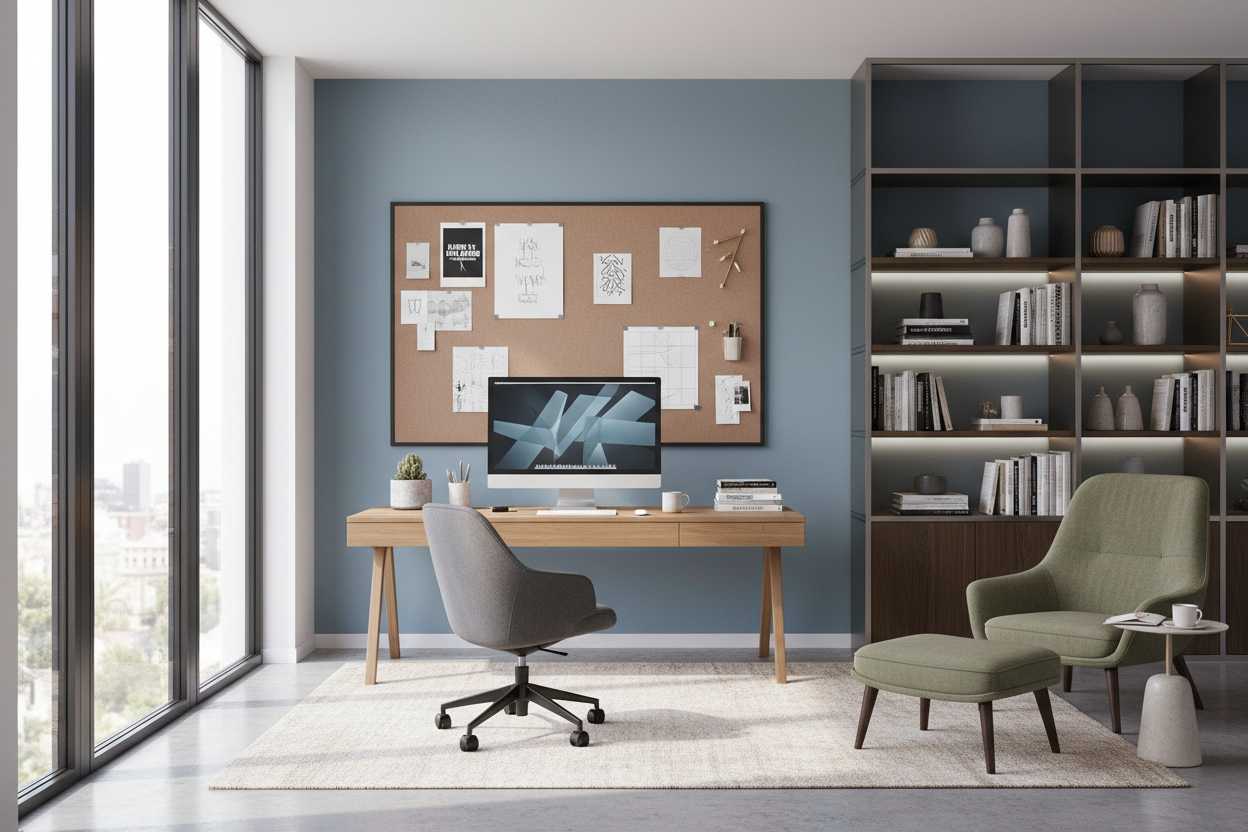
Staring at a blank, sterile wall is the quickest way to stifle creativity. Yet, so many homeowners treat their workspace as an afterthought, prioritizing a utility table over an environment that fosters deep work. As an interior designer, I often tell clients that your environment dictates your output. We aren't just placing furniture; we are curating inspirational office spaces that align with your workflow and aesthetic sensibilities. Whether you are carving out a corner in a master bedroom or outfitting a dedicated room, the goal is to balance high-end functionality with visual soul.
Key Features of a High-Performance Workspace
- Ergonomic Foundation: Prioritize seating with lumbar support and adjustable tension over purely sculptural chairs.
- Lighting Layers: Combine ambient overhead lighting with focused, warm-temperature task lighting (2700K-3000K) to reduce eye strain.
- Material Tactility: Choose desk surfaces like solid wood or matte veneers that feel warm to the touch and resist fingerprints.
- Biophilic Elements: Integrate organic textures and greenery to soften hard lines and improve air quality.
- Acoustic Control: Use rugs, curtains, or acoustic panels to dampen echo, crucial for a truly motivational office space.
Structuring the Layout for "Flow"
The placement of your primary furniture pieces dictates the energy of the room. In design theory, we often refer to the "command position." Avoid facing a wall if possible. Positioning your desk to face the door (but not directly in line with it) or floating it in the center of the room creates a sense of authority and openness.
If space constraints force you against a wall, use a large mirror or artwork above the desk to simulate depth. An inspiring office space never feels claustrophobic; it should feel expansive, allowing your thoughts to travel.
Materiality: The Tactile Experience
When selecting a desk, consider the tactile experience. Glass desks offer a sleek, modern silhouette and visual lightness, which is excellent for small footprints. However, they can feel cold on the forearms and create distracting reflections.
For a warmer, more grounded aesthetic, opt for walnut or white oak. Solid wood changes with the humidity and develops a patina over time, adding character. If budget is a concern, high-pressure laminates with textured grains have advanced significantly, offering the look of wood with superior scratch resistance.
Curating Visual Balance
A cluttered desk leads to a cluttered mind, but a barren desk feels clinical. The secret to a motivational office space is curated styling. Use trays to corral loose items like pens and tech accessories. Introduce a sculptural lamp that looks beautiful even when turned off. The interplay between the hard lines of technology (monitors, laptops) and soft organic shapes (ceramics, plants) creates the visual tension necessary for a sophisticated look.
My Personal Take on Inspirational Office Spaces
I learned a hard lesson early in my career regarding the "showroom vs. reality" disconnect. I designed a stunning, monochromatic home office for a client using a high-gloss white lacquer desk and polished concrete floors. It looked incredible in the portfolio photos.
Three months later, the client called me. The issue wasn't the look; it was the usability. The high-gloss finish reflected the overhead recessed lighting directly into his eyes, causing migraines, and the concrete floor created an echo chamber that made his conference calls sound hollow. We had to retrofit the space with a matte desk pad to kill the glare and bring in a thick wool rug to dampen the sound. Now, when I design, I check the "glare factor" of every surface and the acoustics before I even think about the color palette. Real inspiration requires comfort, not just a pretty picture.
Conclusion
Designing a workspace is an investment in your own potential. By thoughtfully selecting materials that age well, managing light to protect your energy, and solving for acoustics, you elevate a simple room into a sanctuary of productivity. Don't settle for generic; build a space that pulls you in every morning.
Frequently Asked Questions
How do I create an inspiring office space in a small apartment?
Focus on verticality. Use wall-mounted shelving to draw the eye up and keep the floor clear. Choose furniture with exposed legs (rather than solid bases) to maintain sightlines, which makes the room feel larger.
What is the best color for a motivational office space?
While blue is traditionally cited for focus, deep greens (like hunter or sage) are currently favored in high-end design for their restorative, biophilic qualities. Avoid overly bright reds or yellows, which can cause visual fatigue over long periods.
Is a standing desk worth the aesthetic trade-off?
Absolutely. Function must precede form in a workspace. However, you don't have to settle for industrial-looking mechanisms. Many manufacturers now offer standing desks with solid wood tops and concealed motors that blend seamlessly with residential furniture styles.

Leave a comment
This site is protected by hCaptcha and the hCaptcha Privacy Policy and Terms of Service apply.