

















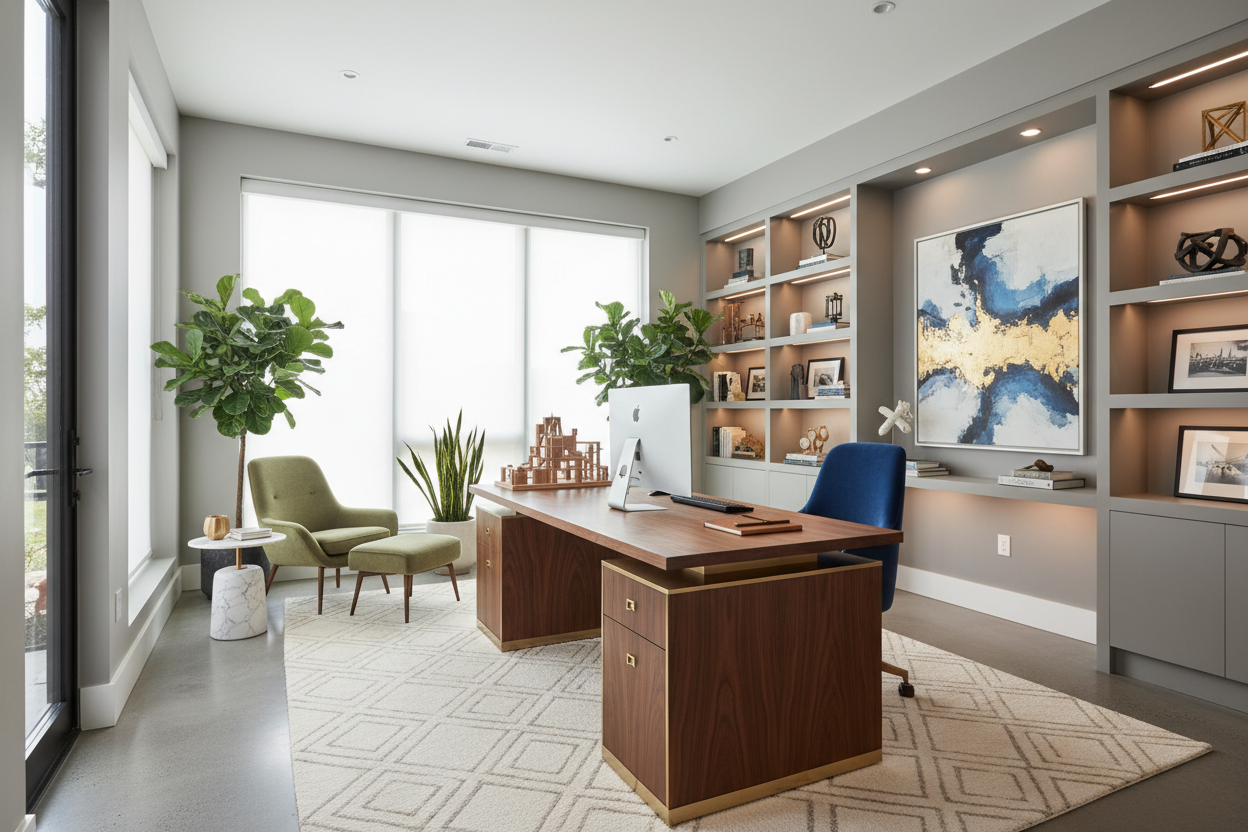
We have all been there: trying to find focus while hunched over a dining table or squinting at a laptop in a dimly lit corner. The difference between a makeshift workspace and truly awesome home offices isn't just about budget—it is about intentionality. As an interior designer, I see clients constantly struggle to balance functionality with aesthetics. This guide moves beyond the basics to help you curate a space that commands respect and fosters deep work.
Key Features of High-Performance Workspaces
- Ergonomic Geometry: The relationship between chair height, desk surface, and monitor eye level is non-negotiable for long-term health.
- Lighting Layers: A mix of ambient, task, and accent lighting to reduce eye strain and improve video call appearance.
- Acoustic Control: Utilizing rugs, curtains, or acoustic panels to dampen echo and absorb distraction.
- Material Tactility: Choosing surfaces like solid wood or leather that age well and feel warm to the touch.
Mastering the Layout: The Command Position
When looking for home office inspiration ideas, you will notice the most impactful spaces place the desk in the "command position." This means facing the door, but not directly in line with it. It is a primal psychological trigger; knowing who is entering the room allows your nervous system to relax, letting you focus on the task at hand.
If your room’s architecture forces you to face a wall, break the visual monotony. Install a floating shelf with art or a mirror above the desk to reflect the room behind you. This expands the visual depth and prevents that claustrophobic feeling common in smaller spaces.
Materiality: Choosing Substance Over Style
To create an amazing home office, you must look closely at materials. A common pitfall is purchasing veneer desks that look stunning in photos but chip within months of use. For a piece of furniture you interact with daily, prioritize durability.
Solid Wood vs. Laminate
Solid wood—Walnut or White Oak—brings warmth and can be refinished if scratched. High-pressure laminate is durable but lacks the tactile luxury of natural grain. If you want the coolest home office aesthetic without the maintenance of wood, consider FENIX NTM surfaces; they are matte, anti-fingerprint, and thermally healing.
Lighting: The Invisible Architecture
Lighting is often an afterthought, yet it defines the mood. Avoid relying solely on overhead recessed cans, which create unflattering shadows (the dreaded "raccoon eyes" on Zoom). Instead, aim for a Kelvin temperature of 3000K to 3500K. This range is crisp enough for reading but warm enough to feel residential rather than clinical.
Lessons from My Own Projects
I want to share a specific detail from a project I worked on last year that changed how I specify desks. I designed a stunning, custom glass-top desk for a client who wanted a "weightless" look. It was visually spectacular.
However, two weeks later, the client called me. The glass was perpetually cold on her wrists, causing discomfort after an hour of typing. Furthermore, her optical mouse skipped constantly on the reflective surface, forcing her to use a mousepad that ruined the clean aesthetic we aimed for. Now, whenever I design awesome home offices, I insist on materials that are warm to the touch—like leather-wrapped desk blotters or honed wood—because tactile comfort is just as important as visual impact.
Conclusion
Building a workspace is an investment in your own cognitive performance. By prioritizing the command position, selecting honest materials, and layering your lighting, you create an environment that pulls you in rather than pushes you away. It is time to elevate your standard of working.
Frequently Asked Questions
How do I fit a home office into a small bedroom?
Focus on verticality. Use wall-mounted shelving or a ladder desk to minimize the floor footprint. Ensure your chair can fully tuck under the desk when not in use to keep traffic flow clear.
Is a standing desk worth the investment?
Absolutely, but aesthetics matter. Look for standing desks with concealed motors and cable management trays. Exposed wires can quickly ruin the visual calm of a space.
What is the best paint color for productivity?
While subjective, low-saturation blues and greens are generally considered best for focus. Avoid high-gloss finishes, as the glare from your monitor reflecting off the walls can cause eye fatigue.


Leave a comment
This site is protected by hCaptcha and the hCaptcha Privacy Policy and Terms of Service apply.