

















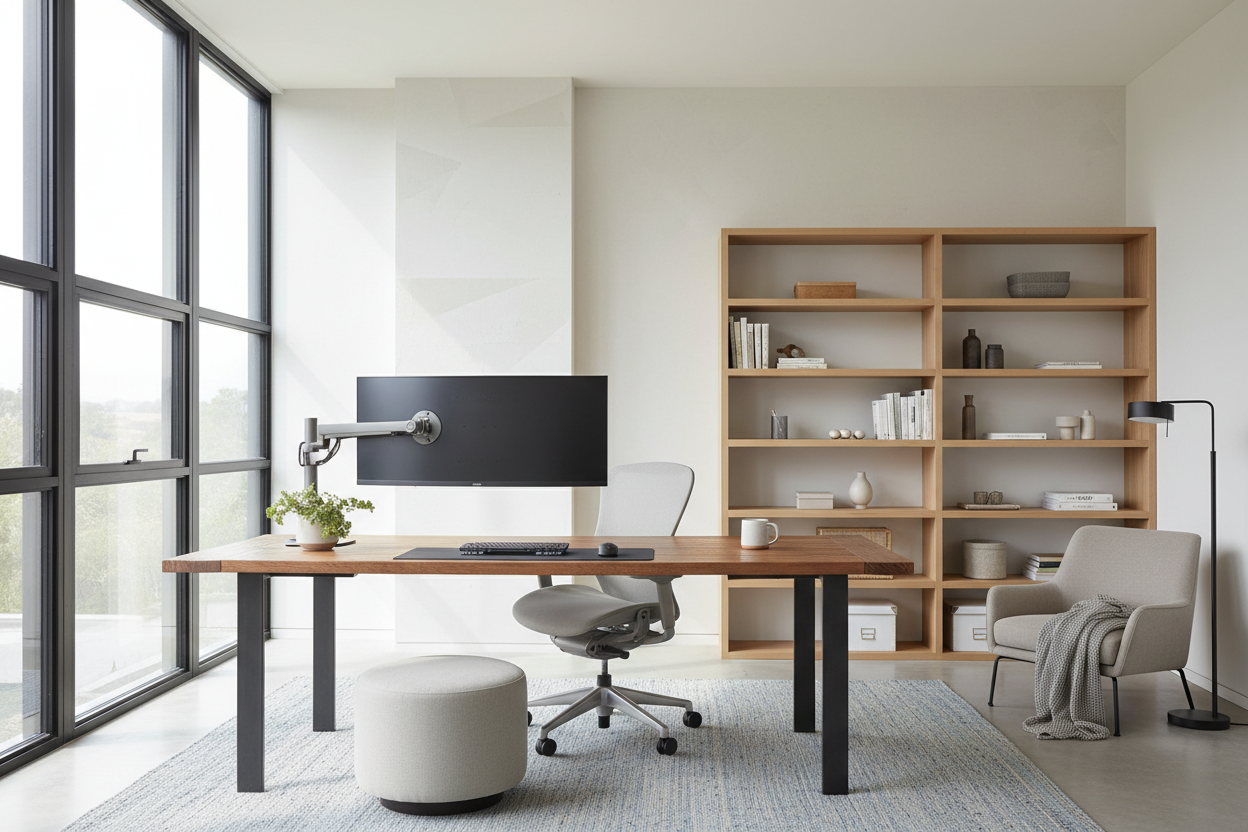
We have all fallen victim to the dining table trap—trying to maintain professional focus while surrounded by the chaos of domestic life. As an interior designer, I see clients struggle to balance productivity with the desire to keep their homes looking like sanctuaries, not corporate cubicles. Implementing successful work from home best practices is not just about time management; it is fundamentally about spatial design, material selection, and lighting hierarchies that signal to your brain when it is time to focus and when it is time to rest.
Key Features to Look For
- Ergonomic Integrity: Prioritize chairs with adjustable lumbar support and seat depth over purely sculptural shapes.
- Surface Depth: Ensure your desk is at least 24–30 inches deep to maintain proper monitor viewing distance.
- Lighting Layers: Combine ambient overhead light with directional task lighting (3000K–4000K color temperature).
- Acoustic Control: Incorporate soft furnishings (rugs, curtains) to dampen echo and reduce visual noise.
- Material Durability: Select work surfaces that resist heat from electronics and resist coffee rings (e.g., sealed hardwoods or high-pressure laminates).
Zoning and Spatial Planning
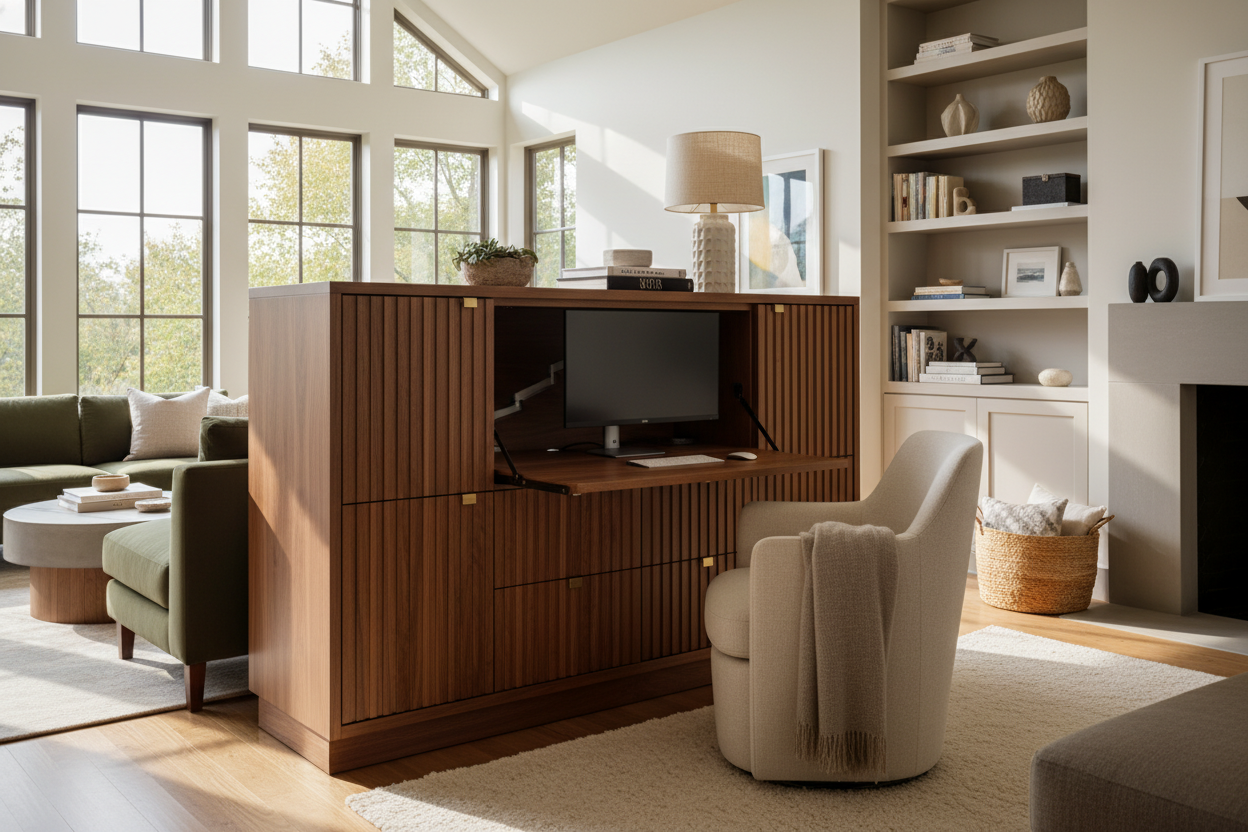
The most critical error in residential office design is poor zoning. Effective work from home practices dictate that your workspace must have a distinct boundary. In open-concept floor plans, we use rug placement and lighting to create a "room within a room." Avoid facing a wall directly if possible; the "command position"—facing the door or room center—reduces subconscious anxiety and offers a better visual backdrop for video calls.
For smaller footprints, consider the visual weight of your furniture. A heavy, solid oak executive desk will dominate a small room. Instead, opt for a desk with a slender metal silhouette or floating joinery to keep sightlines open and the space feeling airy.
The Ergonomics of Luxury
There is often a tension between what looks good in a magazine and what feels good at 3 PM on a Tuesday. While mid-century modern bucket chairs are aesthetically pleasing, they rarely offer the support needed for an eight-hour shift. The goal is to find a task chair that marries mechanics with upholstery.
Choosing the Right Material
When selecting seating and desk surfaces, tactile feedback matters. Breathable mesh is functional but can look too industrial for a warm living space. I often recommend high-quality performance velvets or top-grain leathers that offer durability without sacrificing the residential vibe. For desks, solid wood (walnut or white oak) provides a warmer, more forgiving surface for your forearms compared to glass or stone, which can feel perpetually cold and clinical.
Lighting Layers and Video Call Aesthetics
Lighting is the unsung hero of interior architecture. Relying solely on a ceiling fixture creates harsh shadows that strain the eyes. A proper lighting plan involves layering. Start with ambient light, add a focused task lamp with an articulated arm for paperwork, and consider bias lighting behind your monitor to reduce contrast strain.
Additionally, work from home best practices for employers now often include requirements for professional video backgrounds. Design your background wall with a matte finish paint to avoid glare. Curate a bookshelf or artwork that adds personality without clutter—think 'organized asymmetry' rather than chaotic stacking.
My Personal Take on Work From Home Best Practices
Early in my career, I designed a home office for a client—and myself—centered around a stunning, architectural glass desk. It looked incredible in the portfolio photos. However, the reality of living with it was a different story. I quickly learned that glass is unforgiving. It amplifies the sound of everything you set down, from a coffee mug to a pen. Worse, optical mice struggle to track on the transparent surface without a pad, ruining the clean look we aimed for.
But the detail that drove me crazy? The fingerprints and the cold. In the winter, resting my forearms on that glass for hours actually chilled my blood flow, making typing uncomfortable. Now, I always steer clients toward matte, natural materials like oiled wood or linoleum-topped desks (like the classic Artek styles). They develop a patina over time, feel warm to the touch, and absorb sound rather than reflecting it. It’s a nuance you don't think about until you're six months into using the space.
Conclusion
Transforming your workspace is about more than buying a new desk; it is about curating an environment that respects your body and your design sensibility. By investing in proper ergonomics, thoughtful lighting, and quality materials, you create a space that invites productivity rather than demanding it. Elevate your standard of living by treating your home office with the same design rigor as your living room.
Frequently Asked Questions
What is the ideal desk height for an ergonomic setup?
Standard desk height is between 29 and 30 inches. However, if you are shorter than 5'8", you may need a footrest or a height-adjustable desk to ensure your elbows remain at a 90-degree angle while typing.
How can I hide cords in a floating desk arrangement?
Cable management is essential for visual peace. Use under-desk cable trays (raceways) painted the same color as the wall or desk. For floating desks, route cables through a hollow wall channel or use a paintable cord cover that runs along the baseboard.
Is a standing desk worth the investment for home interiors?
Yes, from both a health and design perspective. Many modern standing desks now come with solid wood tops and premium finishes that blend seamlessly with high-end furniture, allowing you to change posture without ruining the room's aesthetic.


Leave a comment
This site is protected by hCaptcha and the hCaptcha Privacy Policy and Terms of Service apply.