

















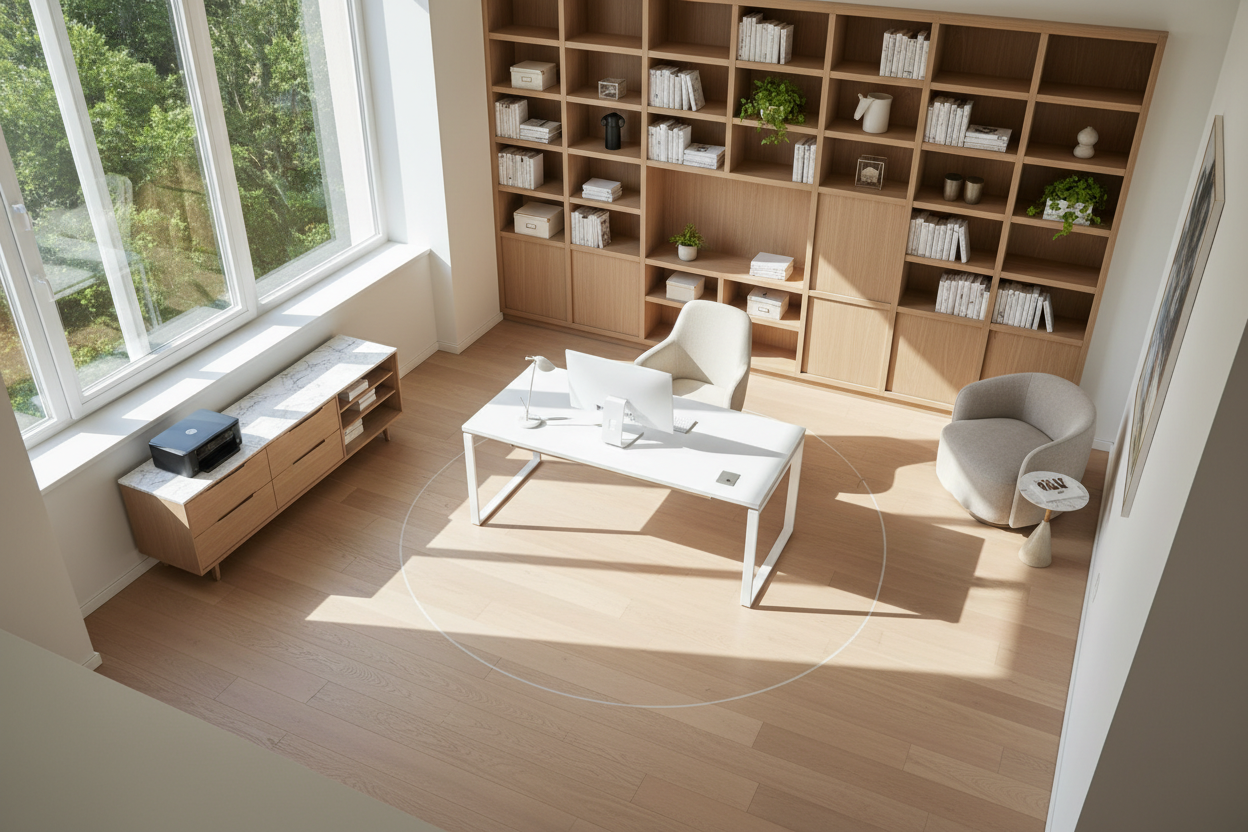
We often treat the home workspace as an afterthought—a desk shoved into a spare corner or a dining chair repurposed for an eight-hour shift. However, as an interior designer, I see the immediate impact of poor spatial planning on focus and fatigue. A successful workspace isn't just about buying a nice desk; it is about establishing a floor plan home office that prioritizes circulation, light control, and ergonomic efficiency.
Key Elements of a Successful Layout
- Traffic Flow: Ensure a minimum 36-inch clearance behind the desk for chair movement.
- Light Source Orientation: Position screens perpendicular to windows to prevent glare and eye strain.
- Zoning: Distinctly separate the "active work" zone from the "reference/storage" zone.
- Power Access: Map floor outlets or cable management routes before placing heavy furniture.
- Visual Command: Orient the desk to face the door (the "command position") to reduce psychological unease.
Mastering the Space: Scale and Proportion
When drafting a home office layout floor plan, the most common error is misjudging the scale of furniture relative to the room. In a showroom, a mahogany executive desk looks majestic; in a 10x10 room, it looks like an obstruction. You must balance the visual weight of your casegoods (desks, bookshelves) with the negative space required to move freely.
The Floating Desk vs. The Wall Anchor
For larger rooms, floating the desk in the center anchors the space and feels executive. However, this requires floor-mounted outlets to avoid trip hazards. If you are working with a small home office floor plan, anchoring the desk against a wall is often necessary to preserve floor space, but try to avoid facing a blank wall directly. If possible, face a window or position the desk so you have a view of the room.
Circulation and The Ergonomic Triangle
Just as a kitchen has a work triangle, your office has an ergonomic triangle consisting of your chair, your digital interface (screens), and your physical reference area (filing or shelving). Your floor plan must allow you to pivot between these points without obstruction.
In a small office home office floor plan, verticality is your ally. Instead of wide, low credenzas that eat up square footage, utilize tall, narrow shelving units. This draws the eye upward, making the room feel more voluminous while keeping the circulation path clear.
Materiality and Acoustics
The materials you choose dictate the room's acoustic profile. Hard surfaces bounce sound, creating an echo that makes conference calls difficult. If your floor plan involves hardwood or tile, incorporate a high-pile wool rug. It should be large enough that your chair casters do not catch on the edge when you roll back. For the desk surface, solid wood offers warmth and durability, but ensure it is sealed against coffee rings; a high-pressure laminate is a practical alternative for high-traffic use.
Lessons from My Own Projects
I once designed a study for a client who fell in love with a massive, vintage partners desk. We drafted the plan, and technically, it fit. However, I failed to account for the swing radius of the French doors leading into the room. On installation day, we realized the door handle would strike the corner of the desk every time it opened fully.
We had to shift the entire layout by six inches, which threw off the alignment with the overhead pendant light. It was a nightmare to fix the electrical work after the fact. Now, I physically tape the floor plan layout on the ground—including door swings and drawer extensions—before ordering a single piece of furniture. It’s the only way to feel the "pinch points" that a 2D drawing hides.
Conclusion
A well-executed floor plan is the invisible foundation of a productive day. By respecting clearances, managing light, and selecting proportionate furniture, you create a space that supports your workflow rather than hindering it. Measure twice, tape it out, and design for the way you actually work.
Frequently Asked Questions
How much space do I need behind my desk chair?
You need a minimum of 30 inches to push back and stand up, but 36 to 48 inches is the industry standard for comfortable movement, especially if there is a bookshelf or credenza behind you that you need to access.
What is the best floor plan for a windowless office?
In a windowless room, the layout should prioritize artificial lighting layers. Position the desk so that overhead lighting is not directly behind you (creating shadows on your work) or directly above (creating harsh down-light). Use lamps to create "pools" of light that mimic natural depth.
Can I use a dining table in my office floor plan?
Yes, but be mindful of height. Standard dining tables are often 30 inches high, which can be slightly too high for typing ergonomics compared to a standard 29-inch desk. Ensure your chair has an adjustable height range to compensate.

Leave a comment
This site is protected by hCaptcha and the hCaptcha Privacy Policy and Terms of Service apply.