

















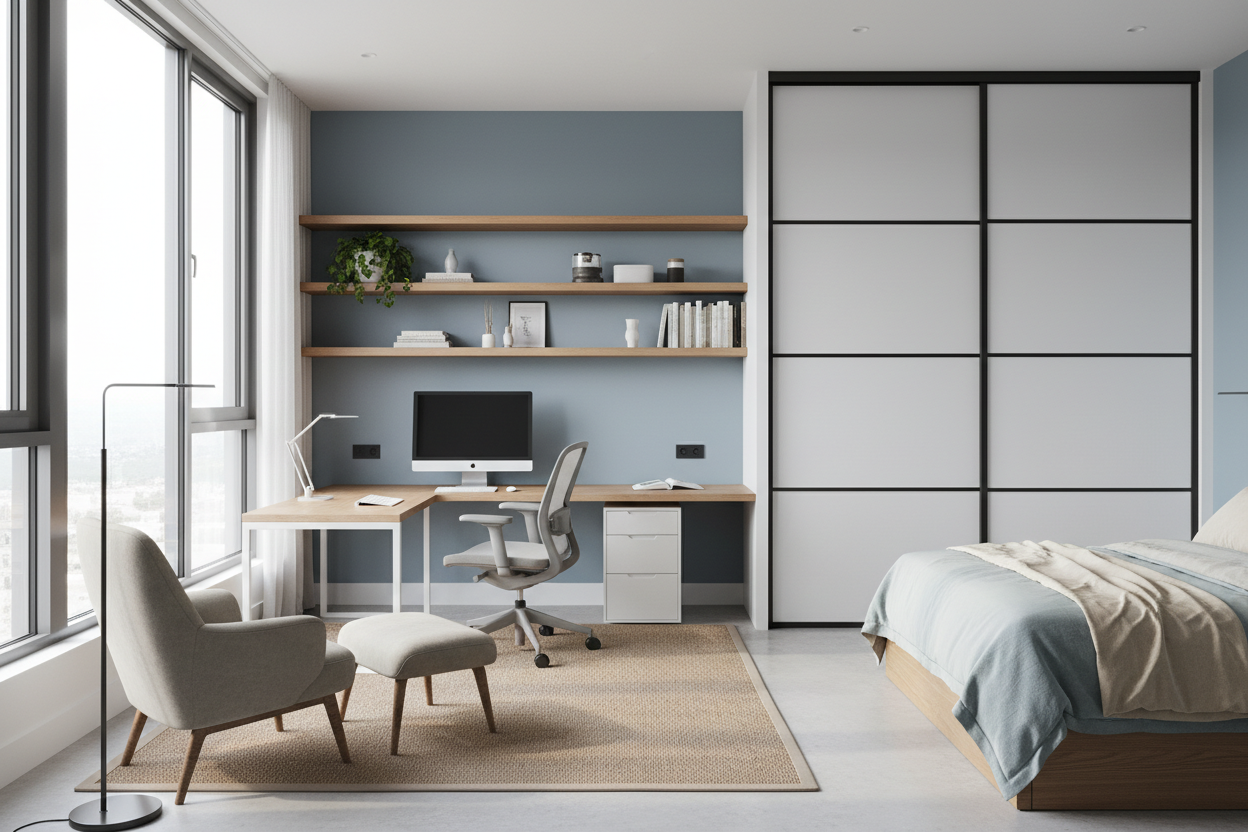
The dining table was never intended for eight-hour shifts, and working from a sofa eventually takes a toll on your lumbar health. The transition from a domestic sleeping quarter to a highly functional workspace is more than just swapping a bed for a desk; it is about psychological separation and ergonomic precision. When you decide to turn a bedroom into office space, you are essentially reprogramming the room's purpose from rest to productivity.
Quick Decision Guide: The Conversion Essentials
Before moving heavy furniture, consider these core elements to ensure your new workspace functions as beautifully as it looks.
- Traffic Flow: Ensure a minimum of 36 inches of clearance behind your desk chair to prevent a cramped feeling.
- Lighting Layers: Relying on a single overhead bedroom fixture causes eye strain; plan for ambient, task, and accent lighting.
- Electrical Access: Map out outlet locations before placing the desk to avoid unsightly extension cords running across the floor.
- Acoustics: Bedrooms often have soft furnishings that dampen sound; removing them can create echoes, so plan for rugs or acoustic panels.
Space Planning and Layout Strategy
The first step to convert bedroom to office spaces is analyzing the architectural footprint. In a bedroom, the bed usually commands the longest wall. In an office, however, the focal point shifts to the desk and the view.
The "Command Position"
Avoid pushing your desk directly against a wall if space permits. In design terms, we call this the "Command Position." By floating the desk in the center of the room or perpendicular to a window, you control the visual field. This layout reduces the claustrophobic feeling of staring at drywall and elevates the aesthetic to an executive level. If you are turning a small bedroom into an office, a floating desk might not be feasible, but positioning the desk to face the door remains a priority for psychological comfort.
Selecting Furniture with Visual Weight in Mind
When turning a bedroom into an office, the furniture scale must change. Bedroom furniture is often low and heavy (dressers, nightstands). Office furniture should generally feel lighter and more vertical.
Materiality and Durability
For the desk surface, I always advise clients to look beyond basic laminates. A solid wood top offering a tactile grain adds warmth that sterile office equipment lacks. However, if you are converting a bedroom to a home office that will see heavy use (sketching, crafting, or coffee spills), a high-pressure laminate or engineered stone top offers superior resilience. Pay attention to the "visual weight"—legs that are slender or open metal frames help a small room feel larger, whereas a heavy pedestal desk can make a spare room feel congested.
Ergonomics: The Non-Negotiable Investment
How to turn a bedroom into an office that doesn't hurt your back? The answer lies in the chair. A dining chair or a repurposed vanity stool will not suffice. You need a task chair with adjustable lumbar support, seat depth, and arm height. Aesthetically, this can be tricky, as many ergonomic chairs look industrial. Look for performance fabrics or leather options that bridge the gap between commercial durability and residential style.
Lighting: The Secret to Focus
Bedroom lighting is designed to be soft and sleep-inducing (2700K color temperature). An office requires alertness. When turning bedroom into office ideas into reality, swap bulbs for a cooler temperature (3000K-4000K). Incorporate a dedicated task lamp with an articulated arm to direct light exactly where you review documents, reducing glare on your monitor.
My Personal Take on Bedroom Into Office Projects
I learned a hard lesson during one of my first projects converting a bedroom to an office for a client in a historic home. We selected a gorgeous, thick-pile Moroccan rug to keep the room feeling cozy and to hide the old floorboards. It looked incredible in the photos.
However, two weeks later, the client called me. Every time she tried to roll her chair back to stand up, the casters got stuck in the thick wool pile, bunching the rug up and nearly tipping the chair. It was a functional disaster. I had to replace it with a low-pile, tight-weave vintage kilim. Now, whenever I help someone turn spare bedroom into office space, I insist on rollerblade-style rubber casters for the chair or a rigid chair mat if they are set on carpet. It’s those unpolished, practical details—like the friction of a wheel on a rug—that determine if you’ll actually love working in the room.
Conclusion
Successfully converting a bedroom to an office requires a balance of rigid functionality and soft aesthetics. By respecting the flow of the room and investing in pieces that support your body, you create a sanctuary for your best work. Don't just fill a room with furniture; curate an environment that fuels your ambition.
Frequently Asked Questions
How do I turn a small bedroom into an office without it feeling cramped?
Verticality is key. Use floor-to-ceiling shelving to draw the eye up and keep the floor clear. Choose a desk with "negative space" (open legs rather than solid drawers) to maintain a sense of openness.
Can I keep a bed in the room for guests?
Yes, but visual separation is vital. Consider a Murphy bed that folds away, or use a sleeper sofa. If the bed must stay, use a folding screen or open bookshelf to create a distinct zone between the sleeping area and the workspace.
Is it expensive to convert bedroom to home office?
The budget varies wildly based on furniture quality. However, the most critical investments should be your chair and lighting. You can save on the desk and shelving, but a poor chair will cost you in physical therapy bills later.


Leave a comment
This site is protected by hCaptcha and the hCaptcha Privacy Policy and Terms of Service apply.