

















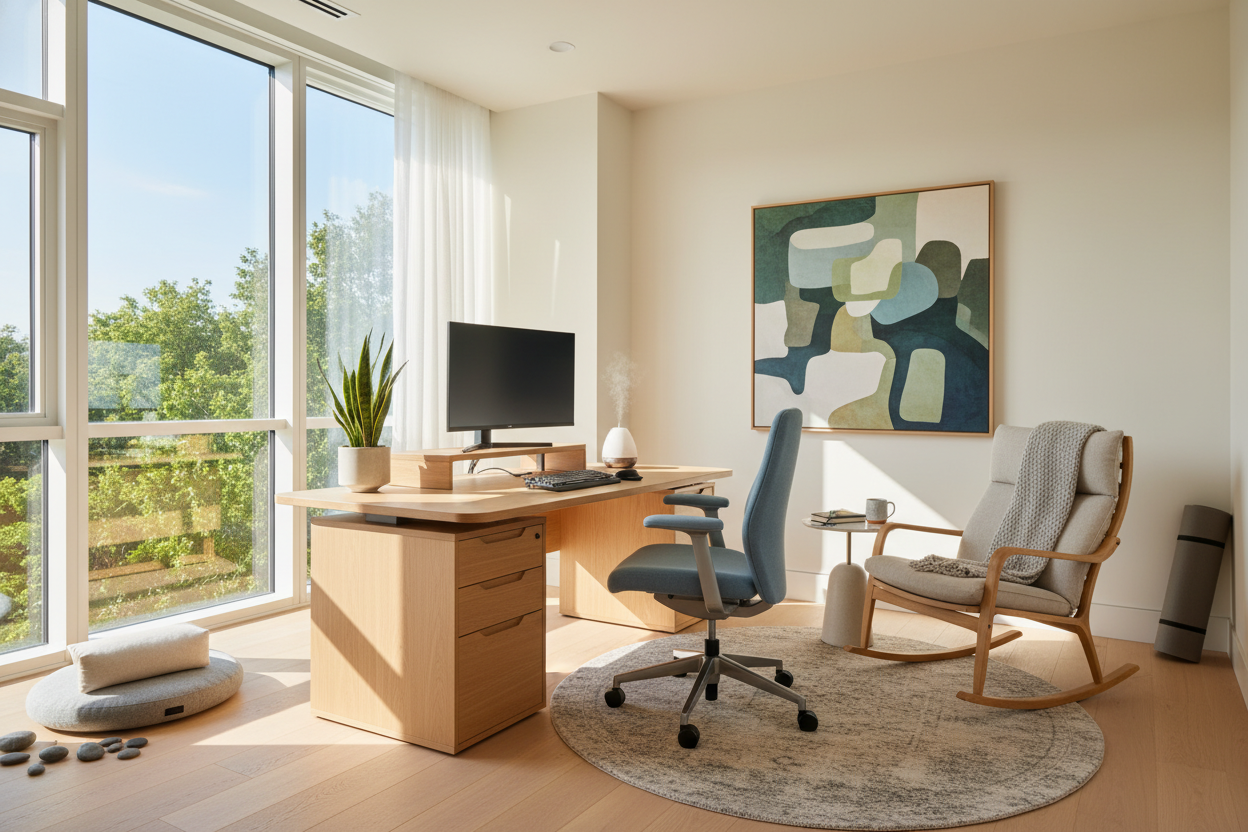
When the boundaries between your boardroom and your bedroom dissolve, the architecture of your day relies heavily on the architecture of your space. As an interior designer, I often see clients struggling with burnout, not because they lack discipline, but because their homes lack distinct zones for decompression. Finding effective ways to take breaks when working from home is rarely about willpower; it is about spatial design and sensory cues. If your environment does not signal 'rest,' your brain will remain in 'work' mode.
Quick Decision Guide: Designing Your Break Zone
- Postural Shift: Ensure your break furniture forces a different body position than your task chair (e.g., reclined vs. upright).
- Lighting Temperature: Switch from cool, blue-light heavy task lighting (4000K+) to warm, ambient light (2700K) in your rest area.
- Tactile Contrast: Introduce softer materials like velvet, boucle, or worn leather to contrast the mesh and plastic of office equipment.
- Visual Disconnect: Position seating so that computer screens and clutter are strictly out of your line of sight.
Curating the "Anti-Desk" Experience
To truly disconnect, you must engage in a physical reset. In design terms, we call this changing the "ergonomic narrative." If you spend eight hours in a high-performance, rigid task chair, moving to a rigid dining chair for a break offers no physiological relief.
The Importance of the Lounge Chair
Invest in an accent chair that encourages a relaxed posture. When selecting this piece, look for a deeper seat depth (around 22-24 inches) and a softer fill, such as a down-feather blend wrapped around a foam core. This provides the "sink-in" feeling that signals to your nervous system that the work sprint is over. An ottoman is not just an accessory; it is a tool for circulation, elevating the legs to reduce the edema that builds up during sedentary work hours.
Zoning Through Lighting and Texture
One of the most overlooked aspects of taking breaks while working from home is the manipulation of light. Office environments typically utilize high-kelvin, bright lighting to stimulate focus. Your break zone—even if it is just a corner of the same room—should utilize floor lamps with linen shades or dimmable sconces.
Furthermore, consider the tactile experience. Workstations are defined by hard surfaces: laminate desks, glass screens, and metal bases. Your break protocol should involve touching organic textures. A high-pile wool rug or a cashmere throw introduces a sensory shift that psychologically separates you from the sterility of the digital workspace.
Micro-Movements and Flow
When planning a layout, I always ensure there is a clear pathway between the workstation and the break zone. This physical distance, however small, is crucial. If you are wondering how often should you take breaks when working from home, the design of your space can dictate this rhythm. Placing a hydration station or a standing height console table away from your desk encourages micro-movements every 60 to 90 minutes, breaking the static load on your spine.
My Personal Take on ways to take breaks when working from home
Early in my career, I designed a stunning home office for myself with a beautiful mid-century modern lounge chair in the corner. It looked perfect on Instagram. However, I realized after a month that I never used it. Why? Because I had positioned it facing my dual-monitor setup.
Every time I sat down to relax with a coffee, the looming black screens reminded me of my unread emails. It created a subconscious anxiety loop. I rearranged the layout so the chair faced the window and a large potted Ficus lyrata. The difference was immediate. I also learned that leather, while durable, can feel cold if you're wearing shorts in the summer—so I now always drape a textural throw over leather pieces to prevent that initial thermal shock. It’s these unpolished, practical details that turn a "showroom" house into a livable home.
Conclusion
A successful work from home break isn't just a pause in activity; it is a shift in environment. By thoughtfully selecting furniture that offers ergonomic relief and styling your space to offer visual and tactile contrast, you protect your energy and elevate your interior simultaneously. Design your home to care for you, not just to house your laptop.
Frequently Asked Questions
How much space do I need for a dedicated break zone?
You need less than you think. A comfortable armchair and a small side table can fit within a 4'x4' footprint. The key is orientation—facing away from the desk—rather than square footage.
What is the best upholstery fabric for a break chair?
For high-traffic break zones, performance velvet is excellent. It offers the luxury and softness required for relaxation but is durable enough to withstand coffee spills or pet claws. Avoid pure linen if you dislike wrinkles, as a relaxed chair will develop "comfort creases" quickly.
Does standing count as a break?
From an interior layout perspective, yes. Moving to a standing console to sketch or read provides a necessary break from the seated "C-curve" spine position. However, ensure your standing surface is at elbow height to prevent shoulder strain.

Leave a comment
This site is protected by hCaptcha and the hCaptcha Privacy Policy and Terms of Service apply.