

















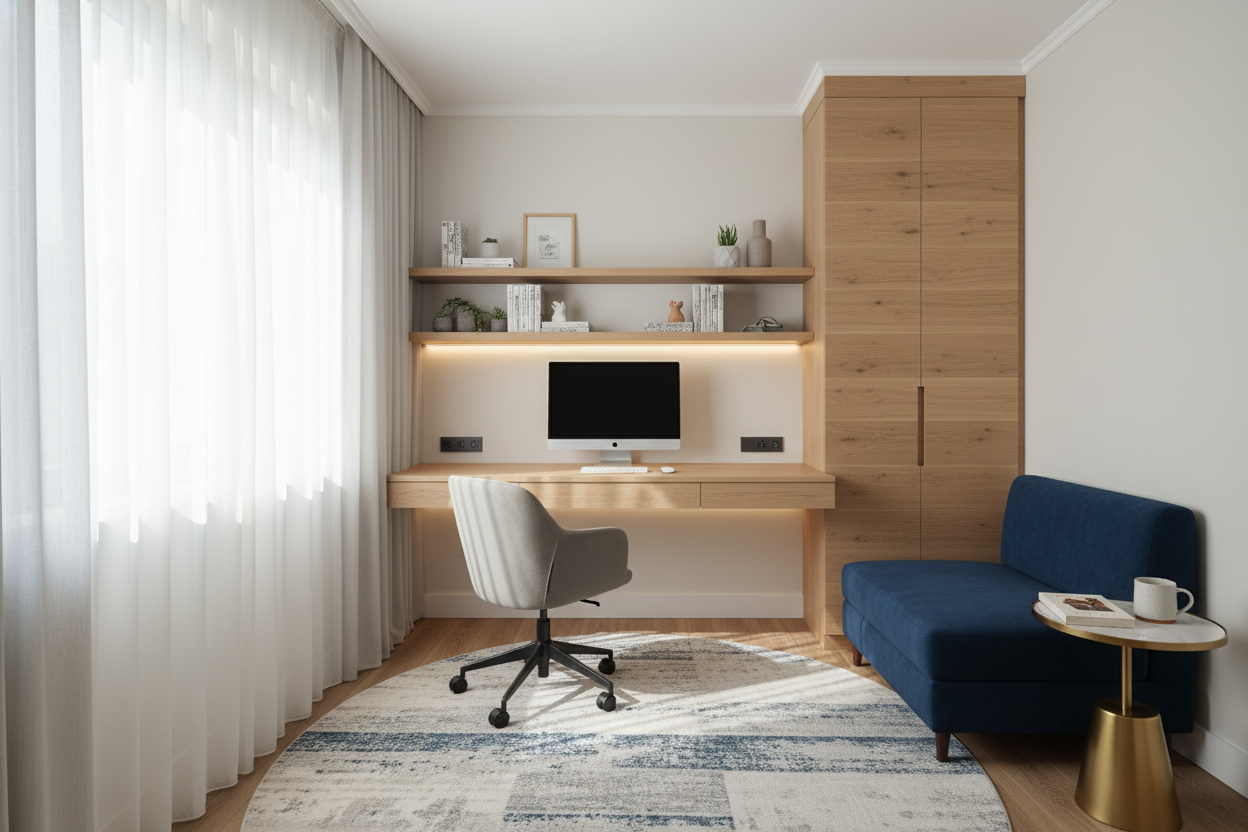
Many professionals spend more waking hours in their workspace than their living room, yet end up settling for a cramped, uninspiring box. When you are staring at blank walls and a bulky desk that swallows the room, focus naturally plummets. Mastering the design of office cabin layouts isn't just about making things look pretty; it is about engineering a space that supports your workflow and mental clarity.
A poorly planned room creates physical friction—bumping into filing cabinets, fighting glare on your monitor, or sitting in a chair that ruins your posture. By the end of this guide, you will know exactly how to balance proportion, lighting, and ergonomics to create a workspace that actually helps you get things done, even if your square footage is limited.
Quick Decision Guide
- Prioritize a 36-inch clearance behind your desk to ensure comfortable movement without scuffing walls or feeling trapped.
- Anchor the room with a rug to define the workspace, especially in open-concept or glass-walled cabins.
- Mix task lighting with ambient sources to reduce eye strain and avoid the harsh glare of overhead LEDs.
- Choose furniture with a lighter visual weight—like desks with open metal legs—to keep tight quarters feeling breathable.
Space Planning: Making Sense of the Square Footage
Navigating Small Footprints
When dealing with a tight footprint, every inch matters. A common mistake is buying an oversized executive desk that forces you to squeeze into your chair. For a highly functional small office cabin design, keep your desk depth between 24 and 30 inches. This provides enough room for a laptop, monitor, and keyboard without eating up your circulation space. Always tape out the dimensions on your floor before ordering furniture to understand exactly how much walkway you have left.
The Power of Negative Space
If your room allows it, resist the urge to shove all your furniture against the walls. Floating your desk in the center of the room facing the door commands authority and creates a clear focal point. Leaving negative space around the desk makes the entire room feel intentionally designed rather than just a storage closet for office equipment.
Style and Coordination: Setting the Right Tone
Choosing Your Aesthetic
A great workspace should feel like an extension of your home's architecture, not a sterile cubicle. When looking for office cabin ideas, lean into transitional or warm minimalist aesthetics. Natural white oak or walnut finishes pair beautifully with matte black or brushed brass hardware, bringing a grounded, residential feel to a corporate necessity. Avoid matching furniture sets; instead, mix a wood desk with a metal bookcase for a curated look.
Layering Textures for Warmth
To prevent the room from feeling cold, introduce texture. One of my favorite office cabin decorating ideas is to layer a low-pile vintage rug under the desk and add heavy linen drapery if you have a window. These textiles absorb sound—crucial for video calls—and soften the hard angles of monitors, printers, and filing cabinets. Proper office cabin decoration is about balancing hard utilitarian surfaces with soft, inviting materials.
Comfort and Ergonomics: The Invisible Design
Beyond the Desk and Chair
A beautiful chair that hurts your back is a useless piece of furniture. Invest in a chair with adjustable lumbar support and a seat depth that leaves roughly two inches between the cushion edge and the back of your knees. Combine this with strategic lighting. A dedicated task lamp on your desk and a floor lamp in a dark corner bouncing warm light off the ceiling will drastically improve the overall office cabin design and keep you from squinting by 3 PM.
Designer's Honest Take
Early in my career, I designed a stunning workspace for a client using a massive, custom matte-black desk. It photographed beautifully for my portfolio. However, I learned the hard way that matte black surfaces show every single fingerprint, coffee cup ring, and speck of dust. The client had to wipe it down three times a day just to keep it looking presentable. Since then, I always steer clients toward wood grains or lightly textured laminates for high-touch surfaces.
Additionally, I once tried to squeeze a plush, oversized leather armchair into a 9x9 room because the client loved the look. It completely choked the visual flow and made getting in and out of the room a chore. Now, I strictly use mid-back chairs with open arms for smaller spaces to keep the sightlines clear.
Frequently Asked Questions
How do I maximize a small office cabin design?
Utilize vertical space. Install floating shelves above your desk for books and decorative items, and choose a desk with built-in cable management to eliminate visual clutter on the floor. Keeping the floor clear makes the room feel instantly larger.
What are the best office cabin decorating ideas for a tight budget?
Paint is your best friend. A rich, moody color like deep navy or forest green on the wall behind your desk creates instant architectural interest and hides scuff marks. Add a healthy potted plant like a ZZ plant or snake plant to bring life into the room without spending a fortune.
How do I choose the right desk size?
Measure your room and subtract at least 36 inches for your chair clearance and 30 inches for a comfortable walkway. Whatever is left is your maximum desk depth and width. If you use multiple monitors, ensure your desk is at least 24 inches deep so the screens aren't sitting too close to your eyes.


Leave a comment
This site is protected by hCaptcha and the hCaptcha Privacy Policy and Terms of Service apply.