

















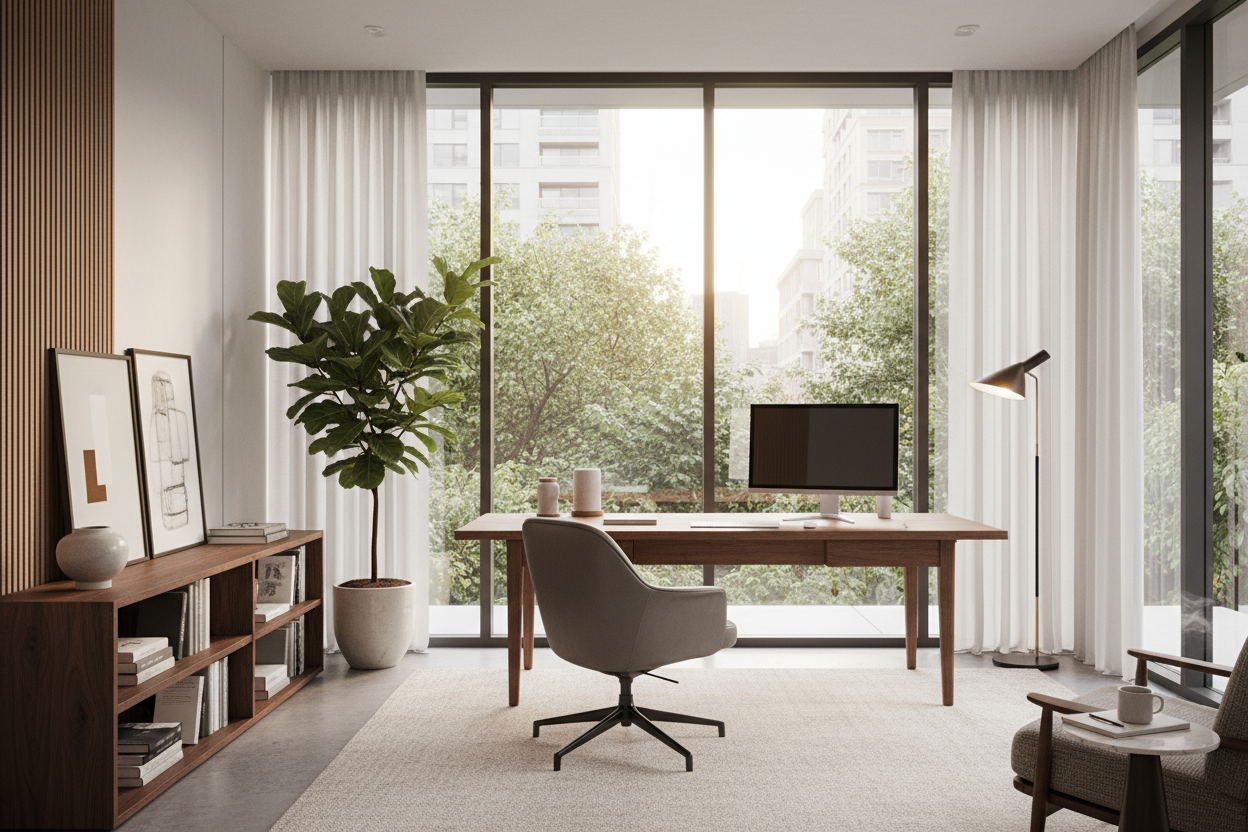
We often discuss the aesthetics of a living room or the serenity of a master suite, but the home office has quietly become the most critical room in the house. If you are aiming for or currently holding reputable remote jobs, your environment is not just a backdrop; it is a tool that dictates your productivity and professional image. A chaotic space often leads to chaotic work habits. As a designer, I see clients attempt to work from dining tables or ill-fitted nooks, only to wonder why they feel fatigued by noon. Let’s curate a workspace that commands respect and fosters deep focus.
Key Features of a High-Performance Home Office
- Ergonomics First: Prioritize chairs with lumbar support and adjustable seat depth over purely decorative accent chairs.
- Acoustic Control: Incorporate soft textiles (rugs, curtains) to dampen echo during calls.
- Lighting Layers: Combine task lighting for paperwork with diffuse ambient light to reduce screen glare.
- Visual Backdrop: Ensure the view behind you is curated and clutter-free for video conferencing.
- Material Durability: Choose solid wood or high-pressure laminate surfaces that withstand daily wear.
Structuring Your Layout for Workflow
To secure and maintain trusted jobs work from home, you need a layout that separates 'living' from 'working.' The placement of your desk is paramount. Never face a wall if you can avoid it; the 'command position'—facing the door but not directly in line with it—offers a psychological sense of security and authority. If space allows, float the desk in the room. This allows for better circulation and creates a focal point that feels executive rather than temporary.
The Desk and Chair: Investing in Material Integrity
When selecting a desk, look beyond the silhouette. While a glass top offers a modern, airy aesthetic, it can be cold to the touch and unforgiving with fingerprints. I often recommend a walnut or oak veneer for a tactile warmth that grounds the space. For seating, the 'trusted work from home' standard is a mesh or high-grade leather task chair. Avoid cheap bonded leather which peels within a year; instead, look for top-grain leather or commercial-grade fabric with a high double-rub count for longevity.
Lighting: The Invisible Design Element
Poor lighting causes eye strain and makes you look washed out on camera. Avoid relying solely on overhead recessed cans, which cast unflattering shadows. Layer your lighting scheme with a dedicated architectural task lamp and floor lamps with linen shades to soften the ambient glow. This balance is crucial for maintaining energy levels during long shifts.
Styling the Video Call Backdrop
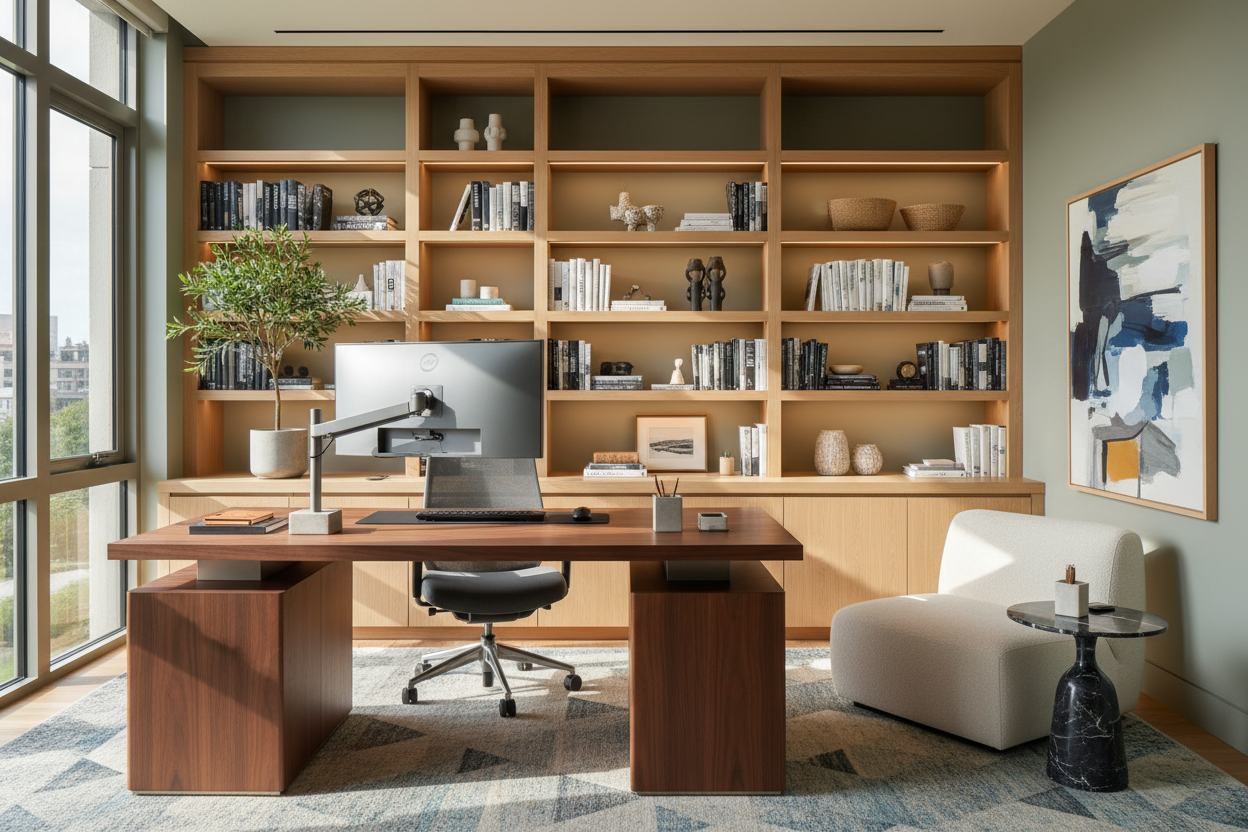
In the world of high-level remote work, your background acts as your office lobby. It should communicate organization and taste. Install floating shelves or a credenza behind your seating area. Style these with a mix of books (spines out or stacked horizontally for texture), sculptural objects, and greenery. The goal is visual interest without visual noise. This attention to detail signals to employers and clients that you are organized and detail-oriented.
My Personal Take on Reputable Remote Jobs and Design
I learned a hard lesson early in my career while designing a home office for a client in fintech. We focused heavily on the visual 'wow' factor—a stunning, reclaimed wood desk with a rough-hewn texture. It looked incredible in photos. However, three weeks later, the client called me in frustration. The texture was so uneven that his mouse wouldn't track correctly, and writing on paper was impossible without a blotter.
Furthermore, we hadn't accounted for the acoustics of the hardwood floors. During his conference calls, the echo was unprofessional. I had to go back in and retrofit the room with a thick wool rug and acoustic art panels. It taught me that for reputable remote jobs, function must precede form. The prettiest chair is useless if it cuts off circulation to your legs after two hours. Now, I always test the 'fingerprint factor' on desk finishes and the 'echo test' in the room before finalizing a design.
Conclusion
Creating a space suitable for high-caliber remote work requires a blend of ergonomic science and aesthetic discipline. By investing in quality materials and thoughtful layouts, you aren't just decorating a room; you are building a foundation for your career. Treat your home office with the same design rigor as a corporate headquarters, and your productivity will follow suit.
Frequently Asked Questions
How do I fit a professional office in a small apartment?
Focus on verticality. Use wall-mounted shelving and a secretary desk that can close up to hide clutter. Ghost chairs (acrylic) can also reduce visual bulk in tight spaces while providing necessary seating.
What is the best color palette for a home office?
Greens and blues are known for promoting focus and calmness. Avoid overly bright reds or yellows, which can induce anxiety over long periods. Neutral greys with warm wood tones offer a timeless, professional look.
Where can I find furniture deals for a home setup?
While you want quality, you can find trusted deals jobs work from home veterans recommend by looking for office liquidation sales or 'open box' returns from high-end ergonomic brands. These often offer commercial durability at a fraction of the showroom price.

Leave a comment
This site is protected by hCaptcha and the hCaptcha Privacy Policy and Terms of Service apply.