

















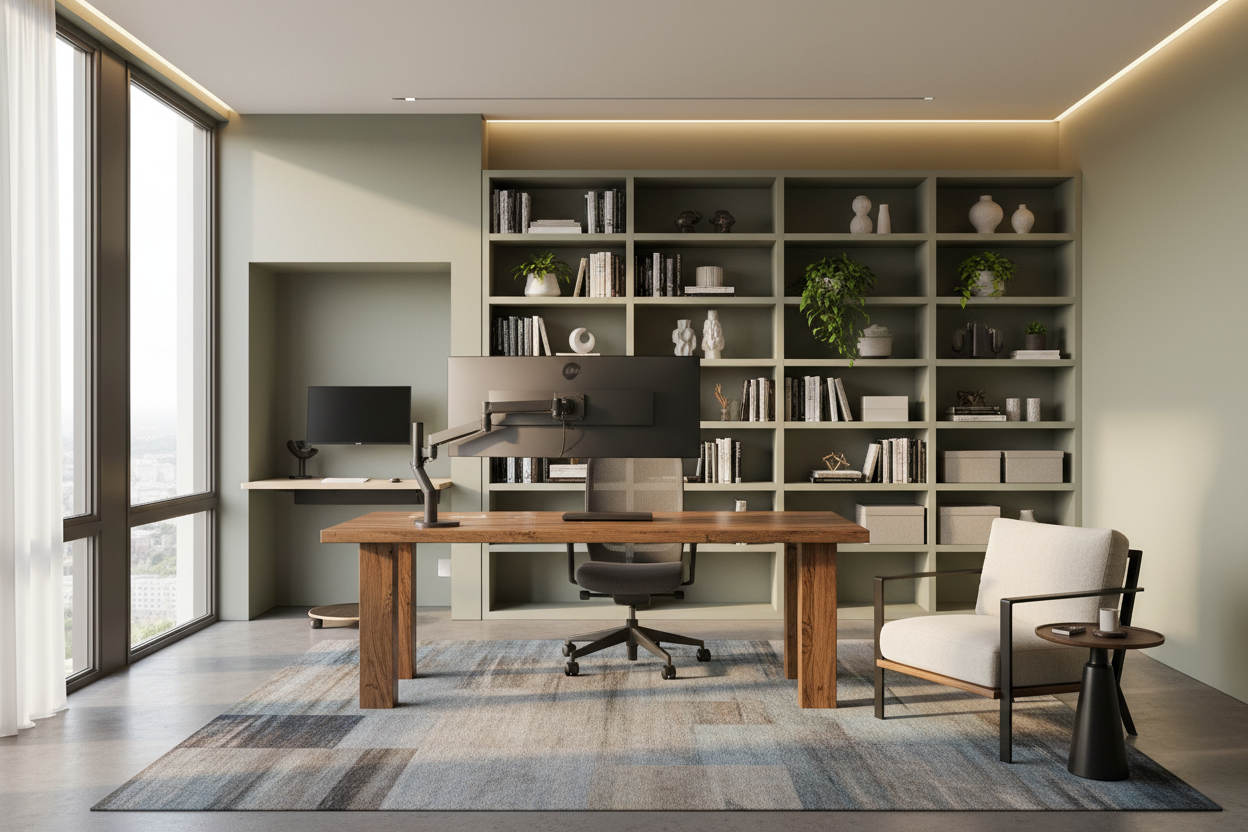
We have all tried working from the dining room table or a makeshift corner in the bedroom. While convenient initially, the lack of ergonomic support and visual separation eventually takes a toll on both focus and posture. When you decide to properly design a home office, you are not just arranging furniture; you are engineering a space that balances high-performance workflow with the comfort of your personal sanctuary.
As an interior designer, I see clients struggle to bridge the gap between a sterile corporate cubicle and a cozy den. The secret lies in intentional layering—combining the right silhouette of furniture with smart space planning. This guide will walk you through the professional process of curating a workspace that looks sophisticated and functions flawlessly.
Quick Decision Guide: Key Features to Consider
Before purchasing a single piece of furniture, review these foundational elements to ensure your design succeeds:
- The "Command" Position: Orient your desk to face the door or room center, never flat against a wall if possible, to reduce subconscious stress.
- Ergonomic Triangle: Ensure the relationship between your chair height, monitor level, and keyboard tray maintains a neutral spine posture.
- Lighting Layers: Plan for three distinct sources: ambient (overhead), task (desk lamp), and accent (bookshelf or art lighting).
- Material Durability: Distinguish between solid wood (heavier, repairable) and high-pressure laminate (durable, scratch-resistant, but harder to repair).
- Acoustic Control: Incorporate soft textiles like rugs or upholstered chairs to dampen echo and improve audio quality for calls.
Space Planning and Layout Strategy
The first step in designing an office at home is understanding the "flow." Many homeowners make the mistake of pushing everything against the perimeter walls, leaving a dead zone in the middle. This creates a disconnect. Instead, consider floating the desk. This layout anchors the room and allows for better circulation.
Zoning for Functionality
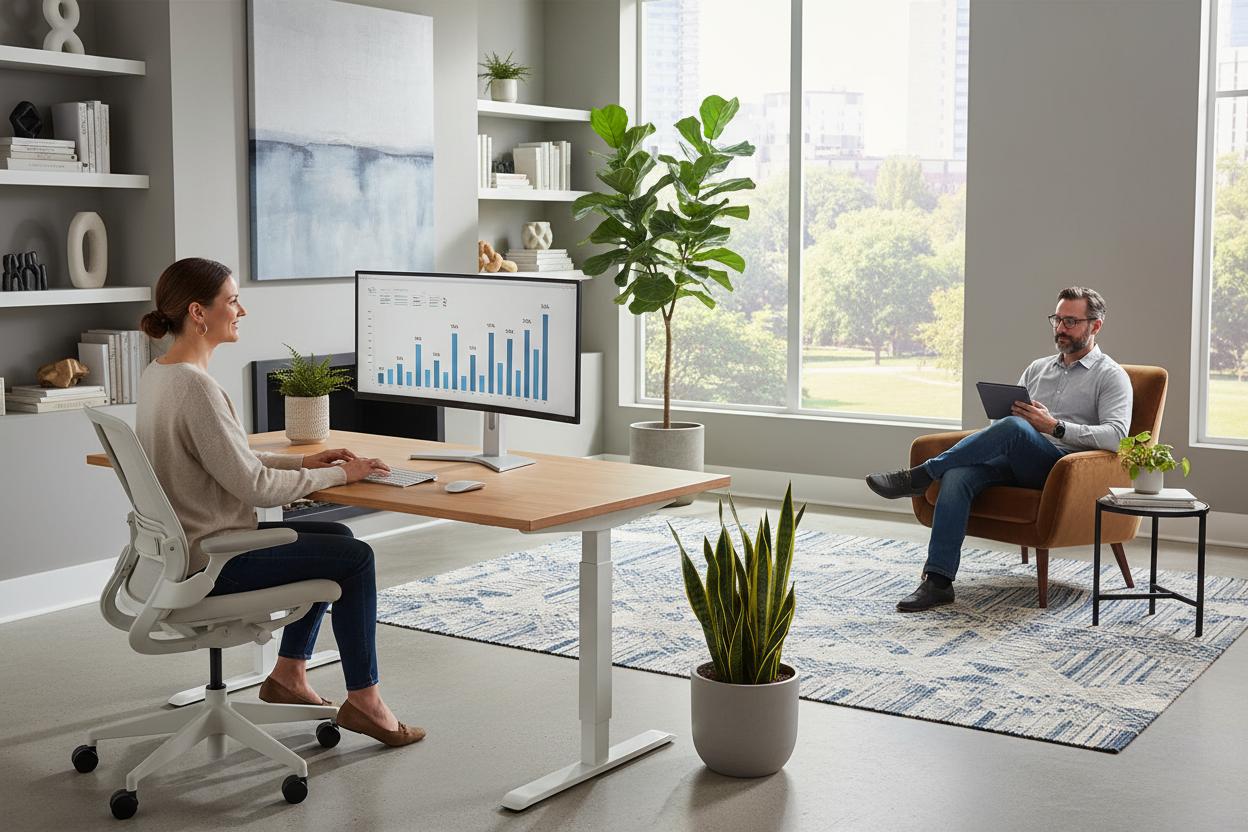
If you are planning a home office in a larger room, create distinct zones. You need a "heads-down" zone (the desk) and a "creative/break" zone (a lounge chair or standing area). If you are designing my home office in a compact area, verticality is your best friend. Floor-to-ceiling shelving draws the eye up and provides storage without eating into your square footage.
Choosing Materials: Aesthetics vs. Utility
When designing your home office, the tactile experience matters. A glass desk might look sleek and modern, but it is cold to the touch and amplifies the sound of typing. For a warmer, luxury feel, look for walnut or oak veneers with a matte finish. These materials hide fingerprints better than high-gloss lacquers and offer a comfortable surface for your wrists.
Furthermore, consider the chair's upholstery. While leather offers a classic executive look, high-quality performance velvet or mesh often provides better breathability for long work sessions.
Lighting: The unsung Hero of Productivity
Bad lighting causes eye strain faster than a small monitor. When figuring out how to design a home office space, avoid relying solely on recessed can lights, which create harsh shadows on your face during video calls. Position a task lamp with an adjustable arm to your non-dominant side to reduce glare while writing. Aim for a color temperature of 3000K to 3500K—bright enough to focus, but warm enough to feel residential.
My Personal Take on Designing a Home Office
I want to share a specific lesson from my own home renovation that I rarely see mentioned in glossy magazines. When I first set out to design office at home for myself, I fell in love with a stunning, reclaimed barn-wood desk. It had incredible texture, knots, and history.
It was a disaster. Why? Because you cannot write on it. Every time I tried to sketch or jot down a note on a single sheet of paper, the pencil would punch through the paper because of the uneven grain and deep grooves. I ended up having to buy a large leather blotter just to make the surface usable, which covered up the wood I paid extra for. Now, when I advise clients on designing home office ideas, I insist on a "smooth-touch" test. Run your hand across the desk surface; if you feel ridges, it’s a dining table, not a desk.
Conclusion
A well-executed workspace is an investment in your career and your mental well-being. By prioritizing layout, lighting, and the tactile quality of your materials, you can create a room that invites you to work rather than forcing you to. Take these home office design tips and start curating a space that reflects your professional identity.
Frequently Asked Questions
How do I design a home office in a small bedroom?
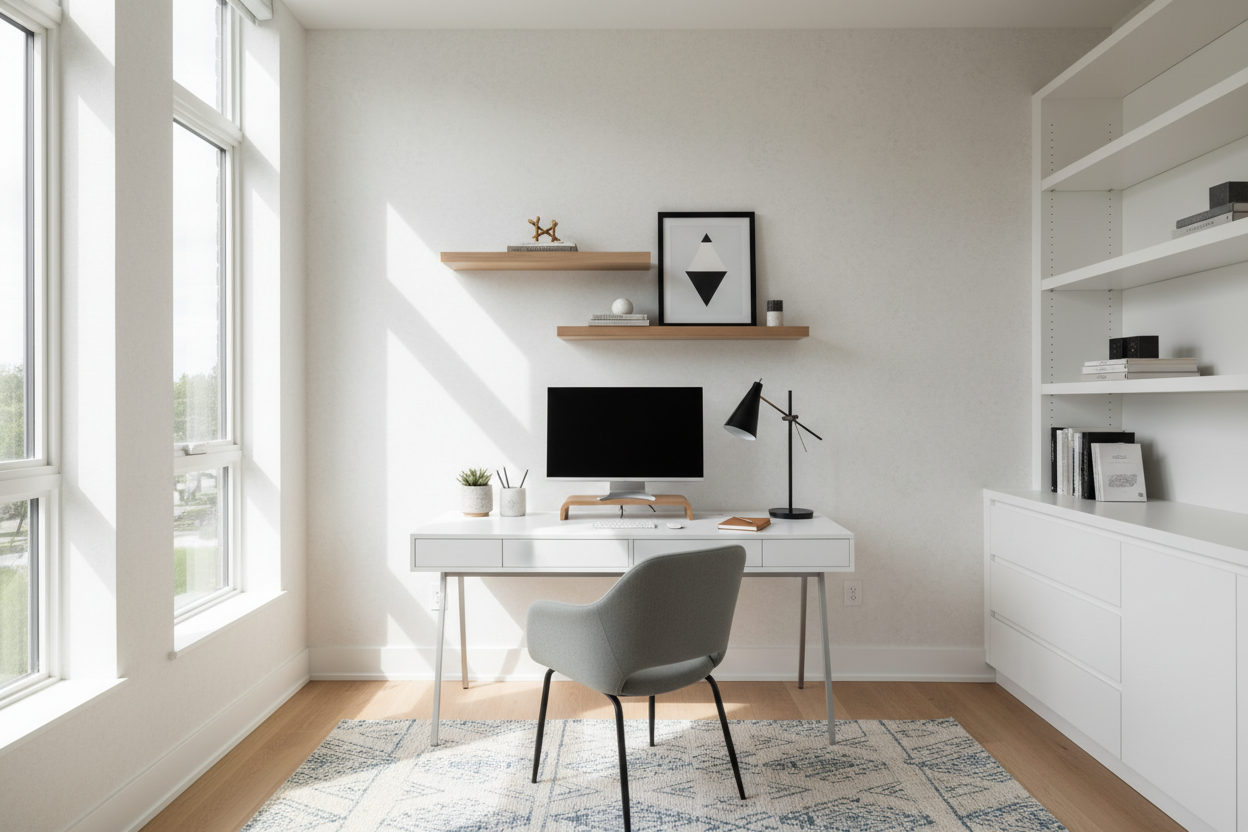
When designing an office space at home with limited square footage, choose furniture with "visual lightness." Look for desks with slender metal legs or glass tops, and utilize wall-mounted shelving to keep the floor clear. A ghost chair or a low-profile task chair prevents the room from feeling crowded.
Is custom cabinetry worth the investment for home office planning?
If you plan to stay in the home for more than five years, custom built-ins are excellent for maximizing storage and increasing property value. However, for flexibility, modular shelving systems offer a similar high-end look but can be moved if you decide to relocate or reconfigure the room.
What is the biggest mistake when learning how to design office space at home?
The most common error is ignoring cable management. Nothing ruins the look of a luxury office faster than a tangle of black wires. Invest in a desk with an integrated modesty panel or cable tray, and use floor cord covers to keep the visual lines clean.

Leave a comment
This site is protected by hCaptcha and the hCaptcha Privacy Policy and Terms of Service apply.