




We have all been there: staring at a massive, black rectangle dominating the living room, wondering how to make the space feel like a home rather than an electronics showroom. You finally find a cute media console online—maybe it has charming fluted doors or a warm oak finish. It looks perfect in the perfectly lit product photo. But when it arrives, it suddenly feels too small, too flimsy, or entirely out of place next to your existing furniture.
Finding a piece that handles the ugly reality of cables and routers while maintaining your room's aesthetic is trickier than it seems. Here is exactly what you need to know before you buy, so you end up with a piece that works just as hard as it looks.
Quick Decision Guide
- Size for the TV, not the room: Your console should be at least 20 to 25 percent wider than your television to avoid a top-heavy, unbalanced look.
- Check the internal depth: Many modern, slim consoles look great but cannot hold a standard AV receiver or gaming console with the doors closed.
- Prioritize cord management: Look for pre-drilled holes in the back panel. Drilling your own through veneer often leads to chipping.
- Consider remote access: Solid wood doors block infrared signals. If you hide your cable box, you need slatted, glass, or cane fronts.
Sizing and Scale for Real Living Rooms
The Golden Ratio of TV Stands
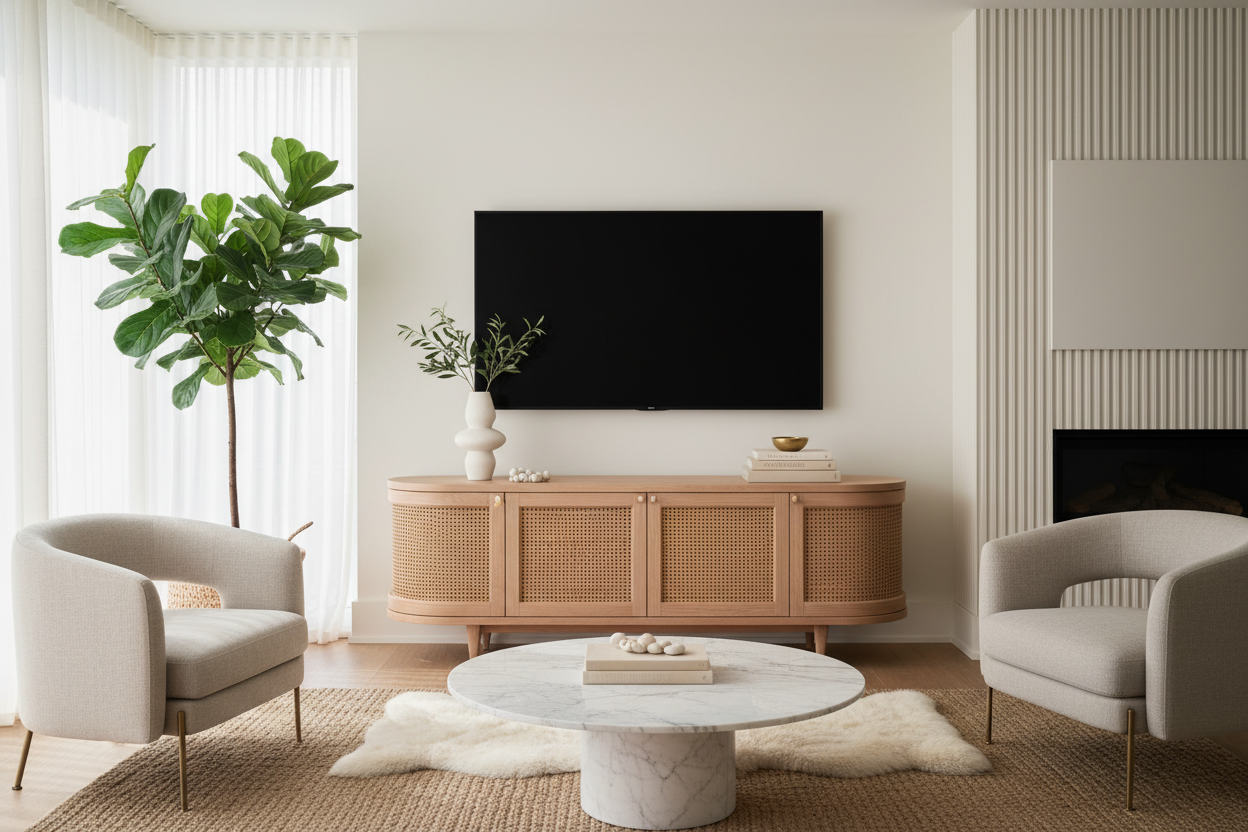
One of the most common mistakes I see in North American homes is pairing a massive 65-inch television with a console that is exactly the same width. This creates an uncomfortable, top-heavy silhouette that makes the whole room feel anxious. If you are investing in a beautiful media console, give it room to breathe. The furniture should extend at least a few inches past the edges of the TV on both sides. This negative space allows you to add a structural plant or a sculptural lamp, grounding the technology.
Managing Visual Weight
In smaller suburban family rooms or tight urban apartments, a heavy, solid-to-the-floor cabinet can easily overwhelm the floor plan. If your room feels cramped, look for a console raised on legs. Seeing the floor continue underneath the piece reduces its visual weight, making the room feel larger. Conversely, in a sprawling open-concept space, a floating or leggy piece might look lost; a heavier, plinth-base cabinet will anchor the room much better.
Achieving the Aesthetic
Materials That Age Gracefully
It is easy to fall for trendy finishes, but a media center sees a lot of daily interaction. Solid wood offers the best longevity and can be refinished, but high-quality wood veneers over MDF are actually more resistant to the warping caused by the heat of electronics. If you are browsing beautiful media consoles, pay close attention to the hardware. Swapping out generic factory knobs for unlacquered brass or matte black hardware is an inexpensive way to make a budget-friendly piece look custom.
Concealing the Tech Clutter
A console is only as good as its ability to hide ugly things. Routers, power strips, and tangled cords can ruin the look of even the most expensive furniture. I always recommend pieces with closed storage in the center and perhaps open shelving on the ends for styling books or ceramics. If you opt for open shelving entirely, invest in structured, woven baskets that fit the dimensions exactly to corral the visual noise.
Designer's Honest Take
A few years ago, I sourced an absolutely stunning, cane-front cabinet for a client's mid-century modern living room. It was the perfect cute media console—warm walnut, delicate woven doors, exactly what the space needed. The client loved it.
Then they moved in. We quickly realized that while the cane was visually transparent, it was just dense enough to block the infrared signal from their specific cable box remote. They had to leave the cabinet door open every time they watched TV, completely defeating the purpose of closed storage. To make matters worse, their new puppy found the natural rattan irresistible and chewed through the bottom corner of the door within a month. I learned the hard way that when mixing electronics, pets, and woven materials, you have to prioritize function and durability just as much as the silhouette.
Frequently Asked Questions
What is the ideal height for a media console?
For comfortable ergonomics, the center of your TV screen should sit at eye level when you are seated. In most living rooms with standard sofas, this means your console should be between 24 and 28 inches tall.
How wide should a console be compared to my TV?
Always measure your TV diagonally for screen size, but measure it straight across for furniture planning. Your console should be roughly 6 to 8 inches wider than the actual physical width of the TV on each side.
Can I use a sideboard instead of a traditional TV stand?
Yes, repurposing dining sideboards or low dressers is a great way to get a unique look. Just remember that you will likely need to drill holes in the back for cable management, and sideboards tend to run taller (30 to 36 inches), which might mount your TV too high for comfortable viewing.

Leave a comment
This site is protected by hCaptcha and the hCaptcha Privacy Policy and Terms of Service apply.