

















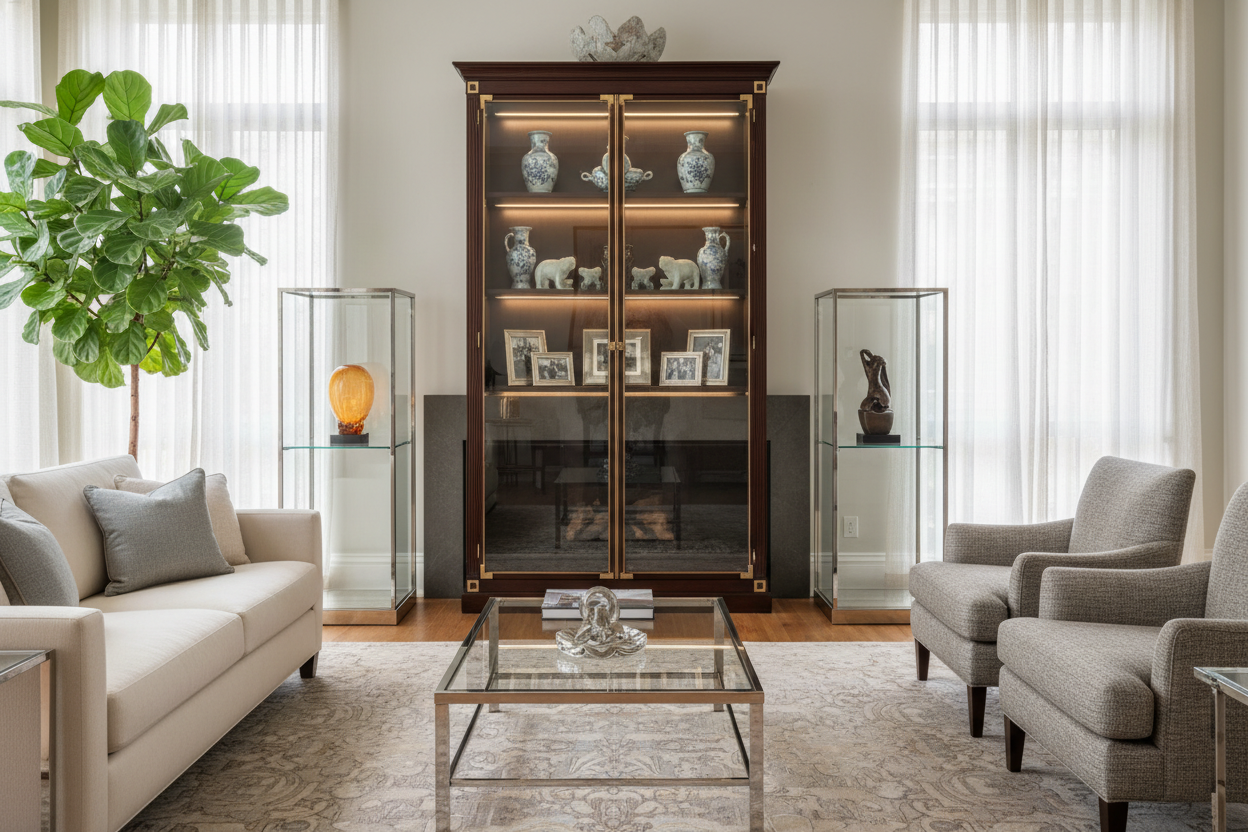
We've all seen it: a beautifully crafted glass cabinet pushed into a dining room corner, stuffed to the brim with mismatched porcelain, looking more like a dusty antique shop than a curated home. It's a common design dilemma. But when styled intentionally, curio and display cabinets can anchor a room, adding vertical interest and a deeply personal touch to your space. In this guide, you'll learn exactly how to choose, place, and style these pieces so they feel fresh, modern, and perfectly integrated into your home.
Quick Decision Guide
- Mind the negative space: Leave at least 30 percent of your shelf space empty to allow your displayed items to breathe.
- Check the lighting: Opt for LED strip lighting over older halogen bulbs to prevent heat damage to delicate collectibles.
- Anchor with visual weight: Place heavier, darker items on the bottom shelves and lighter, delicate pieces near the top.
- Consider traffic flow: Ensure swinging glass doors have at least 24 inches of clearance to open fully without hitting other furniture.
Sizing and Placement in Modern Homes
Finding the right spot for a tall, glass-front piece requires balancing its visual weight against the rest of your room. In open-concept North American living spaces, these cabinets often work best as transition pieces between dining and living areas.
Finding the Right Wall
Avoid sandwiching a curio cabinet display case between two large windows, which can create a silhouette effect that darkens the interior and hides your collection. Instead, place it on a solid wall where natural light can hit the front glass at an angle. If you are working with an eight-foot ceiling, look for a cabinet no taller than 76 inches to maintain comfortable negative space above it.
Making Traditional Pieces Feel Current
The biggest mistake I see with display cabinets curio styles is overstuffing. A cabinet should tell a story, not serve as a secondary storage closet.
Curating Your Collection
To keep the look high-end, group items by a unifying element—like a specific color palette, material, or shape. Mix stacks of hardbound books with sculptural ceramics to break up the monotony of small figurines. Layering is key: place taller items in the back and smaller pieces in the front, slightly off-center to create a dynamic, asymmetrical arrangement.
Material, Build Quality, and Upkeep
When shopping for a new curio display case, the frame material dictates both the style and the longevity. Solid oak or walnut offers incredible durability and a warm, organic feel, while sleek powder-coated metal frames lean industrial or contemporary.
The Glass Factor
Pay close attention to the glass shelving. Look for tempered glass that is at least a quarter-inch thick. Standard glass shelves will bow over time under the weight of heavy books or dense pottery, eventually becoming a safety hazard.
Designer's Honest Take
I love the architectural presence of a tall display case, but I have learned a few hard lessons over the years. A few years ago, I sourced a stunning, frameless, all-glass cabinet for a client's modern suburban living room. It looked incredible on installation day.
However, within a week, the reality of living with two golden retrievers and a toddler set in. The bottom half of the cabinet became a permanent canvas for nose smudges and sticky fingerprints. Furthermore, the older halogen puck lights built into the top shelf ran so hot that they actually warped a vintage resin sculpture my client had placed directly underneath. If you have a busy household, I strongly recommend a design with a solid wood base for the lower half, keeping the glass display safely above waist height.
Frequently Asked Questions
How do I modernize an old curio cabinet?
The fastest update is paint and hardware. Sand down heavy, dark cherry finishes and paint the exterior a matte charcoal or soft cream. Swap out ornate brass pulls for sleek, minimalist hardware, and consider lining the back interior wall with a subtle, textured wallpaper.
What size cabinet do I need for my room?
Scale is everything. In a standard 12x15 foot dining room, a cabinet between 36 and 42 inches wide is usually proportionate. Ensure you leave at least 36 inches of walkway clearance between the front of the cabinet and your dining chairs when pulled out.
How do I keep the glass shelves clean?
Skip the harsh ammonia-based sprays, which can degrade the surrounding wood finish over time. Use a simple mixture of distilled water and a splash of white vinegar, applied with a high-quality microfiber cloth to avoid lint streaks.


Leave a comment
This site is protected by hCaptcha and the hCaptcha Privacy Policy and Terms of Service apply.