

















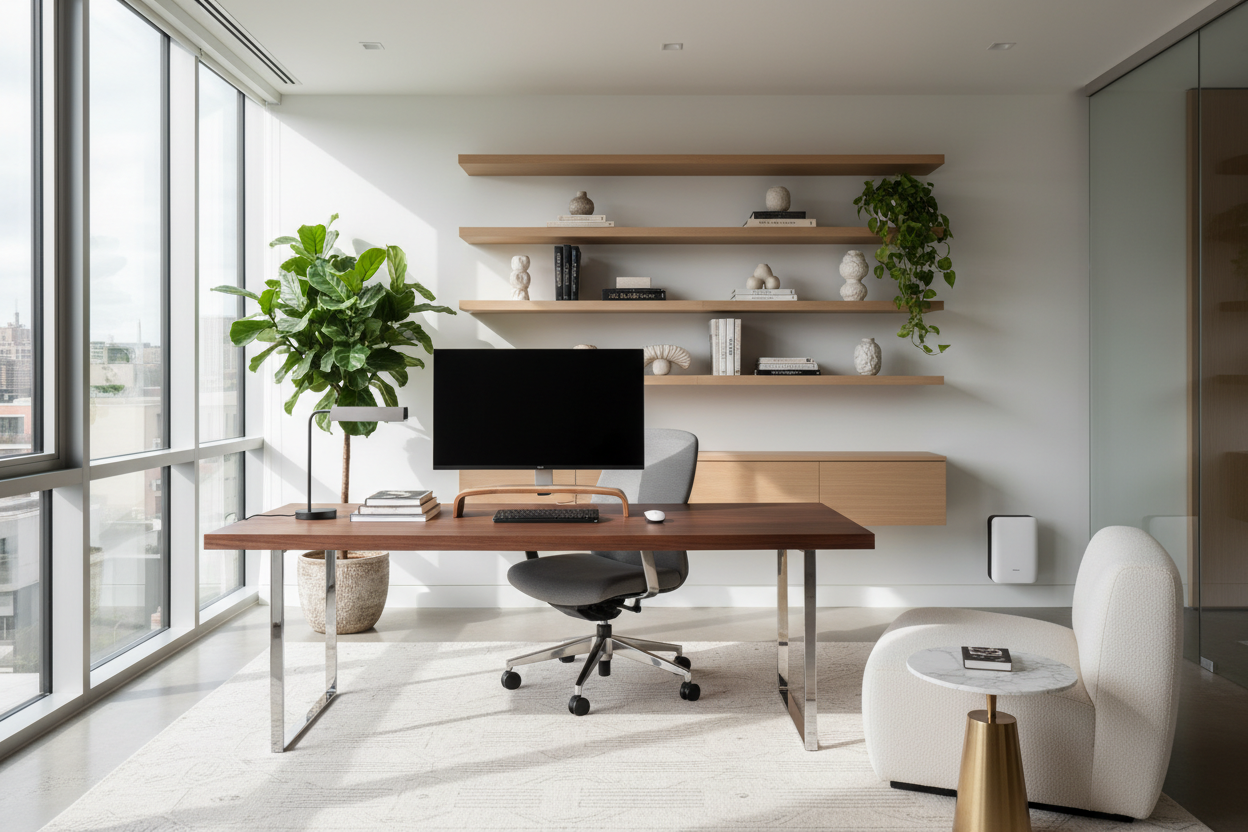
We have all encountered the same design dilemma: trying to squeeze a productive workspace into a residential setting without turning a curated living room into a corporate cubicle. The challenge isn't just finding a desk that fits; it is about sourcing work from home furniture that respects the architectural integrity of your home while supporting your lumbar spine for an eight-hour shift. This article bridges the gap between high-performance ergonomics and high-end residential aesthetics.
Key Features to Look For
- Ergonomic Adjustability: Look for seat depth regulation and synchro-tilt mechanisms, not just height adjustment.
- Visual Weight: In shared spaces, opt for leggy silhouettes or glass surfaces to maintain open sightlines.
- Material Durability: Prioritize kiln-dried hardwoods or high-pressure laminates over particle board to prevent sagging.
- Cable Management: Integrated channels are essential to prevent visual clutter from ruining the room's calm.
Balancing Form and Function
As a designer, I often see clients gravitate toward sculptural chairs that look stunning in a portfolio but offer zero support. The golden rule of home office design is that function must precede form, but it shouldn't annihilate it. When selecting seating, look for designs that hide their mechanisms. Several high-end manufacturers now encase ergonomic mesh in upholstered frames, offering the breathability you need without the "spaceship" aesthetic of a standard task chair.
Choosing the Right Materials
Solid Wood vs. Veneer
For the primary desk, the tactile experience is paramount. Solid wood, such as walnut or white oak, offers a warmth and patina that develops over time. However, it reacts to humidity. If you live in a climate with drastic temperature shifts, a high-quality wood veneer over a stable plywood core is often the smarter engineering choice. It resists warping while maintaining that organic grain texture under your forearms.
Upholstery Considerations
Avoid standard commercial polyesters. Instead, look for Crypton fabrics or commercial-grade wool blends. These materials offer the stain resistance required for coffee spills but provide a soft, residential hand-feel that integrates with your existing drapery and rugs.
Space Planning and Layout
The placement of your furniture dictates the room's energy. A common error is pushing the desk directly against a wall. This is known as the "dunce corner" effect. Instead, position your desk in the "command position"—facing the door, ideally floating in the room or perpendicular to a window. This allows you to benefit from natural light without direct glare on your monitor, and it anchors the furniture as a deliberate design element rather than an afterthought.
Lessons from My Own Projects
I want to share a mistake I made early in my career when designing my own home office. I fell in love with a stunning, vintage reclaimed wood table to use as my desk. It had incredible texture and rustic charm. However, I didn't account for the "writing surface" reality. The deep grain and uneven knots meant I couldn't write on a piece of paper without a pad, and my mouse jumped constantly.
Worse yet, the apron (the wood bar connecting the legs) was too low. Every time I crossed my legs, my knees banged against the timber. It was a beautiful object, but a terrible tool. I learned the hard way that knee clearance is a non-negotiable dimension—you need at least 24 to 26 inches of vertical clearance for comfort. Now, I always measure the "apron-to-floor" distance before recommending any table as a desk.
Conclusion
Investing in the right pieces is about more than just utility; it is about honoring the space you live in. By selecting furniture that balances structural integrity with refined silhouettes, you create an environment that invites focus without sacrificing style. Measure twice, prioritize your posture, and choose materials that age gracefully.
Frequently Asked Questions
How do I protect my hardwood floors from office chair wheels?
Standard nylon casters can wreak havoc on hardwood. Swap them out for "rollerblade style" rubber casters, which are softer and quieter. Alternatively, use a low-pile, tight-weave rug to anchor the space and provide a protective barrier.
What is the ideal desk depth for a home setup?
Aim for a minimum depth of 24 inches. If you use multiple monitors, 30 inches is preferable. This depth ensures your screens are at an arm's length away, reducing eye strain and allowing space for a keyboard and notepad.
Can I use a dining chair as a desk chair?
For short bursts of an hour or two, yes. However, dining chairs lack the lumbar curve, seat contour, and adjustability required for long-term work. If you must use a dining chair style, look for a "hybrid" chair with a hidden swivel base and upholstered back support.


Leave a comment
This site is protected by hCaptcha and the hCaptcha Privacy Policy and Terms of Service apply.