

















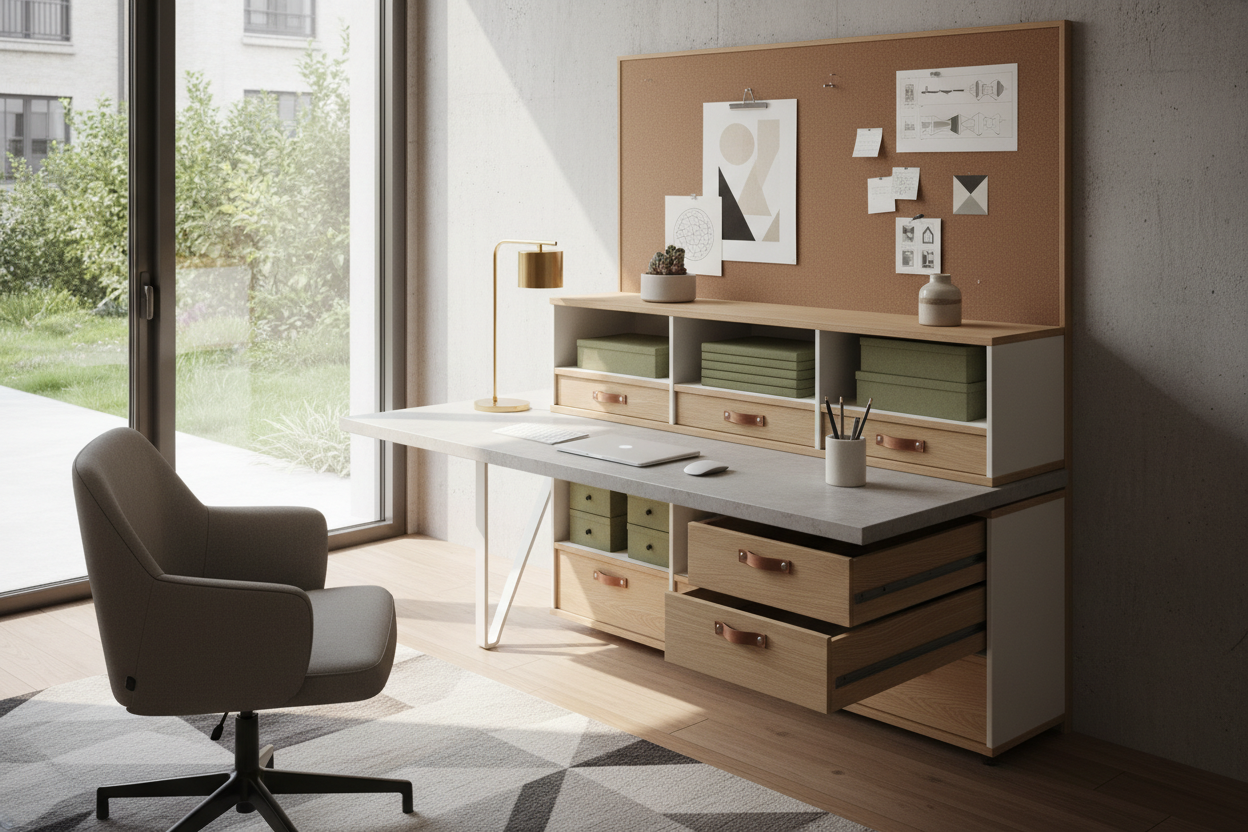
There is a subtle but distinct line between a workspace that feels lived-in and one that feels chaotic. As a designer, I often walk into home offices where the desk itself is a masterpiece—perhaps a live-edge walnut slab or a sleek glass top—but the visual harmony is shattered by clutter. The solution isn't just to sweep everything into a drawer; it is to introduce a desktop storage cabinet that acts as both a functional vessel and a sculptural element.
Key Features to Look For
Before we dive into the aesthetic nuances, here is a checklist to ensure your storage solution offers genuine utility without compromising your desk's real estate. This summary will help you filter your options quickly:
- Footprint Efficiency: Ensure the base depth leaves you at least 18 inches of active workspace in front of the unit.
- Material Integrity: Look for solid wood or high-grade veneer over MDF; avoid particle board which bows under weight.
- Hardware Quality: Check for brushed brass or matte black pulls that offer tactile grip; drawer glides should be silent.
- Visual Weight: Darker cabinets anchor a space, while acrylic or light woods maintain an airy, open feel.
Choosing the Right Material Palette
When selecting a cabinet, materiality is your primary consideration. It dictates the longevity of the piece and how it interacts with the ambient light in your room.
Solid Wood vs. Metal Composites
For a warm, executive feel, nothing rivals solid wood. Oak and walnut are excellent choices because their grain patterns hide minor dust and offer a rich texture. However, wood expands and contracts with humidity. If your desk is near a radiator or in a sun-drenched window, a high-quality powder-coated steel cabinet might be the superior choice. Metal offers a slimmer profile (silhouette), allowing for thinner walls and slightly more internal storage volume.
The Tactile Experience
Design is not just visual; it is tactile. When you reach for a pen or a document, the surface you touch matters. A leather-wrapped desktop cabinet creates a soft, luxurious sound dampening effect, whereas lacquer provides a sharp, modern reflection but attracts fingerprints. Choose a finish that invites touch.
Space Planning and Visual Balance
A common error is treating desktop storage as an afterthought. It should be treated as a micro-architecture project on your desk surface.
The Rule of Thirds
Avoid placing your storage unit dead center. Instead, position it in the outer third of your desk. This creates a focal point that balances your monitor or lamp on the opposing side. If you are right-handed, place the cabinet on the right to minimize the range of motion required to access essentials.
Verticality vs. Horizontality
If your ceiling height is low or your room feels cramped, opt for a low-profile, horizontal cabinet. It leads the eye across the plane of the desk, expanding the perceived space. Conversely, a tall, narrow stack of drawers draws the eye upward, which is beneficial in rooms with high ceilings but limited floor space.
Lessons from My Own Projects
I want to share a specific realization I had while sourcing for a client in a minimalist Tribeca loft. We bought a stunning, high-gloss white desktop organizer that looked incredible in photos. However, within a week, the client called me with a complaint I hadn't anticipated: the sound.
Every time he dropped his keys or a heavy stapler onto the unit, it created a hollow, plastic clatter that disrupted his focus. It felt cheap, despite the high price tag. We replaced it with a unit featuring felt-lined drawers and a cork bottom. The difference was night and day. The lesson? Acoustics matter in furniture. When you are buying, open the drawer and tap the bottom. If it sounds like a drum, it will annoy you eventually. Look for lining or solid construction that absorbs sound.
Conclusion
Your workspace is a reflection of your mind. A well-chosen storage unit does more than hold paperclips; it anchors your workflow and elevates the room's design language. Invest in materials that age gracefully and proportions that respect your working habits.
Frequently Asked Questions
How do I prevent the cabinet from scratching my desk surface?
High-end units often come with silicone or felt feet. If yours does not, apply high-density felt pads immediately. Avoid rubber pads on expensive wood lacquers, as the chemicals in the rubber can sometimes react with the finish over time, leaving permanent marks.
What is the ideal height for a desktop cabinet?
Ideally, the cabinet should not exceed the height of your monitor. Keeping the storage unit below your eye line prevents the desk from feeling enclosed or claustrophobic, maintaining a clear sightline across the room.
Can I mix wood tones between my desk and the storage unit?
Absolutely. In fact, matching them perfectly can look flat. The trick is to keep the undertones consistent. If your desk is a warm honey oak, a darker warm walnut cabinet looks sophisticated. Avoid mixing cool-toned grey woods with warm reddish woods.

Leave a comment
This site is protected by hCaptcha and the hCaptcha Privacy Policy and Terms of Service apply.