

















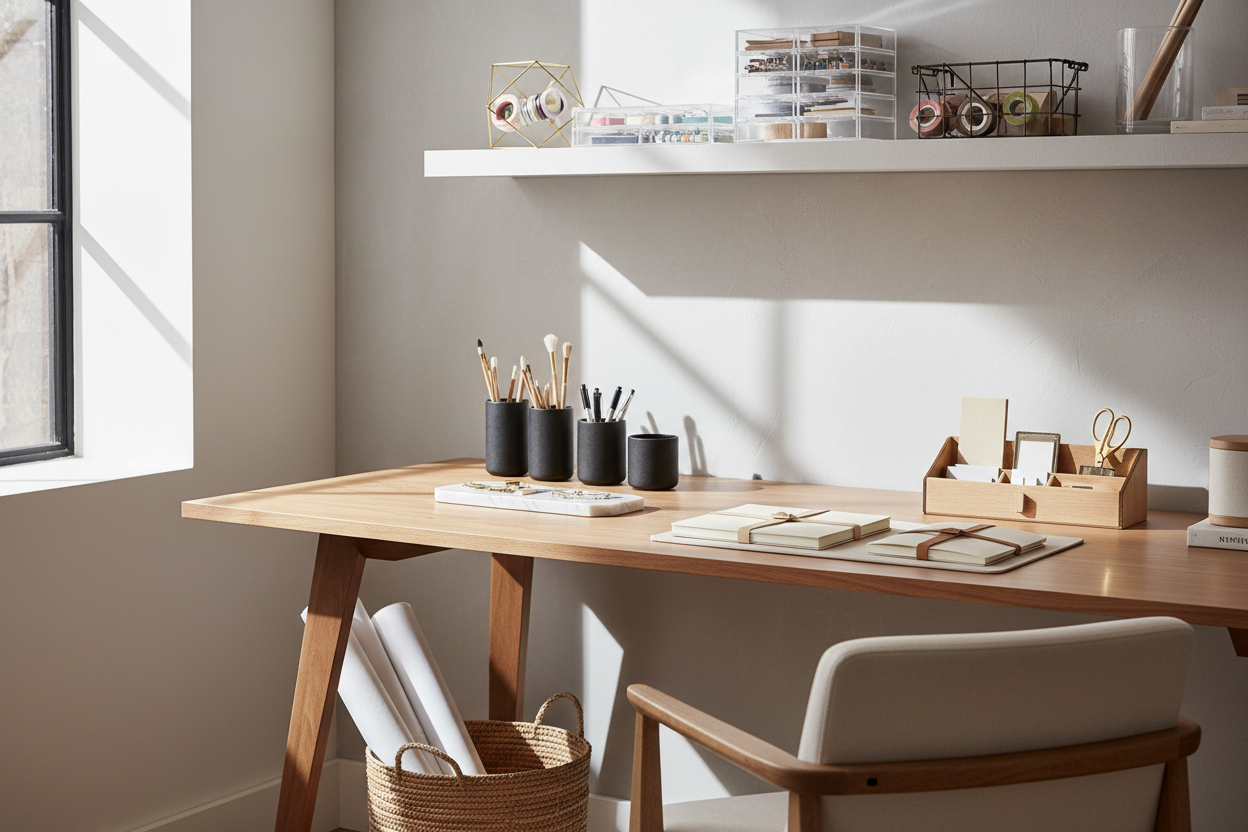
There is a distinct tension in interior design between the need for immediate access and the desire for visual serenity. We have all experienced the "drawer of doom"—that chaotic catch-all where paperclips migrate into tangled tech cables. However, selecting the right storage for stationery is not merely about tidying up; it is about curating a workflow that respects both your ergonomics and your aesthetic sensibilities. As a designer, I view these organizational elements as the architectural details of your desktop—functional sculptures that define how you interact with your work.
Quick Decision Guide: Key Features to Look For
- Material Tactility: Choose materials like leather or solid wood for warmth and sound absorption, or acrylic for visual lightness in small spaces.
- Modularity: Opt for stackable or interlocking units that can adapt as your collection of tools grows or shrinks.
- Compartment Depth: Ensure shallow depth (under 2 inches) for small items like clips and pins to prevent digging; reserve deep bins for paper.
- Visual Weight: Consider how the organizer impacts the desk's silhouette—opaque hides clutter, while transparent demands curation.
Defining Your Workflow and Volume
Before purchasing a single tray or canister, we must audit the "active zone." In professional space planning, we distinguish between high-frequency tools (pens, sticky notes) and low-frequency archives (printer paper, specialty markers). Storing stationery effectively requires a tiered approach. Your primary tools should reside within the primary reach radius—roughly 14 to 16 inches from your seated position. Secondary items belong in drawers or on shelves. If you overcrowd your immediate desktop with items you only use weekly, you disrupt the visual balance of the room.
Choosing the Right Material Palette
The material of your organizers dictates the mood of the workspace. This is where many homeowners miss an opportunity to elevate the room's design language.
The Case for Natural Materials
Solid wood, such as walnut or white oak, grounds a desk. It adds texture and ages beautifully. Leather trays are exceptional for executive spaces; they offer a soft landing for heavy fountain pens, preventing the harsh clatter of metal on metal. These materials develop a patina over time, telling the story of your work.
Acrylic and Metal: The Modern Approach
For smaller desks or dark rooms, high-quality acrylic is a smart choice. It consumes zero "visual space," making the desk feel larger. However, be wary of cheap plastics which yellow over time. Powder-coated steel offers durability and a pop of industrial color, but ensure it has silicone feet to protect your desktop surface.
Visual Balance and Layout
Symmetry is pleasing, but asymmetry is interesting. When styling a desk, avoid lining up all your storage in a soldier-like row against the wall. Instead, create vignettes. Group a vertical file sorter with a low, horizontal tray to vary the height. This creates a pleasing silhouette and prevents the setup from looking like a corporate cubicle. Negative space is just as important as the storage itself; leave breathing room around your organizers to maintain a sense of calm.
My Personal Take on Storage for Stationery
In my early years designing home offices, I was obsessed with high-gloss lacquer organizers because they looked stunning in portfolio photos. However, I learned a hard lesson during a project for a graphic designer in Chicago. Within three months, the client called to say the pristine white lacquer was covered in micro-scratches from metal paperclips and staples. It looked worn and cheap very quickly.
Since then, my non-negotiable rule—and my advice to you—is to look for lined interiors. Whether it’s a velvet flocking inside a pencil cup or a cork bottom in a tray, that interior layer is crucial. It protects the organizer, protects your expensive writing instruments, and dampens the sound of work. It’s a subtle detail you won't see in a catalogue photo, but you will appreciate it every single day you use it.
Conclusion
Investing in quality organization is an investment in your mental clarity. By selecting pieces that offer both tactile pleasure and functional logic, you turn a mundane task into a daily ritual of order. Clear your surface, and you invariably clear your mind for the work that matters.
Frequently Asked Questions
Should I store pens horizontally or vertically?
This depends on the ink. Felt-tip pens and markers should be stored horizontally to prevent them from drying out. Ballpoint and gel pens can be stored vertically in cups, which saves desk surface area and keeps them accessible.
How do I organize deep desk drawers for stationery?
Deep drawers are often the enemy of small stationery items. The solution is to use sliding tier inserts or stackable trays. Place less frequently used items on the bottom layer and your daily essentials on the top sliding tray to utilize the vertical volume without creating a mess.
What is the best way to store paper to prevent curling?
Paper should always be stored flat, not upright, unless it is in a rigid vertical sorter that supports the full height of the sheet. Humidity causes curling, so avoid storing fine stationery near radiators or in direct sunlight.


Leave a comment
This site is protected by hCaptcha and the hCaptcha Privacy Policy and Terms of Service apply.