

















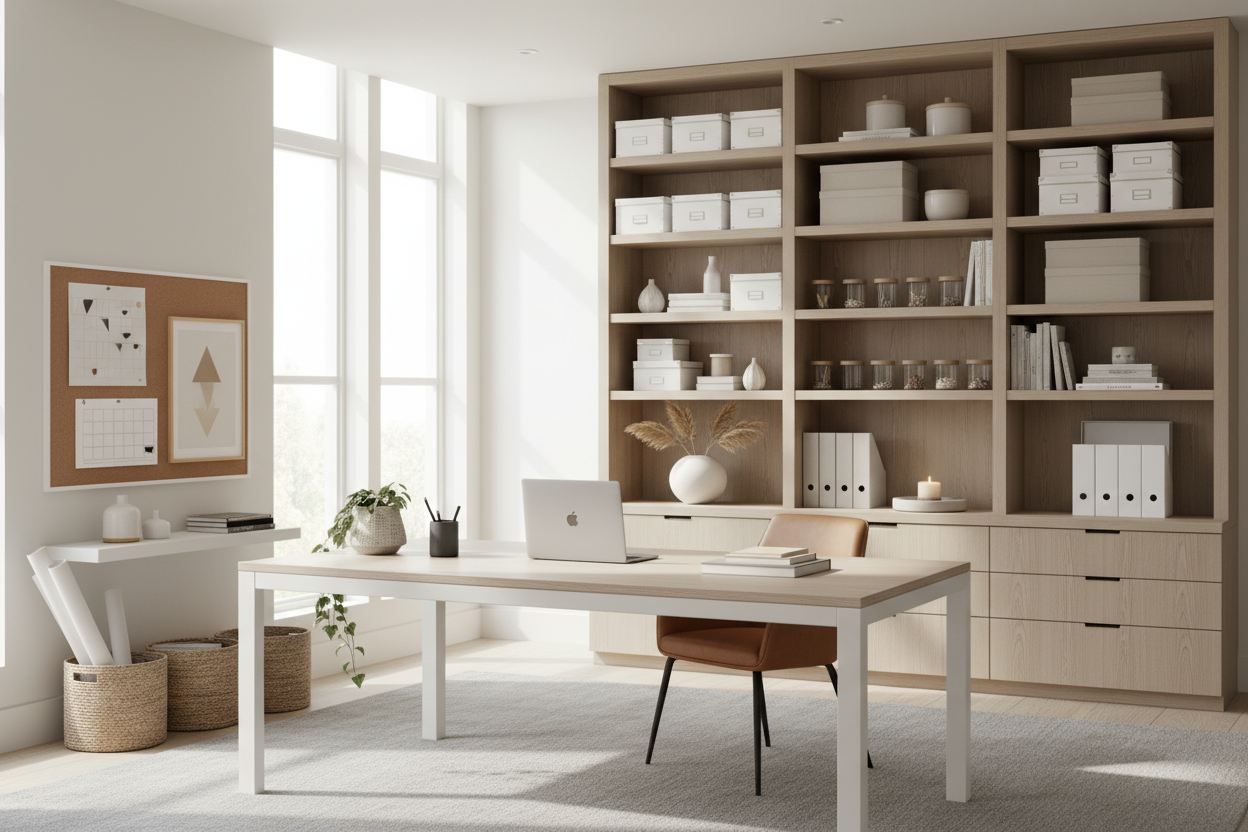
There is a distinct palpable tension that exists in a cluttered workspace. As a designer, I walk into rooms where the architecture is beautiful, but the surface clutter creates a frequency of visual noise that kills productivity. True organization in the office is not merely about hiding papers in a drawer; it is about curating an environment where workflow dictates the layout and aesthetics support your mental clarity. If you are struggling to focus, the fault often lies not in your discipline, but in your spatial design.
Key Features of a Functional Layout
- Zoning Efficiency: Establish distinct 'hot' and 'cold' zones based on frequency of use to streamline movement.
- Vertical Utilization: Maximize floor space by utilizing wall-mounted shelving and tall cabinetry for archival storage.
- Material Durability: Select storage finishes (laminates, hardwoods, metals) that withstand daily wear without showing fingerprints.
- Ergonomic Flow: Ensure clear pathways of at least 36 inches behind the desk to allow for chair movement and circulation.
- Cable Management: Integrate hidden channels or grommets to reduce visual clutter and tripping hazards.
Mastering Space Planning and Layout
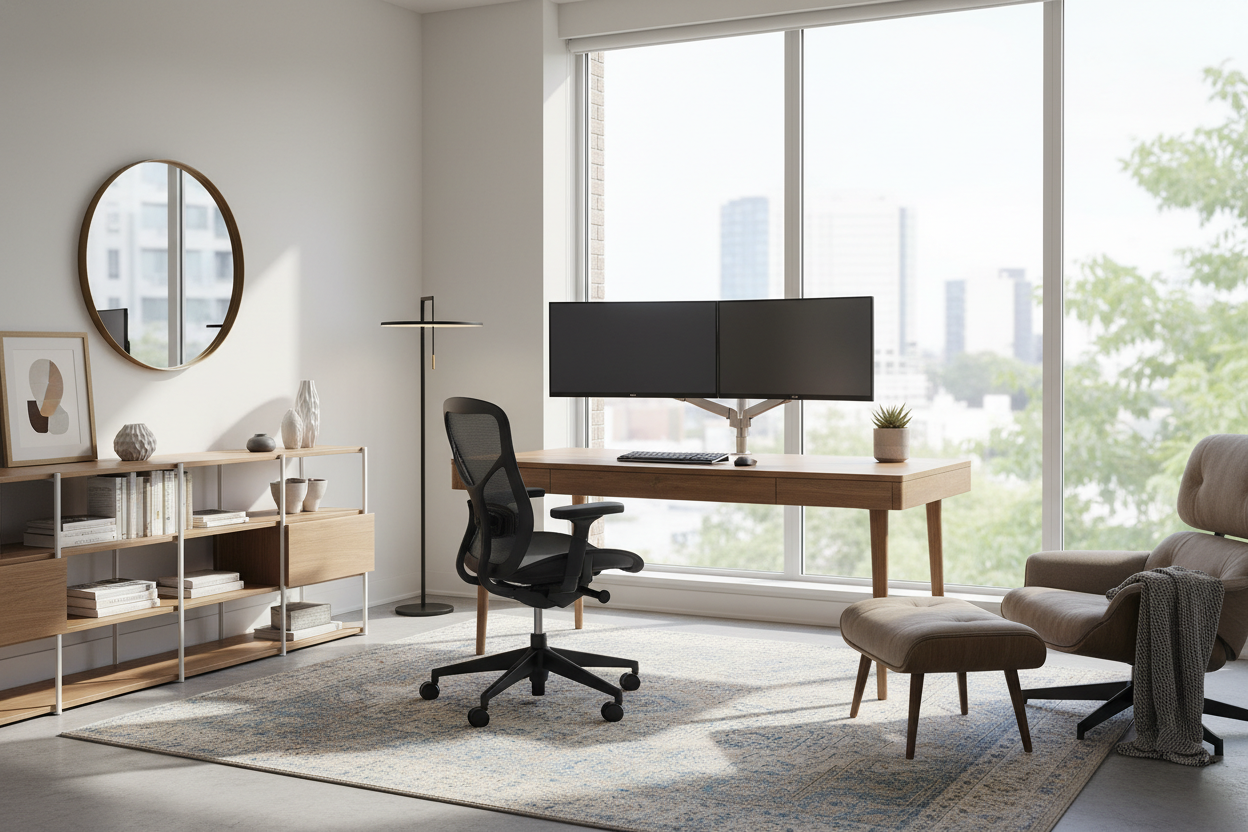
When clients ask how to arrange an office, I rarely start with the desk. I start with the light. Ideally, your primary work surface should be perpendicular to a window to reduce glare while maximizing natural illumination. This foundational step dictates how to organize an office space for sustained energy.
Once the desk is positioned, we look at the 'working triangle'—a concept borrowed from kitchen design. Your chair, your reference materials (filing), and your digital tools (printer/scanner) should form a tight triangle. If you have to walk across the room to retrieve a printed document, you break your focus. Organizing an office space effectively means reducing friction in these micro-movements.
Selecting Sophisticated Office Organization Systems
The market is flooded with plastic bins, but for a professional aesthetic, we must look higher. When considering office organization systems, texture matters. I often specify leather-wrapped desktop organizers or solid wood trays. These materials add warmth and absorb sound, whereas acrylic or metal can sometimes amplify the 'clatter' of a busy workday.
The Art of the Desk Surface
Learning how to organize your office starts at the immediate reach zone. Limit surface items to the essentials: a monitor, a task lamp, and a daily notebook. Use a shallow drawer with modular dividers for pens and tech accessories. This is how to organize my office to ensure that when I sit down, I am greeting work, not managing a mess. If you are wondering how to arrange my office desk, keep the center clear. Clutter should be relegated to the periphery.
Visual Balance and Hidden Storage
To achieve a truly organized office space, you must balance open and closed storage. Open shelving is excellent for books and decorative objects that inspire you—this is the 'soul' of the room. However, for organizing office work like financial records or supplies, closed cabinetry is non-negotiable. It reduces visual overload.
One of the best ways to organize an office is to utilize lateral filing cabinets that double as console tables. By placing artwork or a table lamp on top, you disguise the utilitarian function of the furniture, blending organization of office space with residential comfort.
My Personal Take on Organization in the Office
In my early years of design, I made a classic mistake with a high-end client. I specified beautiful, deep, custom millwork drawers for their desk, thinking maximum volume was the goal. It was a disaster. Six months later, the client called me saying, "I can't find anything." The drawers were too deep; papers and tools were creating a geological layering effect where the bottom items were lost forever.
Since then, my approach to how to organize an office has shifted entirely to shallow, wide drawers with rigid internal dividers. I also learned the hard way about high-gloss finishes on desktops. While they look stunning in photos, they highlight every speck of dust and fingerprint, driving perfectionist clients crazy. Now, I always steer clients toward matte or satin finishes for high-touch surfaces. Real tips for organizing an office often involve anticipating the mess before it happens.
Conclusion
Transforming a chaotic room into a sanctuary of productivity requires intention. By selecting the right materials, respecting ergonomics, and balancing open and closed storage, you create more than just a tidy room—you create a machine for living and working. Take the time to organize the office properly, and you will find that your mind clears as quickly as your desk.
Frequently Asked Questions
How do I organize my office if I have a very small space?
When dealing with limited square footage, ways to organize office layouts must focus on verticality. Use floor-to-ceiling shelving and consider a wall-mounted floating desk to free up floor space. Utilizing the back of the door for storage is also a clever trick for organizing systems for office supplies.
What is the best way to maintain an organized office long-term?
The secret to how to be organized in the office consistently is the 'end-of-day reset.' Dedicate the last 5 minutes of your workday to clearing your desk and filing papers. This ensures you walk into a fresh slate the next morning, preventing clutter from compounding.
Is it worth investing in custom built-ins for office organization?
If you own the property, absolutely. Custom built-ins are the gold standard for how to organize an office because they are tailored to your specific equipment and workflow. They maximize every inch of an alcove or odd corner, providing a level of organized office efficiency that freestanding furniture rarely achieves.


Leave a comment
This site is protected by hCaptcha and the hCaptcha Privacy Policy and Terms of Service apply.