

















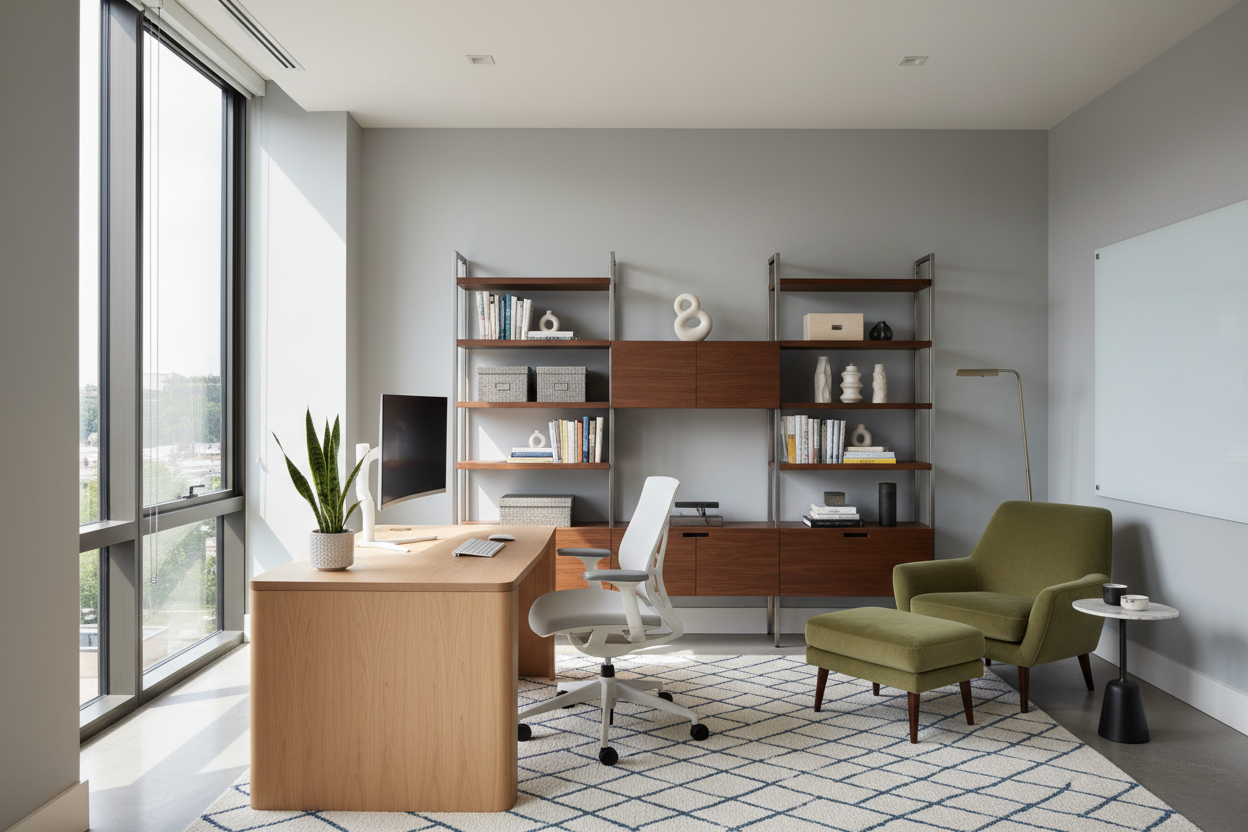
We have all attempted to work from a kitchen island or a makeshift corner in the living room, only to find our focus fragmented and our posture compromised. A truly functional home office requires more than just a surface for your laptop; it demands a deliberate approach to spatial planning that merges ergonomic integrity with your personal aesthetic. As we move away from temporary setups, the goal is to curate a space that not only accommodates your workflow but actively enhances it through thoughtful design and material selection.
Key Features of a High-Performance Workspace
Before selecting a single piece of furniture, consider these core pillars of design that define a successful office environment:
- Ergonomics & Posture: Prioritize chairs with adjustable lumbar support and seat depth to prevent fatigue.
- Material Durability: Look for scratch-resistant surfaces like high-pressure laminate or sealed solid wood for high-traffic zones.
- Lighting Layers: Combine ambient overhead lighting with focused task lighting (aim for 3000K-4000K color temperature).
- Spatial Flow: Ensure a minimum of 36 to 48 inches of clearance behind your desk for chair movement.
- Acoustic Control: Incorporate rugs, drapery, or upholstered panels to dampen echo and improve focus.
Mastering the Functional Home Office Layout
The foundation of productivity lies in the layout. In professional interior design, we often refer to the "Command Position." ideally, your desk should face the door but not be directly in line with it. This vantage point offers a psychological sense of security and authority over the space.
For a functional home office layout, avoid pushing your desk strictly against a wall if space permits. Floating the desk in the center of the room, anchored by an area rug, creates a dedicated zone for focus and allows for better circulation. If you are working with a compact footprint, utilize vertical space. Wall-mounted shelving units that sit above the monitor line draw the eye upward, making the room feel more expansive while keeping essential reference materials within arm's reach.
Choosing Materials: Aesthetics vs. Utility
When curating furniture, the tactile experience is just as vital as the visual one. A glass desk may look sleek and modern, but it often reads as "cold" and creates glare that can lead to eye strain over long hours. Furthermore, optical mice often struggle to track on glass without a pad.
Solid Wood vs. Veneer
For the primary work surface, I often recommend solid wood or high-quality wood veneer. Walnut and oak offer warmth and grain patterns that hide minor dust settling. However, be mindful of the finish. A specialized polyurethane or catalyzed lacquer finish provides the necessary resistance against coffee rings and pen indentations, whereas an oil finish, while beautiful, requires regular maintenance and is susceptible to water spots.
Lighting and Visual Balance
Lighting is the unsung hero of a functional office. Relying solely on a ceiling fixture casts shadows directly over your work area. To counter this, layer your lighting. Start with ambient light, then add a dedicated task lamp with an adjustable arm. Position the lamp on the opposite side of your dominant hand to eliminate writing shadows. Visually, balance the technical look of monitors and electronics with organic textures—a leather desk blotter or a linen curtain—to soften the "corporate" feel and make the space inviting.
Lessons from My Own Projects
I learned a hard lesson early in my career regarding the relationship between office chairs and desk drawers. I once specified a stunning, custom mid-century modern desk with a thick apron (the vertical panel under the desktop) for a client. We paired it with an executive chair that had fixed, non-adjustable arms.
The result? The chair arms couldn't slide under the desk. The client was forced to sit about six inches further back from their keyboard than was ergonomically healthy, leading to immediate shoulder strain. It was a detail measured in millimeters that completely ruined the functionality. Now, I always measure the "clearance height" of the desk drawer against the "armrest height" of the chair before finalizing any order. It is these unpolished, practical checks that save a design from becoming a beautiful failure.
Conclusion
Investing in your workspace is ultimately an investment in your own efficiency and well-being. By prioritizing a layout that flows and materials that endure, you create a sanctuary that respects both your body and your profession. Take the time to measure, select tactile materials, and light your space intentionally.
Frequently Asked Questions
What is the ideal desk height for a functional home office?
The standard desk height is between 29 and 30 inches. However, if you are shorter than 5'4", you may need a footrest or a height-adjustable desk to ensure your elbows remain at a 90-degree angle while typing.
How do I hide cords in a floating desk layout?
If your desk is not against a wall, cable management is critical. Use a floor-mounted outlet if possible, or run a cord cover that matches your rug or flooring. Magnetic cable channels that attach to the desk leg are excellent for guiding wires down cleanly.
Can a small bedroom corner work as a functional office?
Absolutely. In small spaces, choose a desk with visually "light" legs (metal or slender wood) rather than a heavy pedestal desk. This preserves sightlines and keeps the room from feeling cramped. Utilizing a wall-mounted drop-leaf desk is also a viable option for tight quarters.

Leave a comment
This site is protected by hCaptcha and the hCaptcha Privacy Policy and Terms of Service apply.