

















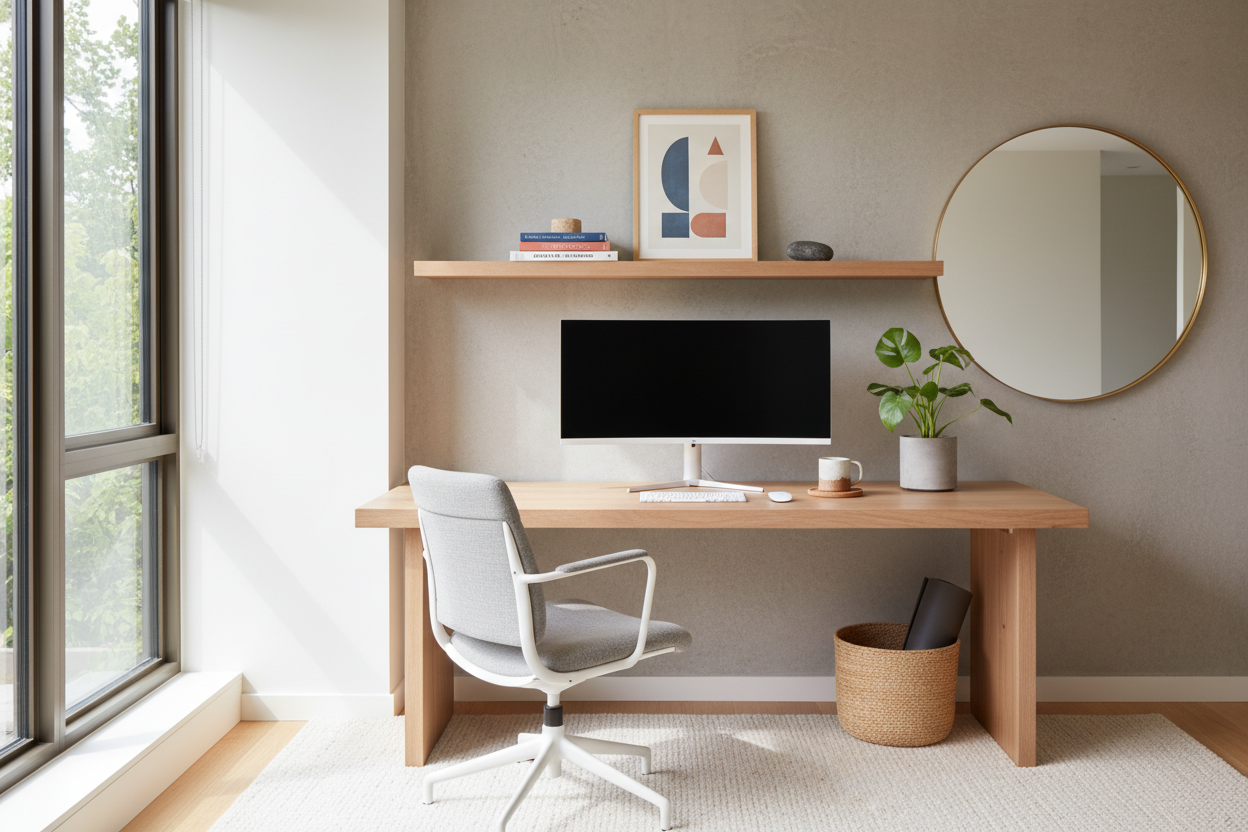
There is a distinct difference between a workspace that feels sterile and one that feels chaotic. We have all experienced the drab energy of a generic cubicle, but the opposite—a desk overflowing with trinkets—can be just as detrimental to your focus. As a designer, I often see clients struggle to find the middle ground. The goal is not merely to decorate, but to intentionally personalize office space in a way that supports your workflow while reflecting your unique identity.
Key Elements of a Personalized Workspace
- Ergonomic Foundation: Prioritize adjustable seating and monitor height before adding decorative elements.
- Visual Balance: Adhere to the 'Rule of Three' when styling shelves or desk surfaces to prevent clutter.
- Lighting Layers: Combine ambient overhead light with warm task lighting to reduce eye strain.
- Tactile Materials: Incorporate natural textures like wood, wool, or leather to soften the tech-heavy environment.
Establishing the Base: Function Before Form
Before we discuss aesthetics, we must address the silhouette of your primary furniture. No amount of decor can fix a workspace that hurts your back. When selecting a desk and chair, look for materials that age well. While laminate is durable, solid wood or high-quality veneer offers a warmth and grain pattern that makes the space feel grounded rather than temporary.
The Role of Textiles
Offices are often dominated by hard surfaces—screens, plastic keyboards, and metal legs. Introducing textiles is the fastest way to soften the room's acoustics and visual hardness. Consider a high-quality desk pad made of full-grain leather or wool felt. This not only protects the desktop but provides a comfortable, warm surface for your wrists, elevating the daily tactile experience.
Curation Strategy: Managing Visual Noise
Personalization often gets confused with accumulation. When styling your sightlines—specifically the wall behind your monitor or the area immediately surrounding your keyboard—restraint is key. Too many colors or small items create "visual noise" that creates subconscious stress.
Instead of scattering ten small photos across your desk, frame one or two larger prints in a finish that complements your hardware. If you are using open shelving, balance books with negative space. The eye needs a place to rest; if every square inch is covered, the design fails.
Lighting as a Design Tool
Standard office lighting is often cool-toned and harsh. To truly claim the space as your own, you need to control the ambiance. A dedicated task lamp with a dimmer switch allows you to adjust the mood from high-focus work to a softer setting for reading or creative thinking. Look for fixtures with a matte finish to avoid distracting glares on your monitor.
My Personal Take on Personalizing Office Space
In my early years of design, I made the mistake of thinking "personal" meant "everything I like on display." I designed my own home office with open shelving directly behind my chair, filled with design books and vintage cameras. It looked incredible in still photos.
However, once I started taking video calls, I realized the background was incredibly distracting for clients. It looked busy and unprofessional on a webcam. I ended up swapping the shelves for a large-scale piece of abstract art and a matte-finish acoustic panel. Another nuance I’ve learned: avoid glass-top desks if you use optical mice or drink cold beverages. The fingerprint smudges and condensation rings drove me crazy within a week. A matte wood or linoleum top is far more forgiving and feels warmer to the touch.
Conclusion
Your workspace is the cockpit of your career, and it should feel tailored to you. By focusing on quality materials, controlling your lighting, and curating your decor rather than cluttering it, you create an environment that invites productivity. Start with one change today—perhaps upgrading your lighting or clearing the visual noise—and feel the shift in your workday.
Frequently Asked Questions
How can I personalize a rented corporate cubicle without damaging it?
Focus on non-permanent additions. Use magnetic hooks for lightweight art, invest in a high-quality desk lamp (if permitted), and bring in a lumbar pillow or seat cushion in a fabric that suits your style. A desk plant is also a powerful, non-damaging way to add life to a grey space.
What is the best color temperature for office lighting?
Aim for a color temperature between 3000K and 4000K. This range is bright enough to keep you alert and focused (mimicking daylight) but isn't as harsh and sterile as the 6000K blue-light tubes found in many commercial buildings.
How do I mix personal photos with professional decor?
The key is unification. Print your personal photos in black and white or sepia to match a neutral color palette, or use identical frames for both personal snapshots and professional certifications. This creates a cohesive "gallery" look rather than a scrapbook feel.

Leave a comment
This site is protected by hCaptcha and the hCaptcha Privacy Policy and Terms of Service apply.