

















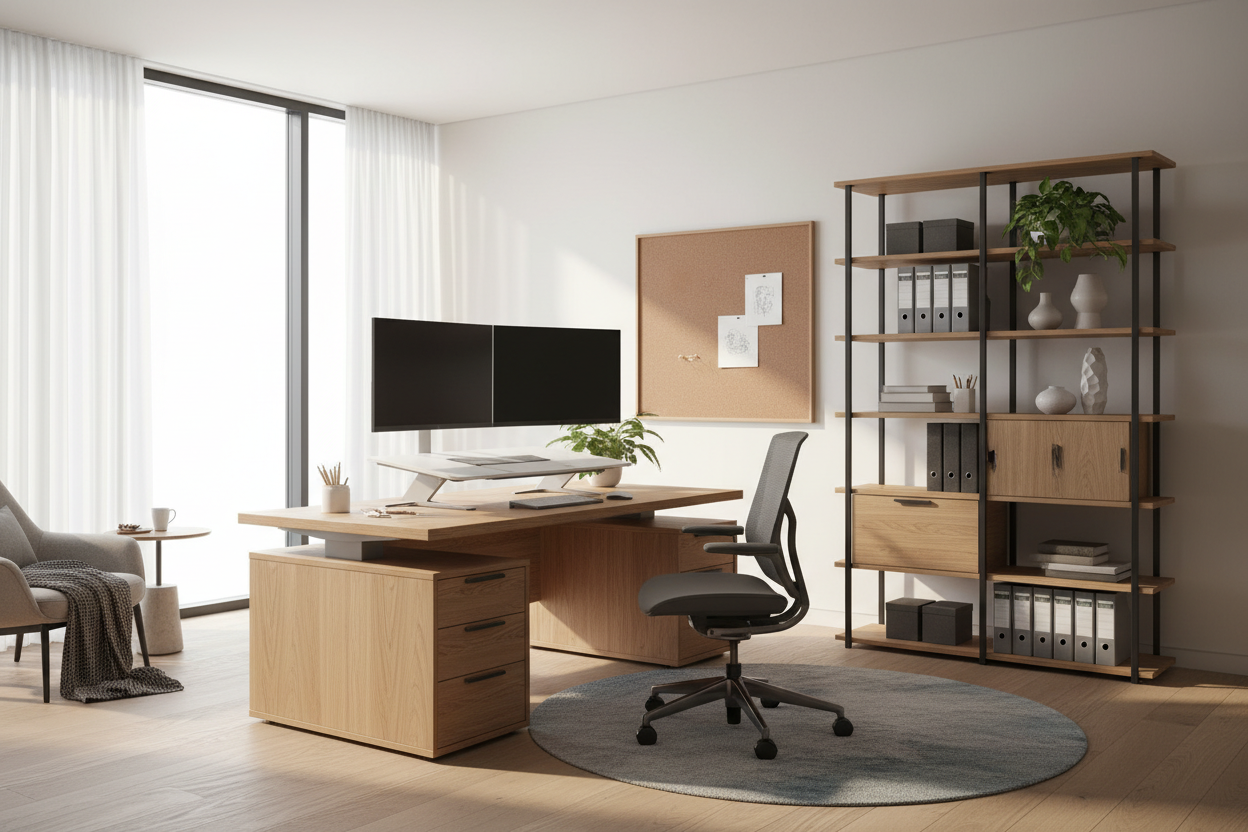
Working from a dining table or a cramped corner of the bedroom is a recipe for physical fatigue and mental clutter. The environment you inhabit dictates the quality of your output. When you set out to create home office interiors, you are doing more than just placing a desk against a wall; you are engineering a space for focus, efficiency, and professional composure. This guide moves beyond basic functionality to help you curate a workspace that feels permanent, sophisticated, and distinctly yours.
Quick Decision Guide: The Essentials
If you are rushing to purchase furniture or clear a room, pause and consider these non-negotiables first. These are the pillars of a functional workspace.
- Ergonomics Over Aesthetics: Always prioritize a chair with adjustable lumbar support and seat depth over a trendy velvet accent chair.
- Desk Depth: Aim for a minimum depth of 30 inches if you use multiple monitors to prevent eye strain.
- Lighting Layers: Never rely solely on overhead pot lights. You need task lighting for the desk and ambient light to soften contrast.
- Acoustics: Hard surfaces create echoes. Incorporate rugs or upholstered furniture to dampen sound for clearer video calls.
Zoning and Layout Strategy
When clients ask me how to create home office layouts that feel expansive, I start with the "Command Position." Ideally, you should never face a wall. Positioning your desk to face the door (but not directly in line with it) reduces subconscious anxiety and establishes authority.
If you are tight on square footage and wondering how to make home office setups work in a multipurpose room, use area rugs to visually delineate the "work zone" from the "living zone." A console table behind a floating desk can also act as a functional partition.
Selecting the Anchor Piece: The Desk
The desk is your focal point. For a luxury look, avoid particle board with cheap laminate edges that peel over time. Look for solid wood or high-grade wood veneers with solid banding.
Material Matters
Walnut and oak offer warmth and hide dust better than glass or high-gloss lacquer. However, be mindful of the writing surface. Heavily grained wood looks stunning but requires a leather desk blotter if you frequently write on paper. If you are making home office plans for a smaller room, consider a desk with a "modesty panel" if it floats in the room, or open legs if it faces a wall to keep the visual weight light.
The Chair: An Investment in Health
The perfect home office revolves around the chair. Do not be seduced by the mid-century modern replica that looks beautiful but offers zero spinal support. Look for a "synchro-tilt" mechanism, which allows the backrest and seat to move in a specific ratio, keeping your feet on the floor while you recline. The upholstery should be breathable—mesh or high-quality leather is superior to synthetic PU leather, which traps heat.
Lighting and Ambiance
Tips for setting up a home office often overlook lighting temperature. Aim for 3000K to 4000K LED bulbs. Anything warmer (2700K) induces sleepiness; anything cooler (5000K+) feels like a clinical hospital. Position your task lamp on the opposite side of your dominant hand to eliminate shadows while writing.
Lessons from My Own Projects
I want to share a specific realization from my own home workspace renovation. I initially fell in love with a stunning, reclaimed wood desk with a raw, textured finish. It photographed beautifully.
However, after two weeks of actual work, I realized two things: First, the texture was so rough that my optical mouse kept skipping, forcing me to buy a specialized gaming pad that ruined the aesthetic. Second, and more annoyingly, the matte black metal legs showed every single speck of dust and dog hair. I spent more time Swiffering those legs than I did filing paperwork. Now, when I advise clients on how to create an office, I steer them toward satin finishes and smooth writing surfaces. Practicality must coexist with beauty, or you will resent the furniture you bought.
Conclusion
Designing a workspace is about respecting your own time and craft. By investing in quality materials, prioritizing light, and respecting ergonomics, you elevate your daily routine. Don't just fill a room with furniture; curate a space that invites you to do your best work.
Frequently Asked Questions
How do I create a home office in a small bedroom?
Focus on verticality. Use wall-mounted shelving above the desk to clear floor space. A "secretary desk" that folds up when not in use is also a brilliant solution for concealing clutter in multipurpose rooms.
What is the most important budget priority?
Always spend the bulk of your budget on the chair. You can work effectively on an inexpensive table, but a cheap chair can cause long-term physical injury. It is the most critical tool in your office.
How do I reduce clutter without many drawers?
If you prefer a minimalist Parsons-style desk without storage, use a mobile pedestal file cabinet. It can roll under the desk or serve as a printer stand, keeping the desktop surface pristine.

Leave a comment
This site is protected by hCaptcha and the hCaptcha Privacy Policy and Terms of Service apply.