

















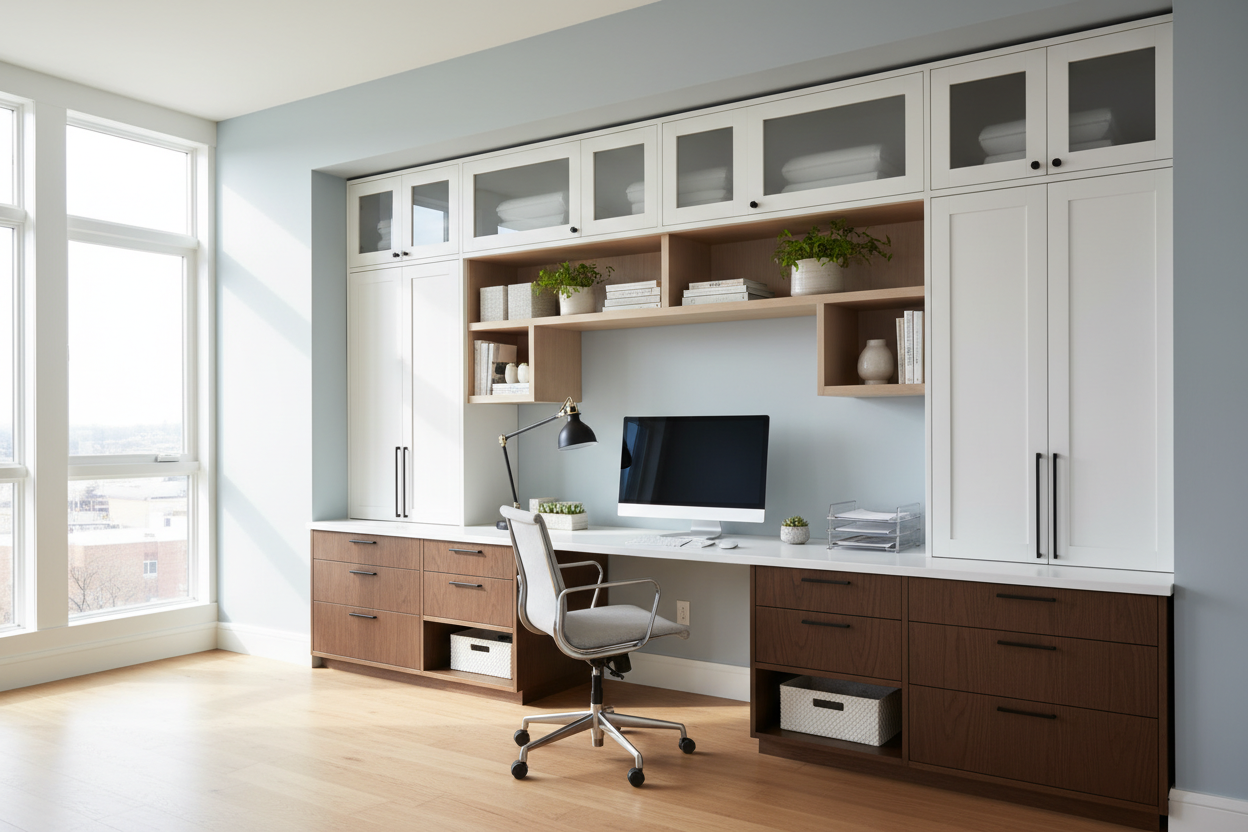
One of the most persistent challenges in residential design is creating a workspace that feels integrated rather than imposed. We often see home offices that look temporary—a collection of mismatched legs and surfaces that clutter the visual field. The solution often lies in a surprisingly accessible place, provided you know how to manipulate the components. A well-planned cabinet desk ikea configuration allows you to mimic high-end custom millwork without the five-figure price tag associated with bespoke joinery.
Key Considerations for Your Build
Before driving to the warehouse, review these critical factors to ensure your setup mimics professional design standards rather than a temporary fix:
- System Depth: Distinguish between standard desk depth (approx. 24 inches) and kitchen cabinet depth (24 inches) versus shallow storage (15 inches) to ensure ergonomic legroom.
- Countertop Material: Opt for solid wood or thick veneer over honeycomb paper fill to prevent sagging over time.
- Base Stability: Ensure the cabinet units can support the dead load of the desktop plus the live load of monitors and equipment.
- Cable Management: Plan for internal routing behind drawers before installation to maintain a clean silhouette.
Structuring the Foundation: Beyond the Basic Setup
When clients ask for an ikea desk and cabinet combination, they usually envision the standard Alex drawer units. While functional, acting as a designer means looking at the catalog as a kit of parts rather than finished goods. To achieve a sophisticated, permanent aesthetic, I often steer clients toward the kitchen systems (Sektion or Metod) rather than office specific lines.
By utilizing kitchen base cabinets, you gain robust hardware and customizable fronts. This allows you to select door styles that match the architectural details of your home—shaker, slab, or beadboard—anchoring the desk into the room’s design language rather than letting it float awkwardly.
The "Credenza Desk" Layout
For executive offices or multi-purpose living spaces, the goal is often to disguise the utility of the desk. An ikea credenza desk layout achieves this by creating a low, long profile. This involves placing two cabinet banks on either side of a knee-hole space and topping the entire run with a continuous surface.
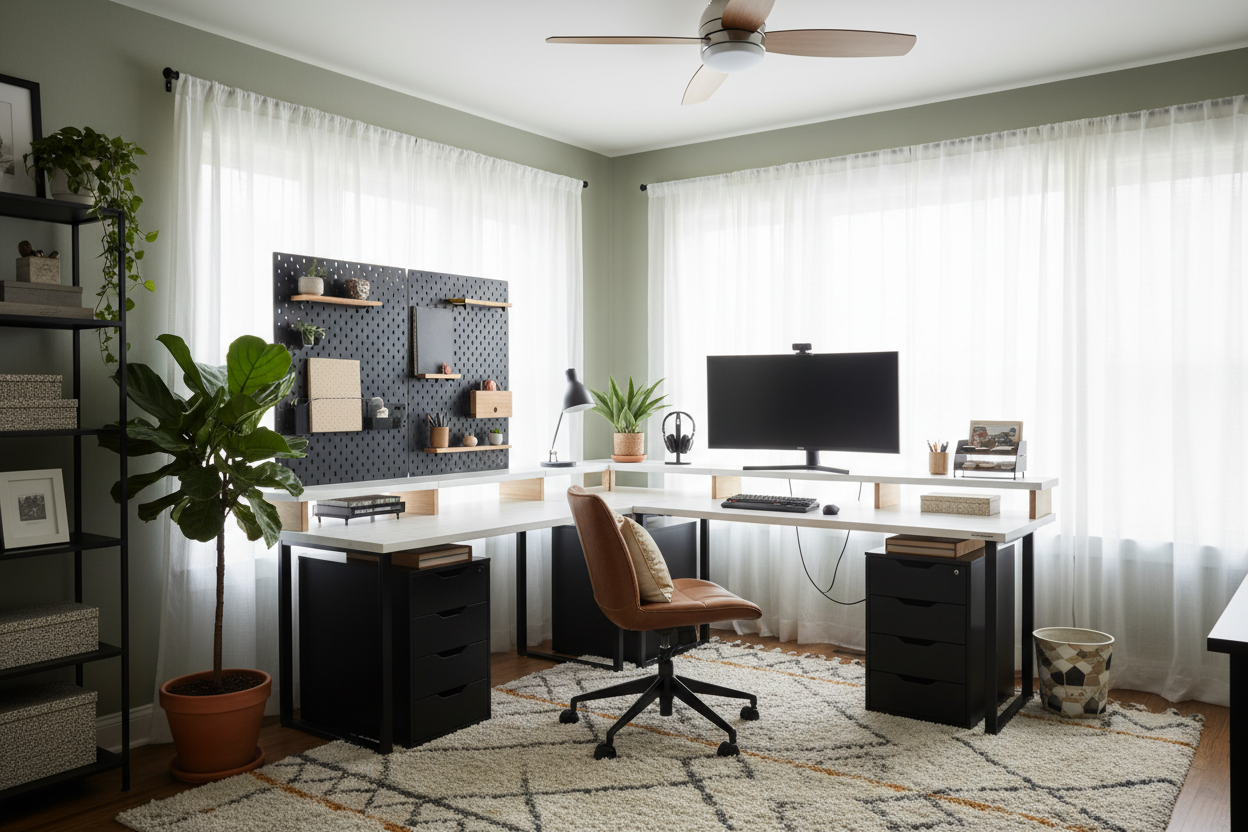
This linear approach creates visual elongation, making the room feel wider. It also provides substantial closed storage, which is essential for maintaining a minimalist "clean desk" policy. If space allows, creating an L-shaped return using a lower cabinet run can offer a secondary surface for printers or reference materials, keeping the primary work zone clutter-free.
Materiality and Visual Weight
The difference between a "hack" and a design feature is often the countertop. Avoid the lightweight Linnmon tops if you are aiming for luxury. Instead, source a butcher block (like the Karlby) or even a custom piece of quartz or stone. The tactile experience of a cold stone or warm, solid wood surface under your wrists elevates the daily work experience significantly. Furthermore, adding a "filler" strip between the cabinet top and the countertop can create a shadow line, a subtle detail often found in high-end Italian furniture.
Lessons from My Own Projects
I want to share a specific hurdle I encountered while designing a 10-foot workspace for a client in a pre-war apartment. We used a long span of walnut veneer over two white cabinets. Visually, it was stunning. However, three months later, the client called me about a "bowing" effect in the center.
I learned the hard way that particleboard-core countertops, even the high-quality ones, have a limit to their tensile strength over wide spans. We hadn't accounted for the weight of dual monitors sitting exactly in the middle of the unsupported span. The fix was unpolished but effective: we installed a heavy-duty steel angle iron (stiffener) underneath the back edge of the desk, hidden from view. It straightened the top instantly. Now, whenever I spec this setup, I insist on a center support leg or a wall-mounted cleat if the span exceeds 30 inches. It’s the invisible engineering that keeps the design looking pristine.
Conclusion
Designing a workspace with modular components is about seeing potential beyond the instruction manual. By carefully selecting your cabinet bases, investing in a quality surface, and paying attention to proportions, you can create a workspace that offers both the functionality of a command center and the beauty of custom furniture. It is time to stop treating your desk as a temporary utility and start designing it as a permanent asset to your home.
Frequently Asked Questions
Can I paint the laminate cabinets to match my wall color?
Yes, but preparation is key. You must use a high-adhesion shellac-based primer (like BIN) before applying your topcoat. Without this specific primer, standard latex paint will scratch off the slick laminate surface within weeks.
What is the ideal height for a cabinet desk setup?
Standard desk height is between 29 and 30 inches. Kitchen cabinets are typically 30 inches tall before the countertop is added, which can result in a desk that is too high for ergonomic typing. You may need to cut the toe-kick bases down or use a height-adjustable chair to compensate.
How do I hide the gap behind the cabinets if I have baseboards?
If you push the cabinets flush against the wall, the baseboard will create a gap. The professional solution is to scribe the cabinet side panels to fit the profile of the baseboard, or install a "countertop overhang" at the back deep enough to clear the baseboard, allowing the top to touch the wall while the cabinets sit forward.


Leave a comment
This site is protected by hCaptcha and the hCaptcha Privacy Policy and Terms of Service apply.