




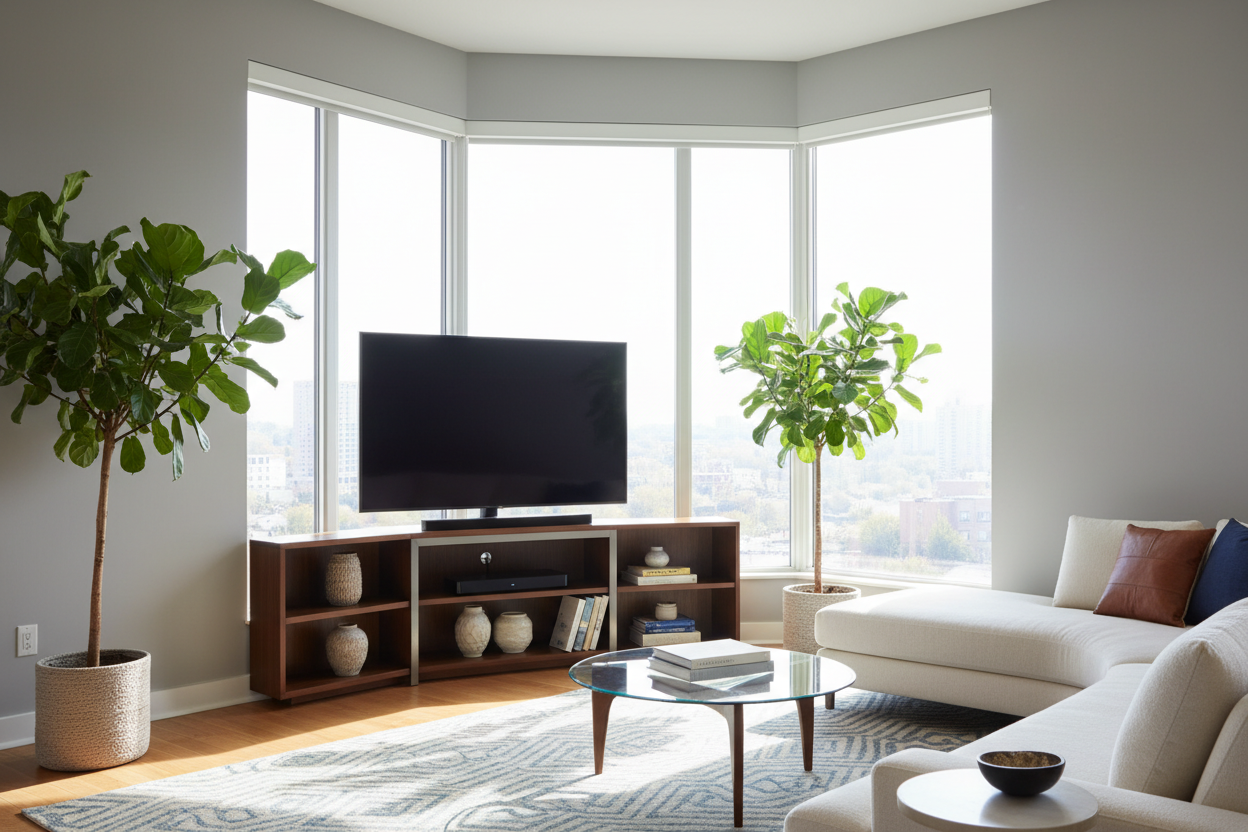
Have you ever walked into a living room where a beautiful fireplace dictates the entire layout, leaving absolutely nowhere logical to place the screen? It is one of the most common design dilemmas in North American suburban homes. You end up angling a standard media console against a flat wall, creating a black hole of dead space behind it. That is exactly where corner television stands prove their worth. They utilize negative space efficiently, but buying the wrong one can quickly make a room feel cramped and dated. In this guide, we will break down how to measure for a corner unit, choose the right materials, and seamlessly integrate it into your existing decor.
Quick Decision Guide
- Measure the depth, not just the width: A corner tv stand grows exponentially deeper as it gets wider. Always tape the triangular footprint on your floor before buying.
- Match the scale of the room: A large corner entertainment center works in a vaulted family room, but a minimalist corner tv stand is better suited for an apartment.
- Prioritize closed storage: Corner units naturally draw the eye. A corner tv cabinet with doors hides visual clutter like cables and gaming consoles.
- Check the viewing height: The center of your screen should sit at eye level when seated, typically around 42 inches from the floor.
Space Planning & Layout Fundamentals
Understanding the Triangular Footprint
The geometry of a corner console for tv is deceiving. Unlike flat-wall consoles, a triangle corner tv stand requires significant depth to accommodate the width of a modern flat screen. If you are looking for a solid wood corner tv stand for a 65 inch tv, the front edge of that cabinet will sit quite far out into the room. For smaller spaces, look for small corner television stands with a truncated back (a pentagon shape rather than a true triangle). This allows the piece to sit deeper into the corner while still providing enough surface area for the television base.
Traffic Flow and Seating
When placing a corner tv stand living room layout, consider the traffic flow. Ensure there is at least 36 inches of clearance between the edge of the tv table corner and the nearest piece of furniture. Because the screen is angled, it naturally dictates a diagonal seating arrangement. A sectional sofa or a pair of swivel chairs often pairs perfectly with a corner tv wall unit, allowing everyone in the room to have a comfortable viewing angle without straining their necks.
Material & Build Quality
Solid Wood vs. Engineered Options
Material dictates both the longevity and the visual weight of your furniture. A solid wood corner tv stand—especially in dense hardwoods like oak or a rich walnut corner tv stand—offers incredible durability and anchors a traditional or transitional room beautifully. However, these pieces are heavy and an investment. If you are browsing cheap corner tv stands, you will likely encounter particleboard with paper veneers. While budget-friendly, these materials are highly susceptible to moisture damage and peeling edges, especially in homes with kids or pets. A great middle ground is a high-quality MDF core with a real wood veneer, which provides the look of a wood corner tv cabinet without the warping risks of solid lumber.
Style & Coordination
Avoiding the 'Outdated' Look
Historically, the corner tv armoire or the massive corner tv hutch with doors dominated the 90s and early 2000s. Today, heavy, towering corner entertainment units can make a room feel claustrophobic. To keep the look current, opt for a modern corner entertainment unit with clean lines, low profiles, and mixed materials. A contemporary corner tv stand with a metal base and slatted wood doors adds texture without visual bulk. If your style leans traditional, a corner tv credenza with subtle molding and brass hardware feels timeless rather than dated.
Designer's Honest Take
Early in my career, I specified a massive, custom corner cabinet entertainment center for a client's open-concept family room. It was a beautiful piece on paper. The problem? I completely underestimated the sheer depth required to house a 65-inch screen diagonally. The cabinet jutted out an extra 16 inches further than I anticipated, completely disrupting the natural walkway to the adjacent kitchen. I learned the hard way that a large corner tv unit eats up floor space aggressively. Now, I never order a corner media stand without physically taping out its exact dimensions on the floor. Also, a practical warning: the deep, dark triangle of floor space behind a corner unit is a magnet for dust bunnies and lost pet toys. If you can, choose a corner console table for tv with taller legs so you can easily run a vacuum underneath.
Frequently Asked Questions
What size corner TV stand do I need for my television?
Your corner tv stand should be at least 2 to 4 inches wider than the total width of your TV screen. Remember that TVs are measured diagonally, so a 55-inch TV is actually about 48 inches wide. You would need a corner tv cabinet that is at least 50 inches wide across its front edge.
Are corner TV stands outdated?
The bulky, towering corner tv armoire with doors is largely a thing of the past. However, low corner tv stands and modern tv corner units are very much in style. The key is choosing pieces with sleek silhouettes, modern finishes, and open or slatted shelving that feels light and intentional.
How do I manage cables in a corner entertainment center?
Because corner units sit away from the wall at the back, cables can easily become a tangled, visible mess. Look for a corner tv stand with storage that features dedicated cord management cutouts in the back panel. Use zip ties or cable sleeves to bundle wires together before dropping them down behind the corner cabinet under tv.

Leave a comment
This site is protected by hCaptcha and the hCaptcha Privacy Policy and Terms of Service apply.