

















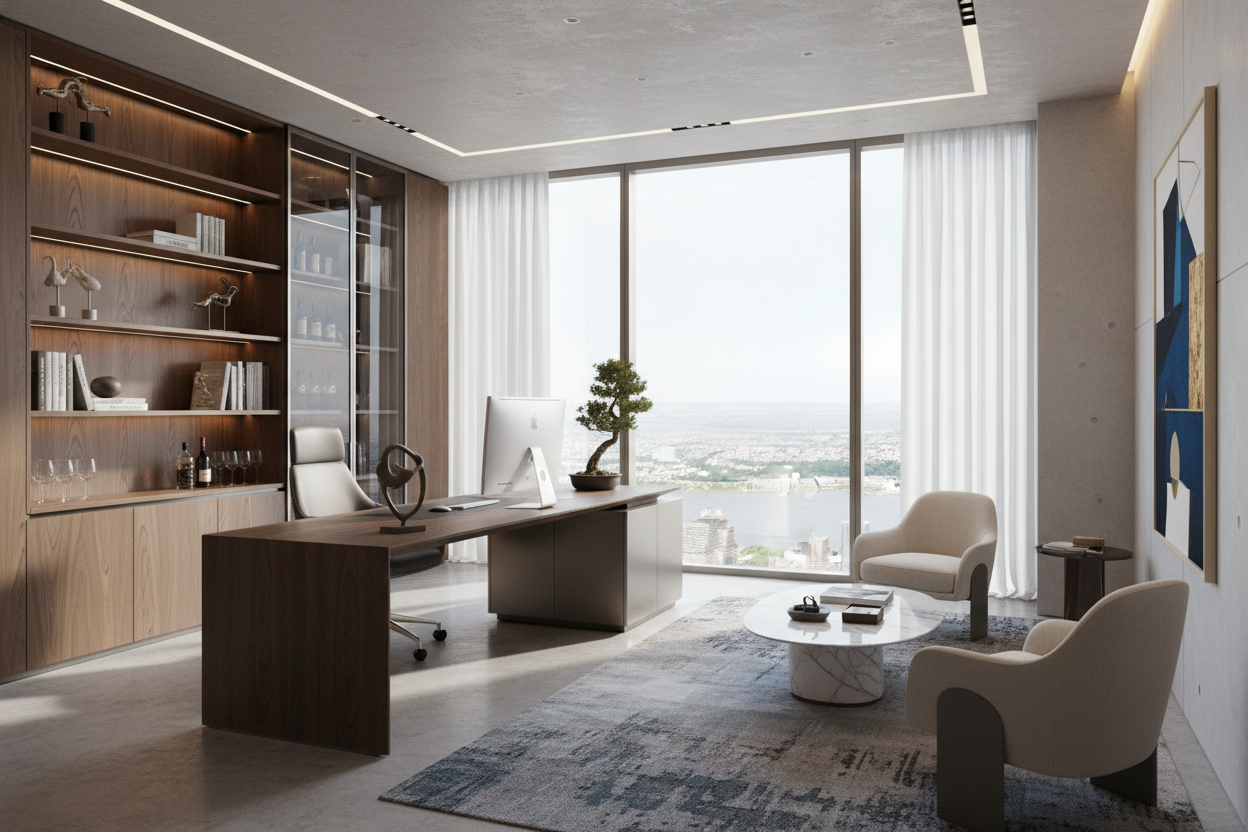
The corner office has evolved. It is no longer just about square footage or a mahogany fortress; it is about curating an environment that facilitates high-level decision-making while projecting a distinct personal brand. As a designer, I often see executives struggle to balance the 'wow factor' with actual livability. They want cool ceo offices that impress investors, yet they end up with spaces that feel cold, sterile, or surprisingly uncomfortable for an eight-hour workday.
True executive design bridges the gap between a showroom aesthetic and a functional command center. Whether you are outfitting a corporate suite or a high-end home workspace, the goal is to create a room that speaks before you even say a word.
Key Elements for Executive Design
- The Anchor Piece: A desk with substantial visual weight (solid walnut, stone, or architectural glass) to establish authority.
- Ergonomic Luxury: Seating that blends high-performance mechanics with premium upholstery (top-grain leather or wool blends).
- Layered Lighting: A mix of ambient, task, and accent lighting to eliminate glare and set the mood.
- Zoned Layouts: Distinct areas for deep work, casual consultation, and formal meetings.
- Acoustics: Soft textures (rugs, drapery, acoustic panels) to dampen echo and ensure privacy.
The Desk: More Than a Surface
In cool executive offices, the desk is the protagonist. However, selecting one requires looking beyond the silhouette. While a floating glass desk looks sleek in a photo, it offers zero wire management. For a CEO, cable chaos is a dealbreaker.
I recommend looking for desks with integrated cable channels and modesty panels. Material-wise, consider the tactile experience. A live-edge wood slab adds warmth and organic texture, grounding the room. Conversely, a marble top projects permanence and luxury, though it can be cold to the touch during early mornings. Ensure the desk depth is at least 30 inches; you need room for a monitor, a laptop, and the negative space required to think.
Seating: The Intersection of Status and Support
Buying a chair purely for its look is the most common pitfall in executive design. The classic mid-century ribbed leather chair is iconic, but if it lacks lumbar adjustment and tilt tension, your back will regret it by 2 PM.
Look for 'hybrid' executive chairs. These models hide advanced ergonomic machinery—synchro-tilt mechanisms and seat depth adjustments—underneath high-quality leather or velvet. The visual language should match the desk; if the desk is heavy and traditional, the chair should have enough volume to not look dwarfed. If the desk is minimal and architectural, a streamlined, high-back profile works best.
Lighting and Ambiance
Overhead fluorescent lighting is the enemy of sophistication. To achieve that 'cool' factor, you must treat the office lighting plan like a residential living room. Start with a statement chandelier or pendant to define the vertical space. Complement this with a heavy, architectural desk lamp for focused work.
Pay attention to color temperature. A warm 2700K to 3000K bulb creates a welcoming, confident atmosphere. Anything cooler (4000K+) tends to feel clinical and anxious.
My Personal Take on Cool CEO Offices
Lessons from My Own Projects
I once worked with a tech CEO who insisted on a 'minimalist concrete bunker' aesthetic—polished concrete floors, concrete walls, and a steel desk. It looked incredible, exactly like the Pinterest board he showed me. But two weeks after installation, he called me in a panic.
The issue wasn't the look; it was the acoustics and the temperature. The hard surfaces made every phone call echo like he was in a cathedral, and the steel desk sucked the heat right out of his arms. We had to retrofit the space with a large, plush wool rug, install acoustic ceiling baffles (painted to blend in), and add a leather desk blotter just to make the surface usable. It taught me a valuable lesson I tell every client now: Textures aren't just visual; they are acoustic and thermal regulators. Don't sacrifice the sensory experience for a stark photo op.
Conclusion
Designing cool ceo offices is an exercise in restraint and quality. It requires investing in materials that age well and layouts that respect your workflow. By focusing on tactile materials, proper lighting, and ergonomic truths, you create a space that doesn't just look powerful—it empowers you to lead.
Frequently Asked Questions
How do I make a small office look like a CEO suite?
Scale is everything. Do not clutter the room with small furniture. Choose one large, impressive desk and a substantial rug. A single large piece of art makes a bolder statement than a gallery wall in a small space.
What is the best color palette for an executive office?
Deep, saturated colors tend to project authority. Navy blues, charcoal grays, and forest greens work well. Monochromatic schemes (layering shades of beige or grey) create a sophisticated, modern luxury feel.
Is a sofa necessary in an executive office?
If space permits, yes. It provides a 'breakout zone' for reading or less formal meetings. It signals that you are approachable and willing to step away from the barrier of the desk to collaborate.

Leave a comment
This site is protected by hCaptcha and the hCaptcha Privacy Policy and Terms of Service apply.