

















We have all faced the classic home office dilemma: the tug-of-war between a minimalist aesthetic and the messy reality of daily work. You want the clean lines of a parson’s table, but you need a place for your stapler, files, and charging cables. This is where a well-designed desk with drawer and shelf becomes the anchor of a functional workspace. It is not just about storage; it is about architectural balance within a room. When selected correctly, this piece of furniture bridges the gap between a utilitarian workstation and a curated interior element.
Quick Decision Guide: Key Features to Look For
- Visual Weight: Ensure the shelving unit doesn't overpower the room; look for open-back shelves to maintain an airy feel in smaller spaces.
- Drawer Glides: Test for full-extension metal ball-bearing slides. Wood-on-wood glides often stick during humid months.
- Vertical Clearance: If you use dual monitors, verify that the integrated shelves do not obstruct your screen setup.
- Material Core: Avoid hollow-core particle board for shelves intended to hold heavy books; look for solid wood or high-density MDF with a quality veneer.
Analyzing Material Quality and Construction
As a designer, the first thing I inspect on a computer desk with shelves and drawers is the joinery and finish. In a showroom, a desk might look pristine, but the structural integrity is defined by what is underneath. For a piece that combines storage with a work surface, the connection points are critical.
If you are leaning towards a desk with drawers and shelves made from solid wood, pay attention to the grain direction on the drawer fronts. It should be continuous. For more budget-friendly options using engineered wood, inspect the edge banding. If you can see a dark line where the veneer meets the edge, it is a sign of lower quality that will likely peel with friction over time.
Ergonomics Meets Aesthetics
The layout of your storage significantly impacts your workflow. A computer desk with drawer and shelves often places storage vertically (a hutch style) or laterally (side returns).
The Vertical Approach
Desks with overhead shelving maximize vertical real estate, making them ideal for tight urban apartments. However, be wary of the "cave effect." If the shelves are too deep or low, they can cast a shadow on your workspace, requiring you to invest in high-quality under-shelf task lighting.
The Lateral Approach
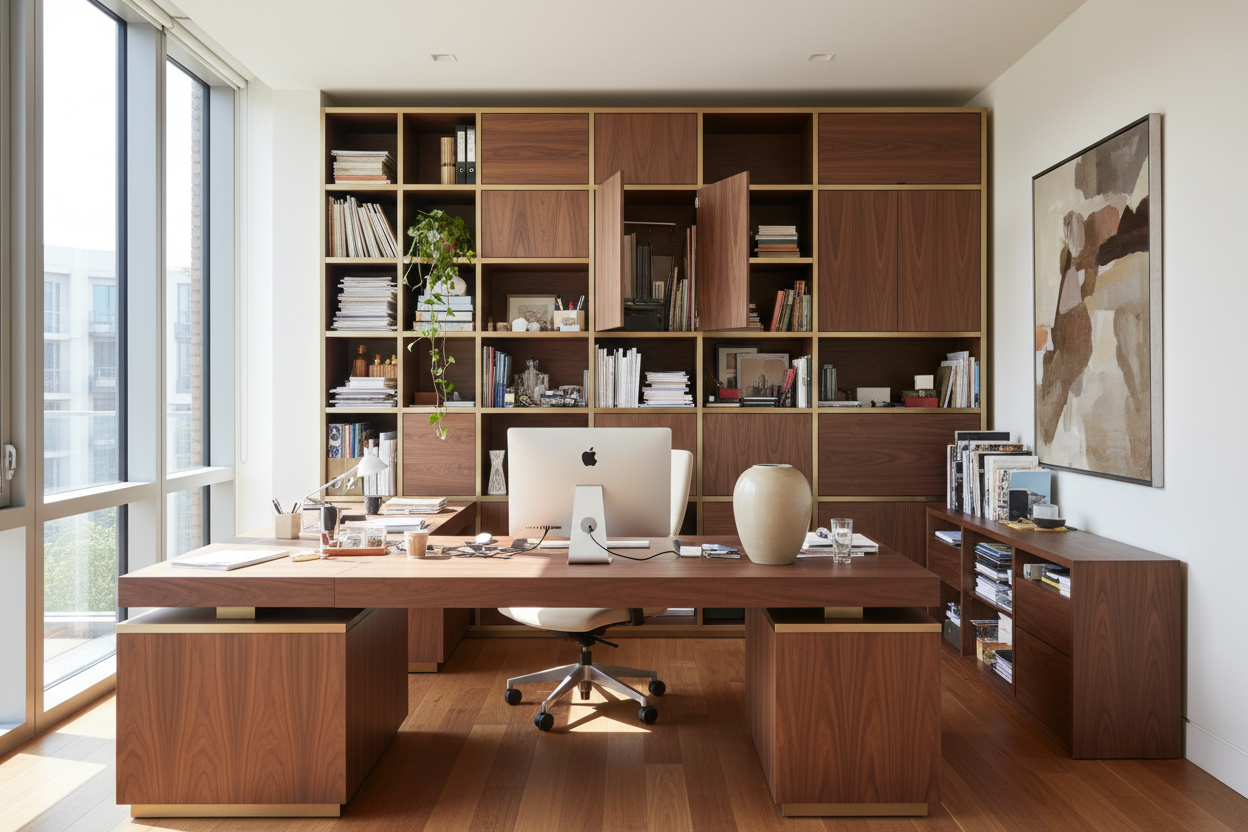
A desk with drawers shelves situated to the side (often an L-shape or pedestal design) offers a more executive silhouette. This layout preserves your line of sight and allows for better ambient light flow. From a styling perspective, this is often the superior choice for open-concept living areas as it feels less like a "cubicle" and more like bespoke furniture.
Styling the Open Shelves
The danger of open shelving is visual clutter. To achieve a luxury look, follow the 60/40 rule: 60% functional items (books, binders) and 40% decorative negative space or objects (sculptural bookends, a small succulent). Use uniform storage bins in the open slots to hide miscellaneous tech accessories while maintaining a cohesive color palette.
My Personal Take on the Desk With Drawer and Shelf
I want to share a lesson from a project I worked on in a converted loft last year. I specified a stunning mid-century modern desk with an attached open shelving unit for a client. It looked incredible in the renderings.
However, once installed, we realized a functional flaw that rarely gets mentioned in product descriptions: cable management visibility. Because the shelves were open-back (which we chose for aesthetics), every single cord from the printer and hard drives stored on those shelves was visible against the white wall behind it. It looked chaotic.
We had to retroactively install a false back panel and use color-matched cable raceways to hide the mess. Now, when I recommend a desk with open shelving to clients, I always check the cable routing path first. If you plan to put electronics on those shelves, make sure the design accounts for where the wires go, or be prepared to get creative with cable clips. Also, a quick note on drawers: shallow "pencil drawers" are often useless for modern work. Ensure at least one drawer is deep enough for a standard laptop charger—that is the real clutter culprit.
Conclusion
Investing in the right desk is about forecasting your future needs. A high-quality desk with integrated storage should reduce your visual noise, not add to it. By focusing on durable materials, checking the drawer depth, and planning your cable management, you can create a workspace that invites productivity rather than stress.
Frequently Asked Questions
How much weight can a typical desk shelf hold?
This varies wildly by material. A solid wood shelf can usually support 40-50 lbs easily, while particle board shelves on budget desks may start to bow after 15-20 lbs. Always check the manufacturer's load rating, especially if you plan to store textbooks or heavy equipment.
Is a desk with a hutch outdated?
Not necessarily, but the heavy, ornate hutches of the 90s are. Modern desks with hutches feature slim profiles, mixed materials (like metal frames with wood shelves), and floating elements that feel contemporary and light rather than bulky.
How do I clean the drawers and shelves without damaging the finish?
Avoid harsh chemical sprays. For wood or veneer, a damp microfiber cloth followed by a dry one is best. For the interior of drawers, which often accumulate dust and graphite, a vacuum with a brush attachment is safer and more effective than wiping the debris into the corners.

Leave a comment
This site is protected by hCaptcha and the hCaptcha Privacy Policy and Terms of Service apply.