

















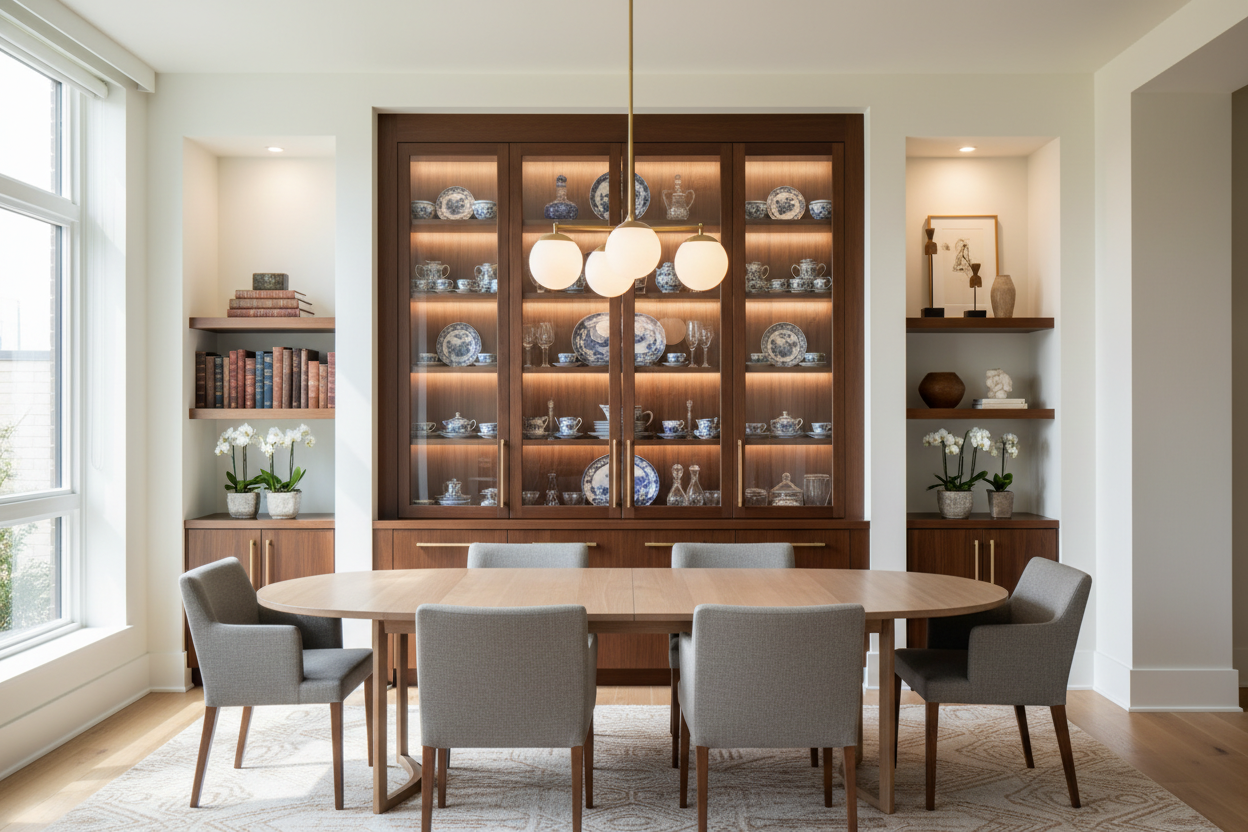
I remember walking into a client's dining room last year. She had inherited her grandmother's complete porcelain set—delicate teacups with gold leaf, dinner plates with hand-painted florals—and it was all stacked in cardboard boxes in her basement. 'I'm afraid to use it,' she told me, 'and I hate that no one can see it.' That's the exact moment a china cabinet display case becomes essential. It's not just furniture; it's the solution that lets you protect what you love while making it a daily part of your home's story.
Quick Takeaways
- Look for 1/4-inch tempered glass doors and adjustable interior shelving for true versatility.
- Integrated LED lighting is non-negotiable for showcasing details; warm white (2700-3000K) works best.
- Leave at least 36 inches of walkway clearance between the cabinet and your dining table.
- Style by grouping items in odd numbers and varying heights to create visual rhythm.
Why Your China Deserves More Than Just Storage
Think about your favorite pieces. Maybe it's the wedding china you use twice a year, or the vintage teacups you've collected from travels. When they're tucked away in a sideboard or a kitchen cabinet, they're just things. A display case transforms them into a curated collection. I've seen it in over 200 homes: the moment someone installs a proper china display cabinet, their relationship with those pieces changes. They become part of the room's decor, a conversation starter, and a source of pride. Functionally, it's about protection from dust and accidental bumps. Aesthetically, it's about intentionality. You're not just storing dishes; you're designing a focal point that adds depth, texture, and personal history to your dining space.
What Designers Actually Look For in a Display Hutch
When I'm specifying a unit for a client, I run through a mental checklist of non-negotiables. First, glass quality. Doors should have tempered glass at least 1/4-inch thick—it's safer and reduces distortion. Next, lighting. Ambient room light isn't enough. You need integrated, directional lighting to eliminate shadows and make colors pop. For example, a china cabinet display case with integrated lighting with warm LED strips (2700-3000 Kelvin) is ideal. Shelving must be adjustable. Fixed shelves limit you to one type of item. Adjustable ones let you display a tall vase one year and a set of low dessert plates the next. Finally, construction. Look for solid wood or plywood frames, not particleboard. Dovetail or mortise-and-tenon joints in the carcass indicate durability. The hardware—hinges and shelf pins—should feel substantial, not flimsy.
Display Cabinet Styles That Work in Real Homes
Your home's architecture should guide your choice. In traditional or transitional North American homes with detailed moldings, a classic china display hutch in cherry or oak with raised-panel doors feels right at home. For modern spaces with clean lines, I often recommend a simpler silhouette. A white display case with glass doors and minimal framing can make a collection feel fresh and bright. Space is always a concern. In condos or smaller dining areas, a corner unit is a genius solution. I've used corner display case collections to turn dead space into a stunning feature. Remember scale: a massive 84-inch hutch will overwhelm a 10x12 dining room. A 60-inch wide, 72-inch tall cabinet is often a better fit, leaving proper breathing room.
Professional Styling Techniques for Your China Display
Arranging your collection is where the magic happens. The goal is curated, not cluttered. Start by emptying the cabinet. Group items by color, pattern, or type. I use the 'rule of threes'—grouping items in odd numbers is more pleasing to the eye. Create height variation: place a cake stand or a stack of books under a smaller item to lift it. Layer pieces from back to front, with taller items in back. Don't line everything up in a single row; stagger items to create depth. For a full deep-dive into my process, I shared more specifics in a post on how designers display china. Leave negative space. Every shelf doesn't need to be packed full. A few well-placed pieces with room around them look far more intentional.
Common Mistakes to Avoid With Display Hutches
I've also seen what goes wrong. The most common error is overcrowding. When every inch is filled, the eye has nowhere to rest, and individual pieces get lost. Another is ignoring lighting. A dark cabinet is a sad cabinet. If yours doesn't have built-in lights, add battery-operated LED puck lights immediately. People often choose a cabinet that's out of proportion with the room—too big and bulky, making the space feel cramped. Finally, maintenance. Glass doors show fingerprints and dust easily. A quick wipe with a microfiber cloth and a vinegar-water solution weekly keeps it looking pristine. Neglecting this turns your beautiful display into a cloudy distraction.
Making Your Final Decision: A Designer's Checklist
Before you commit, walk through this list. Measurements: Note the width, depth, and height of your space. Don't forget ceiling height and doorways it must pass through. Style Integration: Does the wood tone complement your flooring and table? Does the style (traditional, modern, farmhouse) align with your room? Functionality: Does it have the lighting and shelf adjustability you need? Budget: Factor in delivery and assembly if needed. A well-chosen display case is an investment that lasts decades. For a final pre-purchase review, my checklist post on what to look for before buying covers all these points in detail.
Personal Experience
In my own home, I have a mid-century modern display hutch for my collection of Scandinavian pottery. I love how it looks, but I'll be honest: the very shallow depth (only 12 inches) was a mistake. It's perfect for plates and bowls but doesn't fit any of my wider serving platters. I had to get a separate, deeper cabinet for those. It taught me to always check interior depth, not just exterior dimensions, against your largest items.
FAQ
How much clearance do I need around a display hutch?
Leave at least 36 inches of walkway between the cabinet and other furniture, like your dining table. This ensures comfortable movement and prevents a cramped feeling.
Can I use a display case in a room other than the dining room?
Absolutely. I've placed them in living rooms to display books and artifacts, in hallways as statement pieces, and even in home offices for awards and collectibles.
What's the best way to clean the glass?
Use a solution of one part white vinegar to four parts water in a spray bottle and a microfiber cloth. Avoid ammonia-based cleaners, which can damage certain finishes over time.
Is tempered glass really necessary?
Yes, especially in homes with children or pets. If it breaks, tempered glass crumbles into small, dull pieces instead of sharp, dangerous shards.

Leave a comment
This site is protected by hCaptcha and the hCaptcha Privacy Policy and Terms of Service apply.