





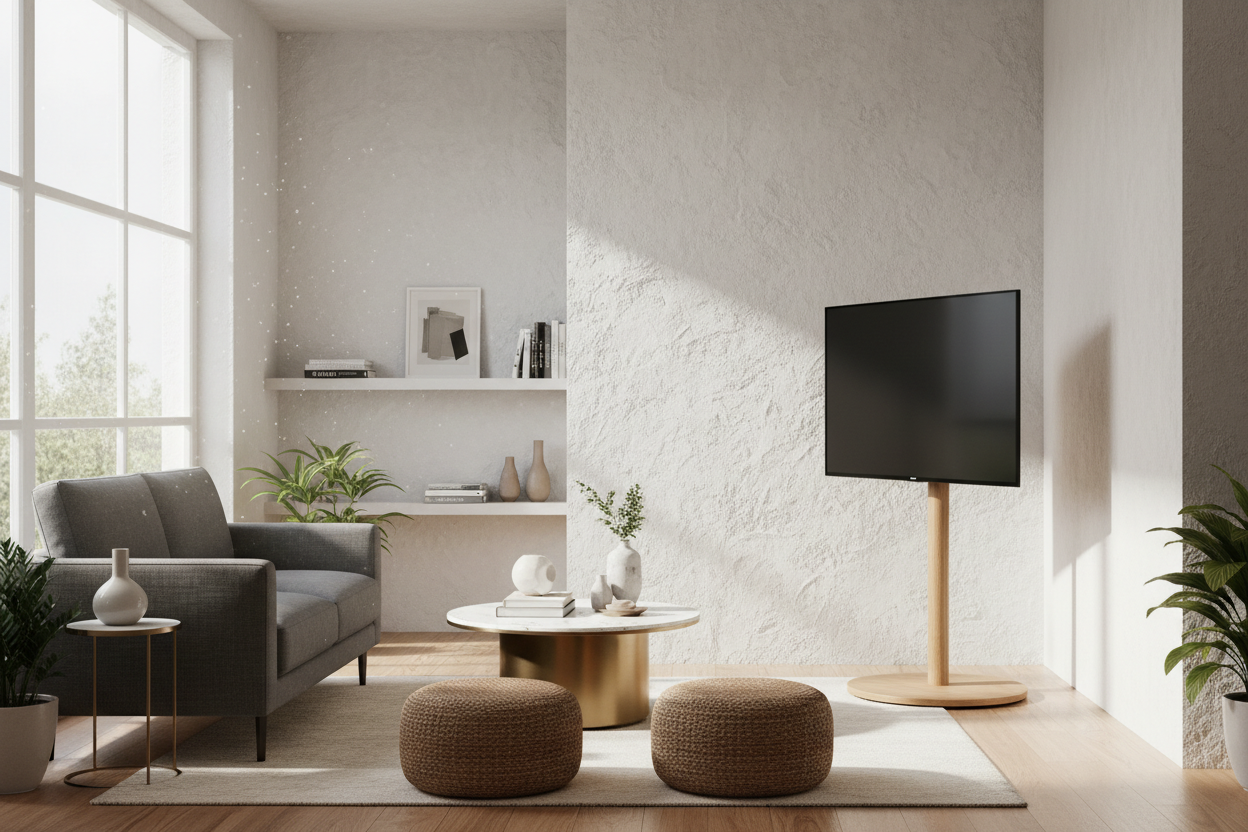
I spent three hours measuring my new studio apartment, trying to figure out how a standard media console could coexist with a sofa and a bed without making me shimmy sideways like a crab. The math just didn't work. Every console I looked at was at least 18 inches deep and five feet long—a literal coffin for my floor space.
That is when I stopped looking at boxes and started looking at columns. Switching to a wood pedestal tv stand was the single best layout decision I made. It turned a crowded corner into a functional zone and finally let my living room breathe.
- Ditching the bulky console saves roughly 6 to 10 square feet of floor space.
- Wooden pedestals look like high-end furniture, unlike their cold, industrial metal cousins.
- The built-in swivel is a lifesaver for open-concept layouts.
- Cable management requires a bit of creativity since there are no drawers.
The Problem With Defaulting to a Giant Rectangle
We are still living with furniture rules from 1998. Back then, TVs were heavy CRT boxes that needed deep, reinforced shelving to keep from crushing your floorboards. Today, your screen is basically a piece of glass that weighs less than a bag of groceries. There is no logical reason to park a massive 60-inch wide wooden box underneath it.
When you buy traditional bulky TV stands, you are paying for storage you probably do not need. Most of us have moved to streaming sticks and digital libraries. That giant rectangle is just a dust magnet that blocks your baseboards and makes your room feel five feet smaller than it actually is.
Wait, What Even Is a Pedestal Stand?
Think of it like a minimalist easel or a sleek floor lamp that happens to hold a 55-inch screen. It is a single vertical column anchored by a heavy, stable base. But here is the catch: you have to get the material right. If you buy the cheap black metal versions from a big-box tech store, your living room will feel like a corporate conference room or a trade show booth.
A wooden version changes the entire vibe. It feels intentional and warm. I have argued before about why a solid wood TV stand is worth it, and that applies double here. When the furniture is this stripped-down, the quality of the grain is the only thing people notice. You want walnut or oak, not a laminate that peels at the edges after six months.
The Unexpected Perks of Ditching the Cabinet
The biggest win isn't just the floor space; it is the flexibility. A pedestal allows you to tuck the TV into weird architectural corners that a rectangular console could never handle. My apartment has a strange 45-degree wall near the window, and the pedestal sits there perfectly without looking like a mistake.
Most of these stands also pivot. I can angle the screen toward the sofa when I am binging a series, then swivel it 90 degrees toward the kitchen so I can follow a recipe or watch the news while making coffee. You can't do that with a 150-pound sideboard.
But Where Do I Hide All My Stuff?
This is the part where I have to be honest: you lose the drawers. If you have a massive collection of physical DVDs, three gaming consoles, and a tangled mess of controllers, a pedestal will test your patience. You have to edit your gear.
I solved this by mounting my Apple TV and my surge protector directly to the back of the television using heavy-duty command strips and velcro ties. The wires run down the back of the wooden column, hidden from sight. If you absolutely need extra storage, a small decorative basket on the floor nearby handles the stray remotes and controllers just fine.
How to Keep It From Looking Like a Presentation Easel
Because a pedestal is so vertical, it can look a bit 'floating' if you don't ground it. You need to anchor the visual weight so it feels like part of the room's architecture. I usually suggest placing a large potted plant—like a fiddle leaf fig or a tall snake plant—right next to the base. It softens the lines of the screen.
If you decide to style a black wood TV stand, consider the lighting. A slim floor lamp on the opposite side of the TV creates a balanced 'V' shape that draws the eye away from the tech and toward your decor. It makes the setup look like a curated corner rather than just a place where you watch Netflix.
My Personal Experience
I originally bought a gorgeous mid-century sideboard for my TV. It was expensive, heavy, and took up half my wall. Every time I walked past it, I bumped my shin. After six months, I sold it and bought a walnut pedestal stand. The room instantly felt twice as large. My only mistake? Buying a stand with a base that was too light. The first time my cat zoomed past it, the screen wobbled enough to give me a heart attack. Always check the base weight—you want something heavy and low-profile.
FAQ
Is it stable enough for homes with kids or pets?
Yes, provided you choose one with a heavy steel or solid wood weighted base. Many also come with a discreet safety tether you can screw into a wall stud for extra peace of mind.
Will it hold a 75-inch TV?
Most pedestals are rated for 32 to 65 inches. If you go bigger, the center of gravity gets sketchy. Always check the VESA pattern and weight limit before buying.
How do you hide the power strip?
I tuck mine into a small cable management box behind the base or strap it to the back of the TV itself. Never let the power strip dangle; it ruins the minimalist aesthetic immediately.


Leave a comment
This site is protected by hCaptcha and the hCaptcha Privacy Policy and Terms of Service apply.