




I once bought a 'statement' cabinet that turned out to be so massive I had to take my front door off its hinges just to get it inside. For the first week, my living room felt less like a home and more like a jewelry kiosk at a dying mall. It was cold, imposing, and frankly, a little weird. I had fallen into the trap of buying for the dream version of my house, rather than the one I actually live in.
But here is the thing: large display cases don't have to feel like retail fixtures. When you scale them correctly and stop treating them like a museum storage unit, they actually anchor a room better than a dozen small, cluttered shelves ever could. It is about balancing the 'store' vibes with real-life warmth.
- Measure for the baseboard, not just the wall width.
- Leave at least 36 inches of walking clearance in front of the glass.
- Use negative space—don't pack every shelf to the brim.
- Anchor the unit to the wall; massive glass is heavy and dangerous if it tips.
The 'Retail Store' Fear is Real (But Avoidable)
We have all seen it: that one house where a massive glass cabinet sits in the corner, filled with dust-covered porcelain and looking like it belongs in the lobby of a bank. It is the 'Retail Store' fear, and it keeps a lot of people from buying the storage they actually need. The reason those cases look like kiosks is usually the lighting and the lack of texture.
If your cabinet is just glass and cold metal, it is going to look clinical. To avoid this, I always look for pieces that incorporate wood grains or matte finishes. You want the furniture to feel like furniture, not a display box. If you already have an all-glass unit, the trick is what you put inside. Mix in organic shapes—think ceramic bowls, old books, or even a trailing plant. These elements break up the hard lines of the glass and make the piece feel integrated into your living space rather than an exhibit you are afraid to touch.
Scale Matters: How to Measure for a Big Display Case
Before you hit 'buy' on a big display case, grab a roll of blue painter's tape. Don't just trust your eyes. Tape out the footprint on the floor, but also tape the height on the wall. I've seen 84-inch cabinets look tiny in a loft but absolutely swallow an 8-foot ceiling in a standard ranch home. You need at least 6 to 10 inches of breathing room between the top of the case and the ceiling, or the room will feel like it is collapsing on you.
Also, check your baseboards. Most people measure wall-to-wall, but if you have thick 1-inch baseboards, your cabinet won't sit flush. This creates a weird gap behind the unit that swallows mail, dust, and cat toys. Either choose a unit with a recessed base or be prepared to trim your molding. Finally, check the 'swing' area. If those glass doors need 24 inches to open fully, make sure they aren't going to smack into your coffee table every time you want to grab a wine glass.
Cornering the Market: When You Don't Have Flat Walls
Not everyone has an expansive, 12-foot blank wall just waiting for a massive cabinet. In fact, in most older homes, walls are chopped up by radiators, windows, and poorly placed outlets. If you are struggling to find a spot for a wide unit, stop looking at the flats and start looking at the corners. A dedicated corner display case can often hold just as much as a standard cabinet while taking up half the 'visual' space.
Corners are dead space anyway. By filling one with a tall, glass-fronted unit, you are drawing the eye upward and making the room feel taller. It is a classic decorator trick for small apartments. Instead of a bulky piece of furniture jutting out into the walkway, the corner unit tucks away, providing that much-needed storage without the footprint of a traditional sideboard.
Styling Rules for a Display Case Long and Wide
If you have a display case long enough to span a whole wall, the biggest mistake you can make is organizing it like a grocery store shelf. You don't want rows of items all at the same height. It is boring, and it highlights the 'retail' aspect we are trying to avoid. Instead, think in 'clusters.' Group items in odd numbers—three vases here, five books there.
Vary your heights. If you have a tall pitcher, pair it with a low, flat bowl. Use the 'Z' pattern: place a heavy visual object on the top left, then the middle right, then the bottom left. This keeps the eye moving across the entire width of the cabinet. If you are using it for functional storage—like dishes—stack some plates vertically and others horizontally. It sounds simple, but that bit of chaos makes the cabinet look like a curated part of a home rather than a sales floor.
Negative Space is Your Best Friend
The secret to a high-end look is knowing when to stop. You do not need to fill every square inch of glass. In a massive cabinet, negative space (the empty air around your objects) acts like a frame. It tells the viewer that the items inside are actually important. If you cram the shelves full, it just looks like a cluttered closet that you happened to put glass doors on. Aim for about 30% empty space on every shelf. It feels like a waste of storage, but it is the difference between 'elegant' and 'hoarder.'
Placement Ideas That Won't Block Your Flow
Deciding where to put a big glass display case is mostly about traffic flow. You never want a massive piece of furniture to be the first thing you 'hit' when you walk into a room. It should be a destination, not an obstacle. I love placing oversized cases in dining room alcoves. It turns the cabinet into a built-in feature rather than a standalone box.
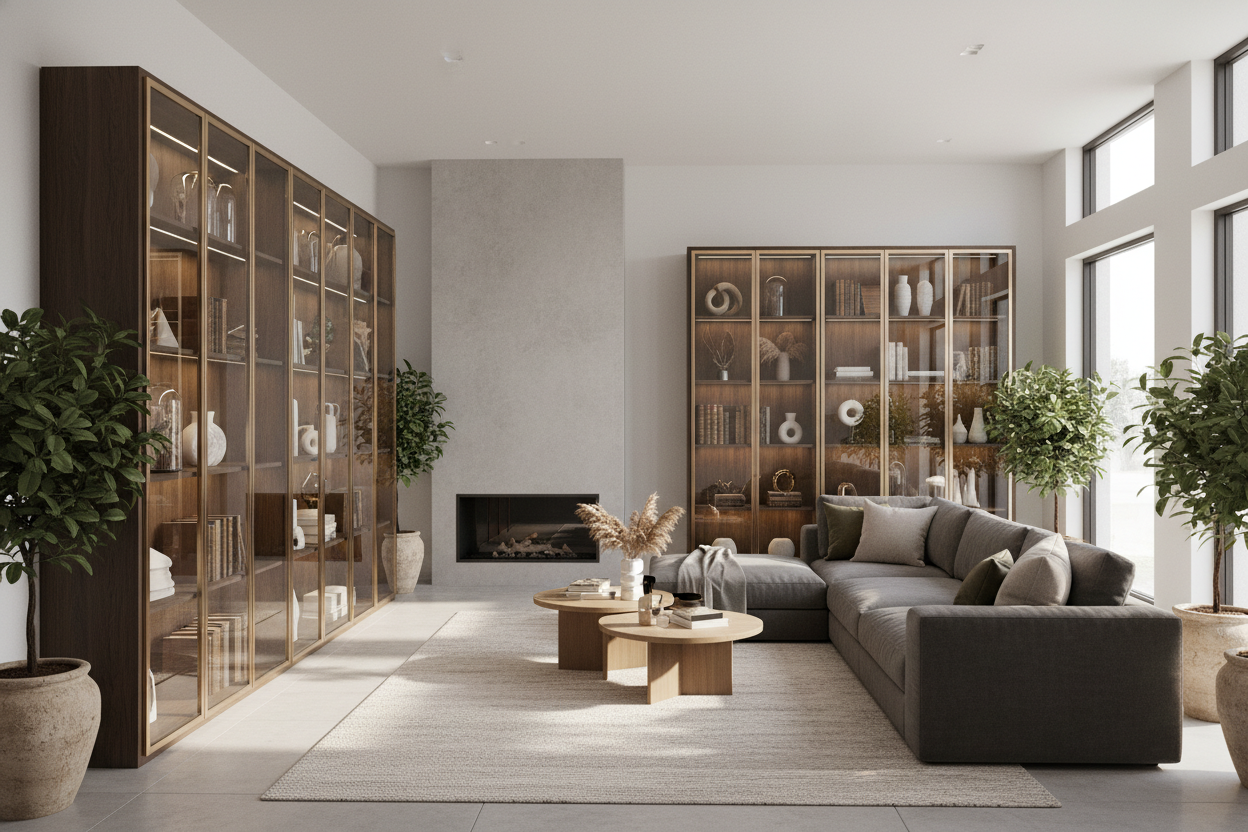
Another pro move is flanking. If you have a fireplace, putting two identical large cases on either side creates incredible symmetry. It makes the room feel grounded and architectural. Avoid putting them directly opposite a window if you can; the glare on the glass will be so intense during the day that you won't even be able to see what is inside. If you must put it near a window, invest in some museum-grade glass cleaner to keep the streaks at bay.
A Massive Cabinet Setup I Actually Recommend
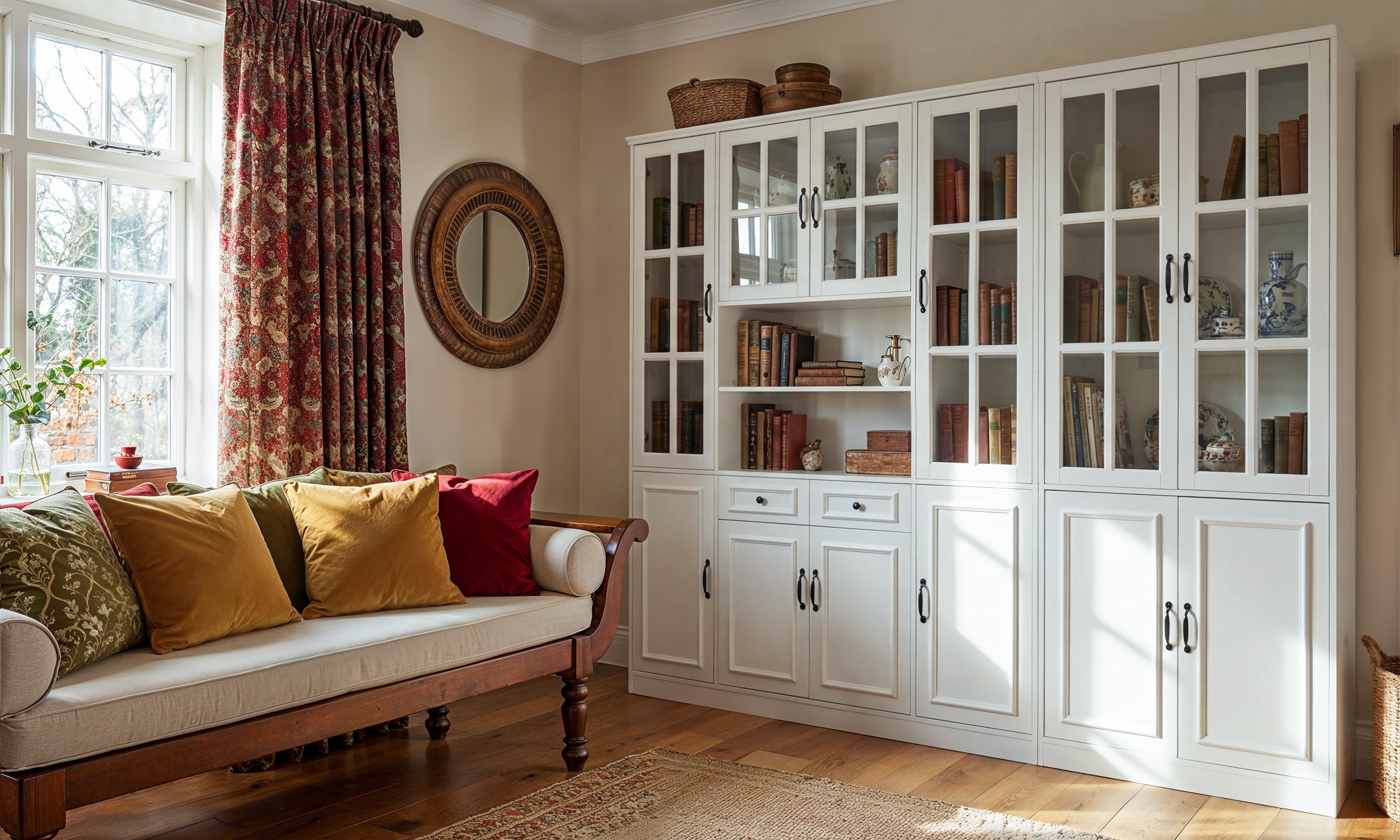
If you're looking for a piece that actually works in a residential setting without looking like a museum, I'm a huge fan of this large display cabinet corner shelf. What makes this specific setup work is the combination of closed and open storage. It isn't just a wall of glass; it has sections that break up the visual weight.
The corner integration is the real winner here. It allows you to wrap the furniture around the room's architecture. This is much less intimidating than a single, flat 7-foot wall of glass. It feels more like a custom library build-out. Plus, the shelf depths are actually practical for things like coffee table books or larger decor pieces, which is a rare find in the world of flimsy, shallow display units.
Personal Experience: The Weight of My Mistakes
I once bought a cheap, oversized laminate case from a big-box store because I wanted the look without the price tag. Within a month, the weight of my 'light' collection of vintage glass caused the middle shelf to bow like a sad smile. It was 1/2 inch particle board, and it just couldn't handle the span. Now, I tell everyone: if you are going big, you have to go sturdy. Look for tempered glass shelves that are at least 6mm thick and a frame made of solid wood or heavy-gauge metal. If you save money on the structure, you will pay for it when the glass shatters.
FAQ
How do I keep the glass from looking streaky?
Skip the blue spray. Use a mixture of one part white vinegar to four parts distilled water and a high-quality microfiber cloth. The distilled water is key—tap water has minerals that leave those annoying white spots behind.
Do I really need to anchor a large case to the wall?
Yes. No exceptions. Large glass cases are front-heavy, especially when the doors are open. A single heavy drawer pulled out or a child climbing a shelf can bring the whole thing down. Use a steel anti-tip kit, not the plastic zip-tie ones.
Will a large case make my small room feel tiny?
Surprisingly, no. Because glass is transparent, your eye travels 'through' the furniture to the wall behind it. This can actually make a room feel larger than a solid wood cabinet would. Just don't overstuff the shelves, or you'll lose that transparency.


Leave a comment
This site is protected by hCaptcha and the hCaptcha Privacy Policy and Terms of Service apply.