

















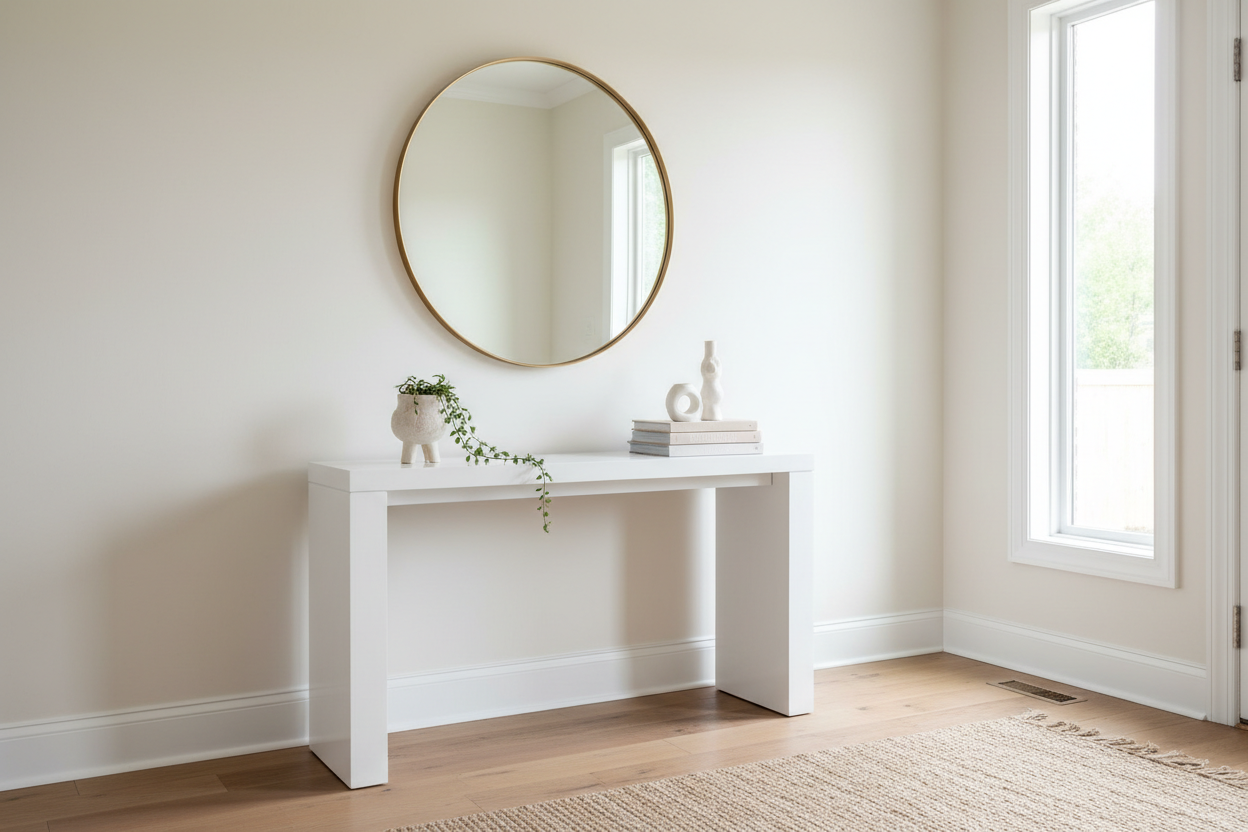
The moment you step through the front door, your home should exhale. That immediate sense of arrival often hinges on a single piece of furniture: the console table. While heavy, dark wood has its place in traditional libraries, the entryway usually demands something lighter, airier, and more forgiving of tight dimensions. This is where entryway tables white in color prove their worth, not just as furniture, but as architectural tools that manipulate light and space.
A white table acts as a visual palette cleanser. It provides a crisp backdrop for daily clutter—keys, mail, sunglasses—while simultaneously reflecting ambient light to make a typically cramped area feel expansive. If you are struggling with a foyer that feels like a tunnel or a landing strip, swapping out a dark, visual-weight-heavy piece for a white alternative is often the most effective, low-renovation solution available.
The Strategic Advantage of Light Furniture
Most hallways lack natural light. Unless you have a grand foyer with transoms and sidelights, you are likely dealing with a space that relies on overhead fixtures. An entrance table white finish works harder than natural wood or black metal in these scenarios. It bounces light rather than absorbing it.
I recall a specific project involving a townhome with a painfully narrow corridor. The owners had a beautiful, but bulky, mahogany chest right at the door. It made the entry feel like a cave. We swapped it for a slender, white lacquered console. The physical footprint changed by only two inches, but visually, the hallway seemed to double in width. The white surface caught the light from the living room beyond, pulling the eye forward rather than stopping it dead at the door. That is the functional power of color psychology in interior design.
Choosing the Right Finish for Your Lifestyle
White is not a monolith; the texture and finish dictate the vibe. A high-gloss lacquer reads modern and glam, perfect for city apartments where you want that sleek, mirror-like quality. Conversely, a chalk-paint or distressed finish fits seamlessly into farmhouse or shabby chic aesthetics. If you have children or pets, a distressed finish is forgiving—a new scratch just looks like added character, whereas a scratch on a high-gloss surface demands immediate attention.
Balancing Warmth: The White and Wood Combination
One valid concern homeowners have is that white furniture can feel sterile or clinical, reminiscent of a doctor's office rather than a cozy home. This is easily mitigated by introducing contrast. A white and wood entry table offers the best of both worlds: the brightness of a painted frame with the warmth and organic texture of a timber top.
This two-tone approach grounds the piece. The wood top ties in with hardwood floors or stair banisters, creating a cohesive architectural flow, while the white base keeps the look buoyant. This style is particularly effective in Scandinavian or coastal interiors, where the goal is "effortless" design. The wood top also serves a practical purpose: it hides dust and water rings from flower vases better than a pure white surface.
Styling Your Foyer Table
Once you have selected your foyer table white base, the styling creates the personality. Because the table itself is neutral, you have permission to go bolder with your accessories without overwhelming the space. The lack of visual noise from the furniture allows your decor to sing.
Start with a focal point above the table. A large mirror is the standard companion for white tables because it amplifies the light-reflecting properties mentioned earlier. If you prefer art, choose a piece with a white mat to visually connect with the table below.
Anchor the surface using the rule of three. For example, place a tall lamp on one side to add height. On the opposite side, group a low tray for keys and a medium-height vase with greenery. The white table makes greens pop vividly—eucalyptus, ferns, or simple branches look sculptural against a pale background. If your table has a bottom shelf, use large woven baskets. These add texture (wicker, rattan, or seagrass) which warms up the white paint and provides essential hiding spots for shoes or umbrellas.
Navigating Narrow Spaces
In tight quarters, the profile of the table matters as much as the color. A demilune (half-moon) shape is excellent for preventing hip-bumps in high-traffic zones. The curved edges soften the linear nature of a hallway. If you need a rectangular profile, look for "skinny" consoles that are 10 to 12 inches deep. Because the table is white, it will blend into white baseboards or light-colored walls, minimizing its intrusion into the walking path.
Floating white consoles are another sophisticated option. By mounting the table to the wall and eliminating the legs entirely, you reveal more floor space. The eye perceives the continuous floor running to the wall, which tricks the brain into thinking the room is larger than it is. This is a favorite trick in modern minimalist design.
Maintenance and Longevity
Fear of dirt often deters people from white furniture, especially in high-traffic zones like an entryway. However, modern paints and sealants have made this largely a non-issue. A semi-gloss or satin finish is simple to wipe down with a damp cloth. Unlike dark wood, which shows every speck of dust the moment after you clean it, white hides dust surprisingly well. The main enemy is scuff marks, but these are easily remedied with a melamine sponge (magic eraser) or a quick touch-up pen.
Selecting the right material for the tabletop is crucial if you are heavy-handed with keys. If you opt for a painted top, use a tray to catch hard objects. Alternatively, the previously mentioned white and wood entry table or a table with a glass or marble top can withstand the daily drop-zone abuse better than painted soft wood.
Your entryway sets the expectation for the rest of the home. It doesn't need to be grand, but it needs to be intentional. A white table offers a clean slate, a bright welcome, and a versatile foundation that adapts as your style evolves.
Frequently Asked Questions
How do I stop a white entry table from looking too plain?
Texture is the key to avoiding a flat look. Incorporate contrasting materials like a woven runner, a ceramic lamp with a rough finish, or a metallic tray. Mixing these elements adds depth and prevents the white surface from feeling sterile.
What is the ideal height for a foyer table?
Standard console tables range from 30 to 36 inches high. For a balanced look, the table should be roughly level with the lower back of a sofa if placed behind one, or comfortable enough to drop keys on without bending down significantly when placed against a wall.
Can I mix a white table with dark wood floors?
Absolutely. The high contrast between dark floors and a white table is striking and elegant. To bridge the gap, consider using a decor element that contains both tones, or add a rug with lighter colors to soften the transition between the dark floor and the bright furniture.

Leave a comment
This site is protected by hCaptcha and the hCaptcha Privacy Policy and Terms of Service apply.