


















We have all experienced the fatigue of staring at sterile, white walls under harsh fluorescent lighting. It creates a disconnect that stifles creativity and heightens stress. The solution isn't simply buying a potted plant; it requires a fundamental shift in how we view our workspace environment. A well-executed biophilic design office does more than look good—it actively engages with your cognitive functions to improve well-being and productivity.
Key Elements for a Nature-Forward Workspace
- Material Authenticity: Prioritize raw, unsealed woods (like walnut or oak) and natural stone over synthetic laminates to introduce tactile texture.
- Circadian Lighting: meaningful exposure to natural light or color-temperature adjusting bulbs that mimic the solar cycle.
- Organic Silhouettes: Select furniture with curved edges and soft lines rather than sharp, industrial angles to mimic patterns found in nature.
- Layered Vegetation: Utilize a mix of floor plants, desk succulents, and hanging greenery to create depth rather than a singular focal point.
Curating the Right Material Palette
When executing a modern biophilic office design, the tactile experience is just as vital as the visual one. In my years specifying furniture, I’ve found that the biggest impact comes from materials that develop a patina over time.
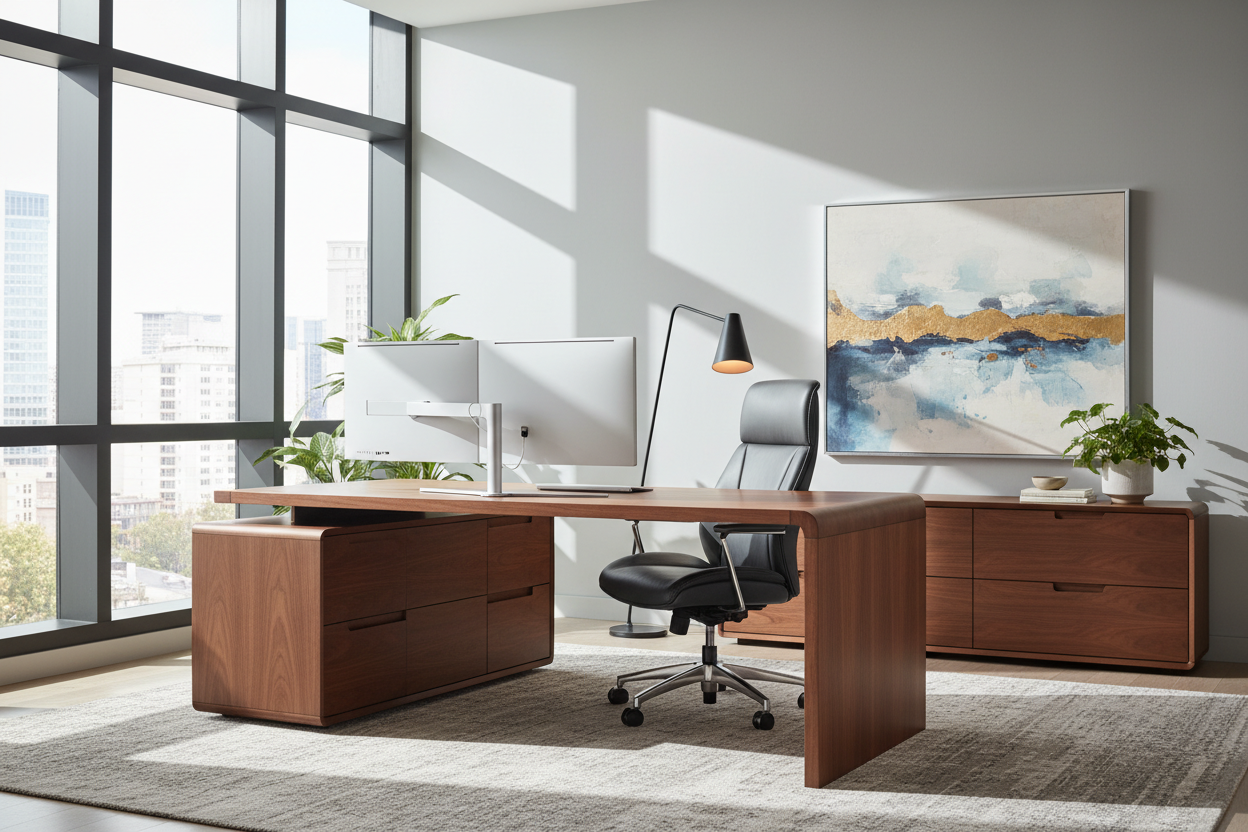
Avoid high-gloss finishes that feel cold to the touch. Instead, look for open-pore wood finishes for your desk and shelving. These surfaces retain the natural grain texture, providing subtle sensory feedback when you touch the surface. For seating, swap synthetic mesh for natural textiles like wool blends or high-quality leather. A nature themed office relies on this material honesty to ground the space.
Spatial Planning and Organic Flow
Biophilic office design is not just about decor; it is about layout. In nature, straight lines are rare. When planning your floor plan, try to orient desks to face outward toward views or light sources, rather than facing a solid wall.
Biomimicry in Furniture Shapes
Incorporating nature inspired office decor goes beyond greenery. Look for furniture that utilizes biomimicry—design elements that mimic biological entities. This could be a rug with a moss-like texture variation or a desk chair with a spine-like support structure. These elements subconsciously signal safety and comfort to the brain, hallmarks of a successful biophilic workplace.
Lighting: The Invisible Material
You cannot have a thriving nature home office without addressing light. Standard 4000K office lighting is often too static. To achieve a natural office design, layer your lighting. Use ambient light to wash the walls, task lighting with warmer tones (2700K-3000K) for your desk, and if possible, maximize window proximity. The play of shadow and light—dappled light, similar to sunlight filtering through trees—adds a dynamic quality that keeps the mind alert.
Integrating Vegetation Without the Clutter
Many homeowners attempt a forest themed office and end up with a cluttered greenhouse. The trick is verticality. Use tall, architectural plants like Ficus or Snake Plants to define corners and improve acoustics. For smaller footprints, a nature-inspired home office benefits from preserved moss walls. They offer the visual and acoustic benefits of a biophilic design in the workplace without the maintenance of irrigation systems.
Lessons from My Own Projects
I learned a hard lesson about biophilic office design examples during a project for a tech startup in Seattle. We installed a massive, active living green wall right next to a series of custom white oak veneer desks. While it looked stunning on installation day, I failed to account for the localized humidity created by the irrigation system.
Within six months, the veneer on the desks closest to the wall began to lift and bubble due to the moisture microclimate. It taught me a crucial lesson I now tell every client: if you want high-density greenery, you must use solid wood or metal furniture nearby. Veneer and laminate simply cannot handle the "breath" of a true biophilic workplace design. Furthermore, the maintenance crew had to interrupt work every Tuesday to prune it, disrupting the very flow we tried to create. Now, I lean heavily toward preserved moss or self-watering planters that require less intrusion.
Conclusion
Creating a nature inspired office is an investment in your mental clarity. By selecting authentic materials, prioritizing organic shapes, and respecting the flow of light, you turn a place of work into a place of growth. Start with one solid wood piece and proper lighting, and let the space evolve naturally.
Frequently Asked Questions
How do I maintain a biophilic office if I have no natural light?
If your space lacks windows, rely on full-spectrum LED grow lights for plants and select low-light species like ZZ plants or Pothos. Additionally, focus heavily on nature themed office design elements like wood textures and stone, which don't require light to provide biophilic benefits.
Is biophilic design expensive to implement?
It can be, but it doesn't have to be. While a full biophilia in the workplace fit-out with living walls is costly, you can achieve the effect by investing in one high-quality solid wood desk and positioning it near a window. Quality over quantity is key.
Can biophilic design work in a small home office?
Absolutely. A nature themed office in a small space should focus on vertical space. Wall-mounted planters, hanging terrariums, and a compact desk with organic curves can make a small room feel airy and connected to the outdoors.

Leave a comment
This site is protected by hCaptcha and the hCaptcha Privacy Policy and Terms of Service apply.