

















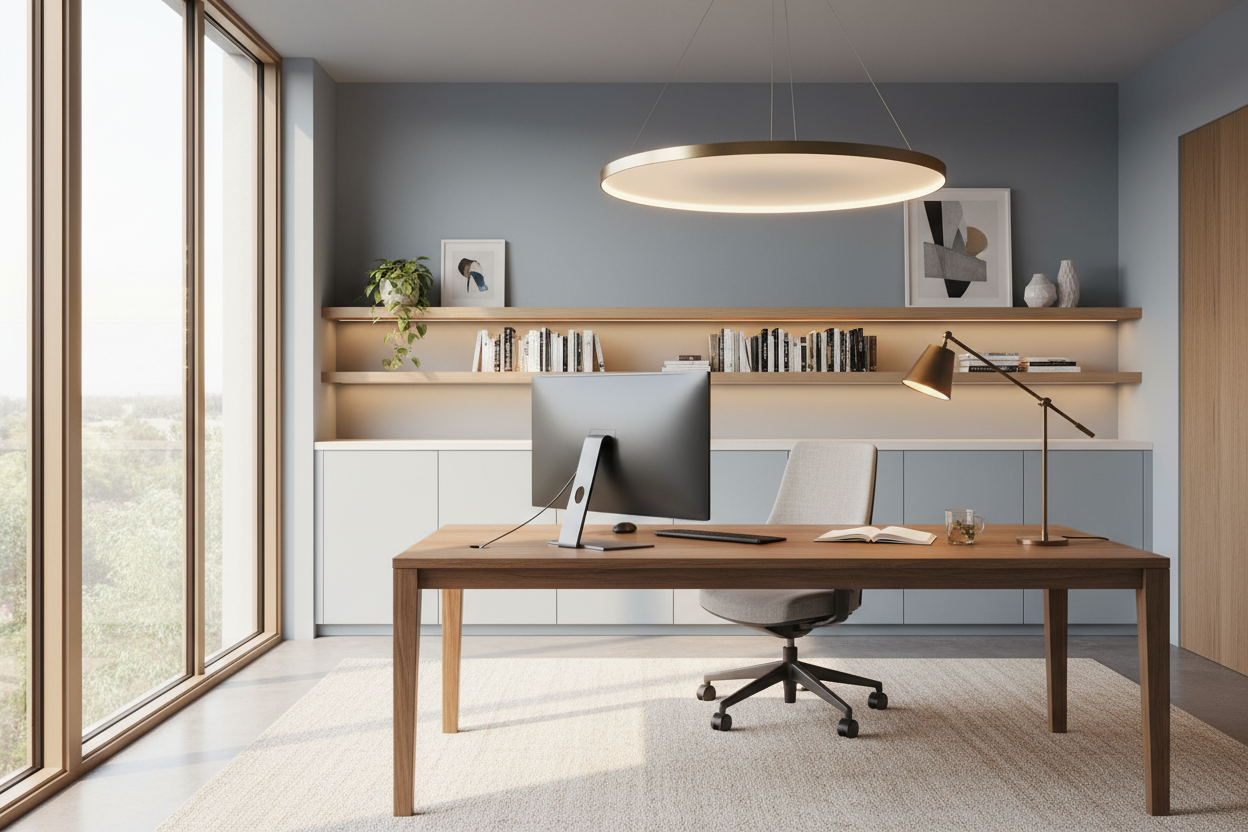
We often blame our 3 PM fatigue on a lack of caffeine or a poor night's sleep, when the real culprit is frequently hanging right above our heads. In my years designing corporate HQs and private home studies, I have found that better office lighting is the single most underrated factor in interior architecture. It is not merely about illumination; it is about sculpting an environment that supports your circadian rhythm while highlighting the textures of your workspace.
Quick Decision Guide: Key Features to Look For
If you are rushing to upgrade your setup, look for these non-negotiable specifications to ensure you are getting the ideal office lighting:
- Color Temperature (Kelvins): Aim for 3500K to 4000K. This mimics neutral daylight, which is the best light for productivity, keeping you alert without the harshness of blue clinical light.
- Color Rendering Index (CRI): Look for a CRI of 90+. This ensures your wood veneers look rich and your paint colors look true, rather than washed out and grey.
- Adjustability: A quality task lamp must have at least two points of articulation (joints) to direct light away from your eyes and onto the work surface.
- Lumens: For a desk lamp, 450-800 lumens is the sweet spot. Anything less causes strain; anything more causes glare.
Layering Light: The Designer's Secret
The most common mistake homeowners make is relying on a single overhead fixture, often colloquially called the "boob light." To achieve a sophisticated look and functional utility, you must employ a layered approach.
1. Ambient Lighting
This is your base layer. In a home office, avoid harsh downlights directly over your chair, as they create unflattering shadows on your face during video calls. Instead, opt for semi-flush mounts or pendant lights with a diffuser to scatter soft light across the ceiling and walls.
2. Task Lighting (The Workhorse)
This is where ergonomics meets aesthetics. When selecting a task lamp, consider the material carefully. A matte finish (powder-coated steel or brushed brass) is superior to chrome or polished glass, which can create distracting specular highlights and glare. The silhouette should be substantial enough to anchor the desk visually but slender enough not to obstruct your monitor view.
3. Accent Lighting
This provides visual relief. LED strip lighting behind a monitor (bias lighting) reduces the contrast between a bright screen and a dark room, significantly lowering eye strain. Alternatively, a small picture light over a bookshelf adds depth and warmth to the room's perimeter.
Positioning for the Best Light for Productivity
Even the most expensive fixture will fail if placed incorrectly. If you are right-handed, place your task lamp on your left side (and vice versa) to prevent your hand from casting shadows across your notebook. Furthermore, ensure the light source is below your eye level to avoid direct retinal burn.
My Personal Take on Better Office Lighting
I learned a hard lesson about finishes on a project in Tribeca a few years ago. I specified a stunning, high-gloss lacquered desk paired with a task lamp that had an exposed bulb design. It looked incredible in the rendering.
However, once installed, the reflection of the bulb on the glossy desk surface acted like a mirror, shooting light straight into the client's eyes. It was unusable. I had to swap the lamp for one with a deep, opaque metal shade and a honeycomb louver to direct the beam strictly downward. It taught me that better office lighting isn't just about the lamp itself—it's about how that light interacts with the surfaces below it. Also, a small detail I always check now: the switch location. If you have to reach behind a monitor or crawl under a desk to turn it on, you won't use it. Look for lamps with capacitive touch bases or switches on the shade itself.
Conclusion
Treating light as an afterthought is a missed opportunity to elevate your workflow and your wellness. By layering your sources and paying attention to color temperature, you transform a utility space into a sanctuary of focus. It is time to turn off the harsh overheads and design a brighter way to work.
Frequently Asked Questions
What is the best color temperature for a home office?
For most workspaces, 4000K (Cool White) is the standard as it promotes alertness. However, if your office doubles as a reading nook in the evening, smart bulbs that can shift to 2700K (Warm White) after 5 PM are an excellent investment.
How do I stop my desk lamp from causing glare on my screen?
Glare is usually caused by light hitting the screen at a direct angle. Position your light source to the side of the monitor, not behind you or directly in front of the screen. Using a lamp with a hooded shade also helps control the light spill.
Is LED lighting better than halogen for offices?
Absolutely. While halogen offers great color rendering, it runs extremely hot, which can be uncomfortable in a small room during summer. Modern LEDs offer high CRI (color accuracy) with zero heat emission and significantly longer lifespans.

Leave a comment
This site is protected by hCaptcha and the hCaptcha Privacy Policy and Terms of Service apply.