

















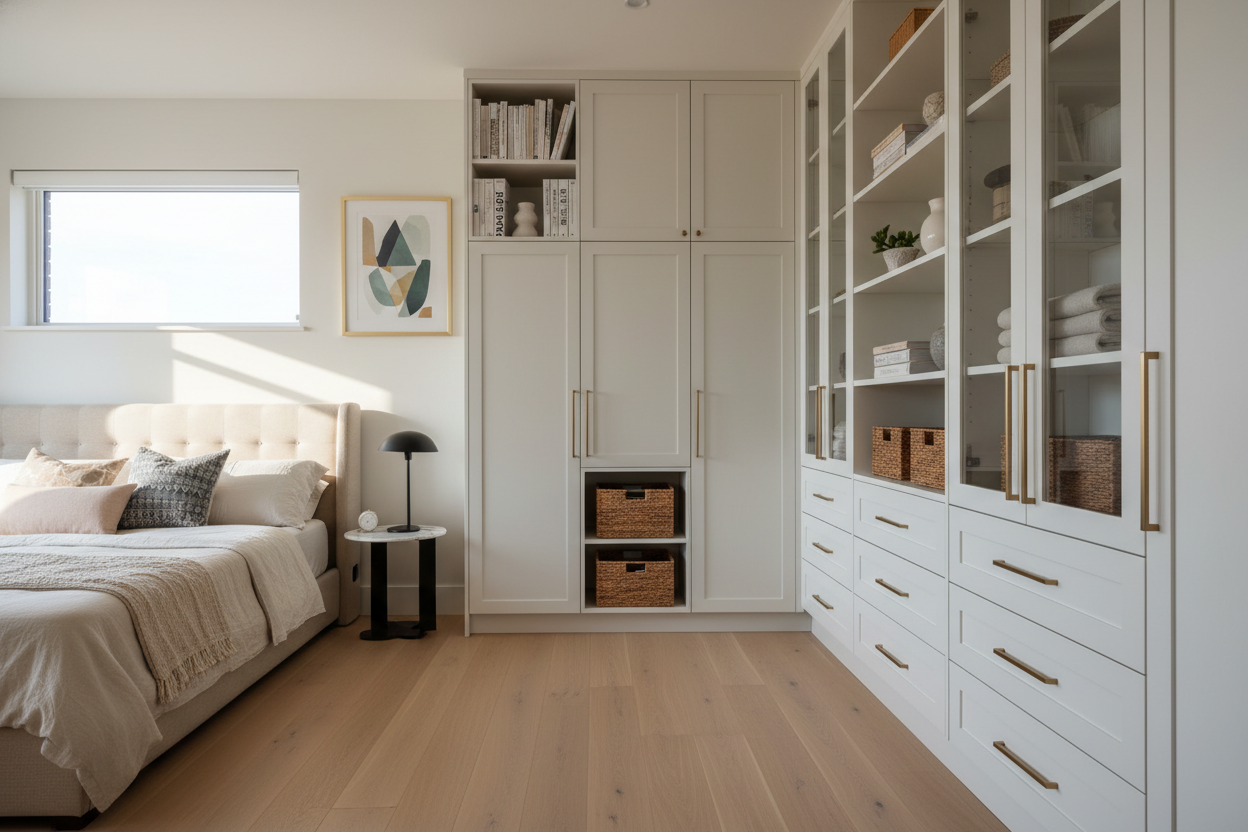
Most bedrooms suffer from a very specific design flaw: everything lives below the waist. Between the bed, the nightstands, and a standard dresser, the lower half of the room feels incredibly heavy while the upper walls sit completely empty. If you are constantly battling overflowing closets or a room that feels visually unbalanced, a bedroom tall cabinet might be exactly what you need.
But bringing a massive vertical piece into a sleeping space requires careful planning. Buy the wrong finish, and it looks like a kitchen pantry; place it in the wrong corner, and it swallows the room's natural light. Today, I am walking you through exactly how to choose, place, and style these towering pieces so they feel intentional rather than imposing.
Quick Decision Guide: Vertical Storage Rules
- Measure your ceiling height: Leave at least 12 to 18 inches of negative space between the top of the cabinet and your ceiling to prevent the room from feeling cramped.
- Anchor everything: Tall furniture is a tipping hazard. Always secure these pieces to a wall stud, regardless of whether you have children or pets.
- Mix closed and open storage: If the piece feels too heavy, look for options with glass upper doors or open shelving to lighten the visual load.
- Mind the swing: Ensure you have a minimum of 36 inches of clearance in front of the cabinet so doors and drawers can open fully without hitting the bed.
Mastering Space Planning and Layout
When introducing tall cabinets for bedroom use, placement is everything. Because these pieces command so much attention, they dictate the flow of the room. I generally advise against placing a tall piece immediately next to the primary doorway. It creates a bottleneck effect and makes the room feel smaller the moment you walk in.
Balancing Visual Weight
Instead, position your tall bedroom storage opposite a window or alongside a substantial piece of furniture, like a king-size bed, to balance the proportions. If your room has an awkward alcove or a recessed wall, tucking a tall cabinet into that niche is a fantastic way to utilize dead space while making the furniture feel built-in.
Choosing the Right Configuration
Not all tall storage for bedroom spaces is created equal. The interior layout dictates how useful the piece will actually be for your daily routine. Think about what you are actually trying to hide away.
Drawers vs. Shelves vs. Hanging Rods
If you are storing bulky sweaters, extra bedding, or denim, adjustable shelves are your best friend. However, if you need to organize undergarments, socks, or accessories, you absolutely need a tall bedroom cabinet with drawers. Many modern armoires offer a hybrid approach: a hanging rod or adjustable shelves on top, with two or three deep drawers at the base. This is often the most practical furniture tall cabinet configuration for North American homes where closet space is shared.
Material Matters: Longevity and Build Quality
Because tall bedroom storage cabinets carry a significant amount of weight—both from their own construction and the items inside—material choice directly impacts longevity.
Solid Wood vs. Engineered Alternatives
Solid wood (like oak, walnut, or maple) is incredibly durable and anchors a room beautifully, but it comes with a high price tag and is incredibly heavy to move. Engineered wood with a high-quality wood veneer is a very common and acceptable alternative. However, check the hinges and drawer glides. A tall cabinet bedroom piece is useless if the doors sag after six months. Look for soft-close, European-style hinges and dovetail drawer joints as indicators of good craftsmanship.
Designer's Honest Take: Lessons from My Own Projects
Early in my career, I sourced a stunning, 80-inch matte black cabinet for a primary suite in a historic Chicago greystone. It looked incredibly chic in the showroom. But once it was delivered, I realized I had made a rookie mistake: I didn't account for the room's heavy crown molding and the direction of the natural light.
Because I placed it too close to the room's only south-facing window, the massive dark frame blocked a quarter of the sunlight, casting a permanent shadow over the sitting area. Worse, the matte dark finish showed every single fingerprint and speck of dust. We ended up having to hire movers to shift it to the opposite wall. The lesson? A tall bedroom storage cabinet is essentially a miniature wall. Treat it with the same respect you would architectural features, and always account for how it interacts with your light sources.
Frequently Asked Questions
How deep should a tall bedroom cabinet be?
For folded clothes and general storage, a depth of 18 to 20 inches is ideal. If you plan to use it as a wardrobe with a hanging rod, you will need a minimum depth of 24 inches to accommodate standard hangers without the doors staying ajar.
Can I put a TV on top of a tall cabinet?
Generally, no. Most tall cabinets range from 60 to 80 inches in height, which forces you to crane your neck uncomfortably to watch a screen. If you want to hide a TV, look for an armoire specifically designed with pocket doors and a dedicated media shelf at eye level (usually around 40 to 50 inches high).
How do I keep a tall piece from looking too bulky?
Choose a piece that sits on legs rather than a solid plinth base. Seeing the floor continue underneath the cabinet tricks the eye into perceiving more square footage. Additionally, lighter wood tones or painted finishes feel visually lighter than dark, heavy stains.


Leave a comment
This site is protected by hCaptcha and the hCaptcha Privacy Policy and Terms of Service apply.