

















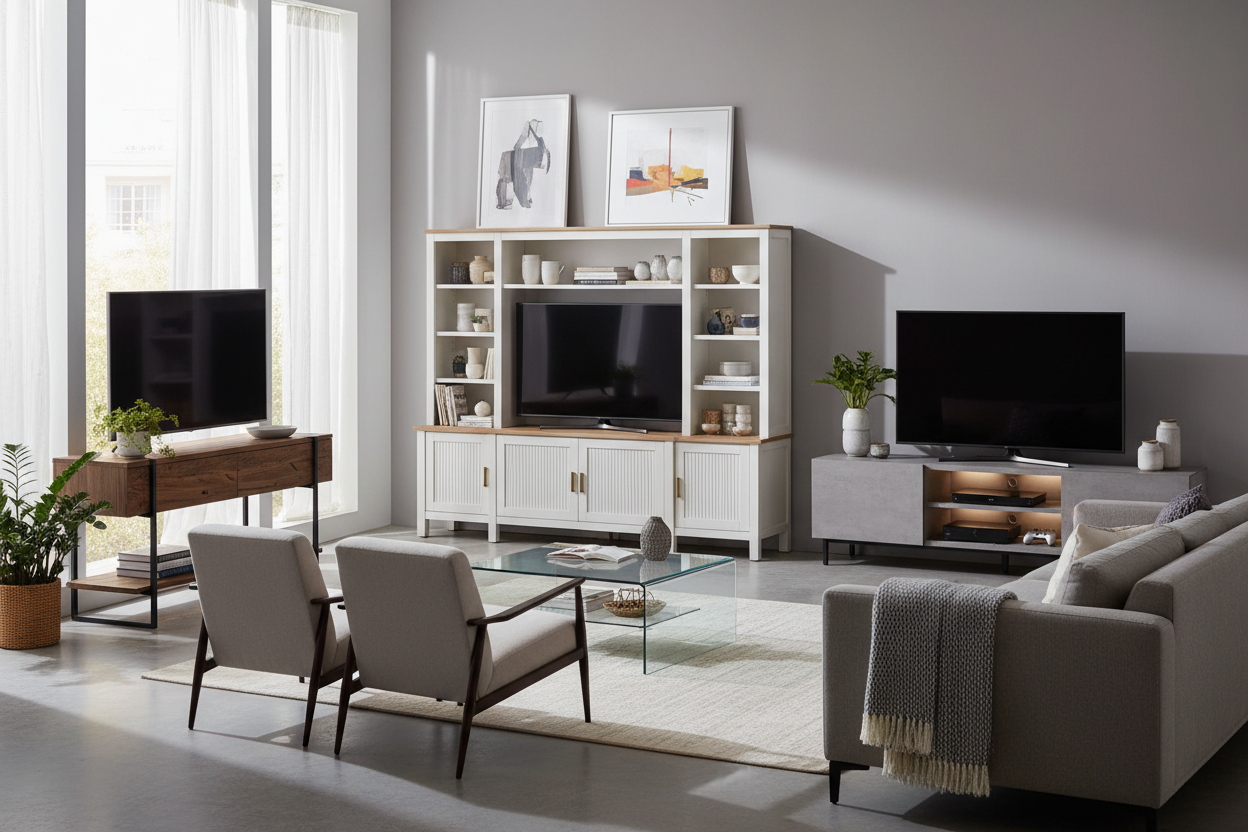
We have all stared at that massive, empty wall in the living room, wondering how to ground the giant black rectangle of a television without spending a fortune. I see clients struggle with this constantly; they want something stylish that hides the cable clutter, but they balk at paying custom furniture prices. That is exactly why At Home store TV stands have become such a frequent topic in my design consultations.
Finding the right media console is about balancing visual weight and practical storage. In this guide, I will walk you through exactly what you need to know about these budget-friendly pieces, from spotting the durable models on the showroom floor to making sure they actually fit your space.
Quick Decision Guide
- Rule of thirds: Your console should be at least a few inches wider than your television on both sides to maintain proper visual weight and prevent a top-heavy look.
- Check the hardware: Look closely at the drawer glides and door hinges; upgrading cheap factory hardware with solid brass pulls can instantly make a budget console look high-end.
- Mind the depth: Ensure the stand has at least 15 to 18 inches of depth to accommodate modern receivers, gaming consoles, and soundbars.
- Look for cable management: Pre-drilled holes in the back panel are non-negotiable for keeping a clean, organized living area.
Space Planning and Visual Proportion
One of the biggest mistakes I see in North American family rooms is a massive 75-inch screen perched precariously on a tiny, narrow base. It throws off the entire balance of the room and makes the ceiling feel lower.
Sizing Your TV Stand Home Furniture
When selecting tv stand home furniture, proportion is your best friend. A standard rule of thumb is that your console should be about 25 percent wider than the screen itself. If you have an open-concept living room, a longer, lower profile unit helps anchor the space without blocking sightlines. Conversely, in a smaller apartment, look for taller, narrower units that utilize vertical space for storage while keeping a minimal footprint.
Material Quality and Durability
When you are shopping at big-box retailers, you have to be strategic about materials. Not all engineered wood is created equal, and knowing what to touch and test in the store is critical.
Spotting the Best At Home TV Stand
A typical at home tv stand will likely be constructed from MDF (medium-density fiberboard) covered with a laminate or paper veneer. While this keeps the price point accessible, it means you need to protect it from moisture. If you have kids or pets, look for models with textured laminate finishes rather than smooth paper veneers, as they hide scratches and dust much better. Pay special attention to the legs—metal bases or solid wood peg legs offer far more structural integrity than particleboard bases.
Styling Your Media Console
A media unit should not just be a utilitarian box holding wires; it should bridge the gap between your technology and your personal aesthetic.
Layering Decor on an At Home TV Console
Once you bring an at home tv console into your space, the trick to making it look expensive is mastering negative space. Do not clutter the top surface. Place a trailing plant, like a pothos, on one side to soften the hard edges of the television. On the opposite side, stack two or three large coffee table books topped with a sculptural object. This creates an asymmetrical balance that draws the eye away from the electronics.
Designer's Honest Take
I have sourced pieces from almost every retailer over the last 15 years, and I recently used a mid-century inspired console from At Home for a client's basement remodel. Visually, it hit all the right notes—the faux walnut finish had a surprisingly realistic grain, and the fluted door details added great texture to the room.
However, I learned the hard way during installation that the back panel was incredibly flimsy. It was essentially thick cardboard. When we tried to push stiff, heavy HDMI cables through the pre-cut holes, the panel tore. We ended up having to reinforce the back with a thin sheet of plywood we cut ourselves. It is a great piece for the price, but you definitely have to handle the rear cable management with extreme care.
Frequently Asked Questions
How do I know what size TV stand I need?
Measure the actual width of your TV horizontally, not the diagonal screen size. Your console should be at least 4 to 6 inches wider than the TV on both sides to prevent the setup from looking unbalanced.
Are these budget-friendly TV stands difficult to assemble?
Most flat-pack furniture requires patience. Expect to spend one to two hours on assembly. I highly recommend using your own ratcheting screwdriver instead of the tiny hex keys provided, as it will save your hands and ensure tighter joints.
Can an engineered wood console hold heavy equipment?
Yes, but always check the manufacturer's weight limit. Most standard MDF consoles can safely hold modern flat screens, but if you have heavy vintage audio receivers, you should look for units with a center support leg to prevent bowing over time.

Leave a comment
This site is protected by hCaptcha and the hCaptcha Privacy Policy and Terms of Service apply.