

















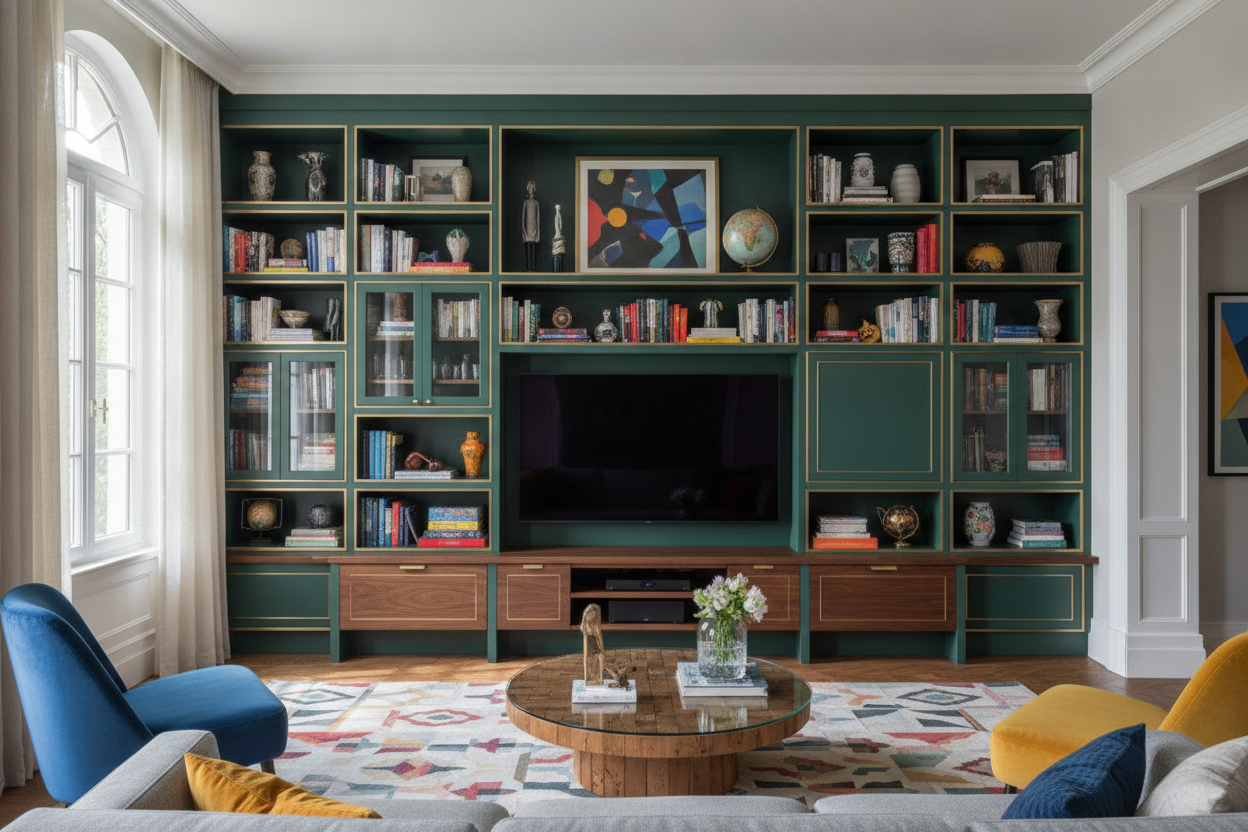
I spent three years staring at a 65-inch screen perched on a console so small it looked like the TV was trying to balance on a skateboard. My living room felt perpetually unfinished, like a stage set where they ran out of budget for the backdrop. If you have been scrolling through dozens of tabs for a tv stand and entertainment center at 1 AM, you know the struggle of trying to make a massive piece of tech look like it actually belongs in your home.
- Minimalist consoles often leave walls looking empty and awkward.
- Modern units are modular and airy, not the bulky oak monsters of the 90s.
- Integrated storage is the only real way to hide the 'cable spaghetti' behind your tech.
- Vertical shelving helps balance the visual weight of a large television screen.
The Problem With the Minimalist Media Console
The minimalist movement did a real number on our living rooms. We were told that 'less is more,' which led us all to buy standard low-profile TV stands that barely cleared the baseboards. It looks great in a 2,000-square-foot loft with 12-foot ceilings, but in a normal house, it just leaves a giant, sad vacuum of space between the top of your TV and the ceiling.
I have seen so many people try to fix this by hanging random small art prints around their TV, which just makes the wall look cluttered and frantic. A tiny base cannot support the visual weight of a modern 75-inch screen. It feels top-heavy and unfinished. Plus, where is your stuff supposed to go? Unless you live in a museum, you probably have a router, a soundbar, and maybe a stray PlayStation controller that needs a home that isn't the floor.
What Even Counts as a Modern Wall Unit Today?
When I say 'entertainment center,' I am not talking about the dust-gathering behemoths your parents bought in 1994 that required four grown men and a U-Haul to move. Those things were built for cathode-ray tubes and 50-lb encyclopedias. Today’s tv units stands are much more sophisticated. They are often modular, meaning you can mix and match pieces to fit your specific wall width.
A modern 3 piece entertainment center is a great example of how this works. You get the base for the TV, but you also get vertical towers or overhead cabinets that frame the screen. It creates a 'built-in' look without the $5,000 contractor bill. These designs use thinner profiles and better materials—think matte finishes and slatted wood—to keep the room feeling open while still providing that much-needed structure.
The Storage Factor (And Hiding the Ugly Tech)
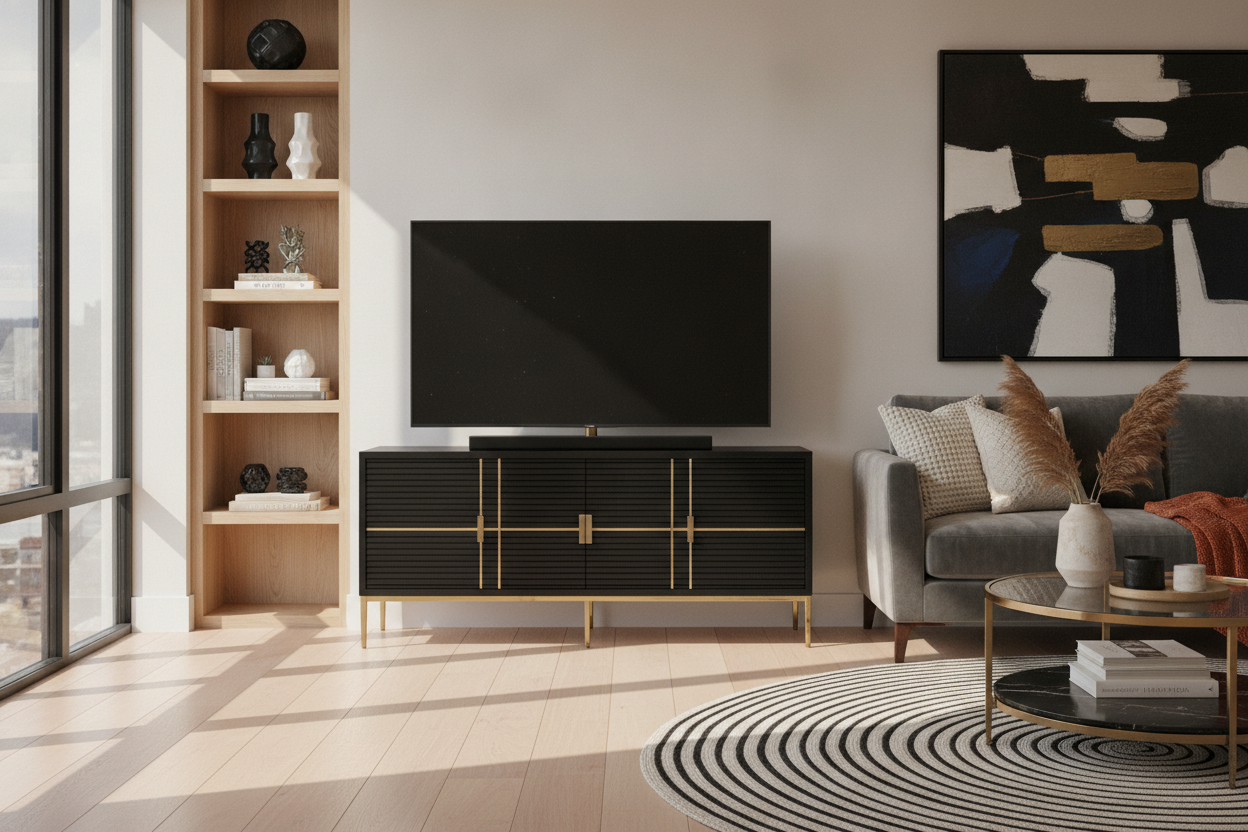
Let’s be honest: technology is usually ugly. Routers have blinking green lights that look like a spaceship landing in your peripheral vision, and HDMI cables are the weeds of the interior design world. If you choose television furniture stands with actual closed storage, all of that disappears. I personally prefer a black tv stand entertainment center because the dark finish helps the black screen and black components blend in rather than popping against a light wood grain.
Beyond the tech, a full-scale unit gives you a place for the things you actually use but don't want to see. I use my bottom cabinets for board games and extra throw blankets. It is about reclaiming the footprint of your room. If a piece of furniture is going to take up six feet of wall space, it should be working hard for you, not just sitting there holding a remote.
How to Style the Shelves Without It Looking Chaotic
The biggest fear people have with larger units is that they will look like a cluttered mess. The secret is negative space. You do not need to fill every square inch of those side shelves. I follow the 'rule of three': group a tall vase, a medium book, and a small object together, then leave the rest of the shelf empty. It lets the eye rest.
Mix textures. If your unit is a sleek laminate or metal, add some organic shapes like a piece of driftwood or a ceramic pot. If you have open shelving above the TV, keep it light. Heavy items up high make the room feel like it is closing in on you. Stick to a cohesive color palette—maybe all white pottery or books with the spines turned in if you are feeling particularly 'minimalist' about your maximalist furniture choice.
Before You Buy: The Golden Rule of Wall Measurements
Before you commit, grab some blue painter's tape. Tape out the dimensions of the unit on your wall. I once bought a gorgeous walnut unit that I thought was perfect, only to realize it blocked the light from my only south-facing window by two inches. It was a nightmare to return. You need to ensure the unit isn't so deep that it chokes the traffic flow of the room.
Ask yourself if it is truly worth the space in your specific layout. If your room is narrow, look for units that are 15 inches deep or less. If you have high ceilings, go for something with height to draw the eye up. A well-measured entertainment center doesn't make a room feel smaller; it makes it feel more intentional.
My Personal Experience: The 'Floating' Fail
I once tried the 'floating shelf' look because I saw it on a home renovation show. I mounted three shelves around my TV and thought I was a genius. Within a week, the shelves were sagging under the weight of my books, and the visible power strip underneath looked like a crime scene. I eventually ripped them out, patched the drywall, and bought a proper 3-piece unit. The relief of having one solid, sturdy piece of furniture that hid every single cord was worth every penny. Sometimes, trying to be 'minimal' is just more work than it's worth.
FAQ
Will a large entertainment center make my small room look smaller?
Actually, no. One large, cohesive piece of furniture often makes a room look less cluttered than five small, mismatched pieces. It creates a single focal point rather than a fragmented mess.
How do I hide the cords if the unit has an open back?
Use adhesive cable clips to run the wires down the back of the legs or frame. You can also buy 'cable management boxes' that sit on the shelf and look like a decorative storage bin but house your power strip inside.
Should the TV be centered or offset?
In a large entertainment center, centering is usually king. It provides the symmetry that our brains find relaxing. If you offset it, you have to be very careful to balance the other side with something of equal 'visual weight,' like a tall stack of books or a large lamp.

Leave a comment
This site is protected by hCaptcha and the hCaptcha Privacy Policy and Terms of Service apply.