

















I spent three years watching my IKEA-adjacent media unit develop a sad, visible sag in the middle. Every time I added a soundbar or a stack of coffee table books, the particle board groaned like it was holding up the weight of the world. It was a temporary fix that overstayed its welcome, and the moment I saw the veneer peeling at the corners, I knew I was done with 'disposable' furniture.
That realization led me down a rabbit hole of materials that could actually withstand the weight of a 65-inch OLED and a decade of life. I landed on stone tv stands. They are heavy, they are expensive, and they are arguably the most striking piece of furniture I have ever owned. But before you call a moving crew, you need to know what you are actually signing up for.
Quick Takeaways
- Stone is virtually indestructible compared to wood or MDF—no sagging, no scratches, and no water rings.
- Weight is the biggest hurdle; you will need at least two people (and maybe a floor reinforcement check) for solid pieces.
- A tv stand with stone top offers the look and durability of stone with the cable management benefits of a wooden base.
- Styling is key to prevent the 'tombstone' effect—mix in warm woods and soft textures.
The Breaking Point: Why I Ditched Flimsy Wood
The frustration of particle board is a slow burn. It starts with a little wobble when you dust it and ends with a permanent bow that makes your expensive TV look crooked. I got tired of furniture that felt like a placeholder. When a spilled glass of water caused a permanent blister on my old console's 'wood grain' surface, I started shopping for TV stands that were built for the long haul.
I wanted something that didn't feel like it was made of compressed sawdust and hope. Stone—whether it’s marble, travertine, or slate—doesn't care about your humidity levels or your heavy electronics. It stays flat. It stays level. It feels like a permanent part of the architecture rather than something you’ll toss in a dumpster the next time you move apartments. If you are tired of replacing your media unit every three years, stone is the logical, albeit heavy, endgame.
The Aesthetic Shift: From Dorm Room to Grown-Up
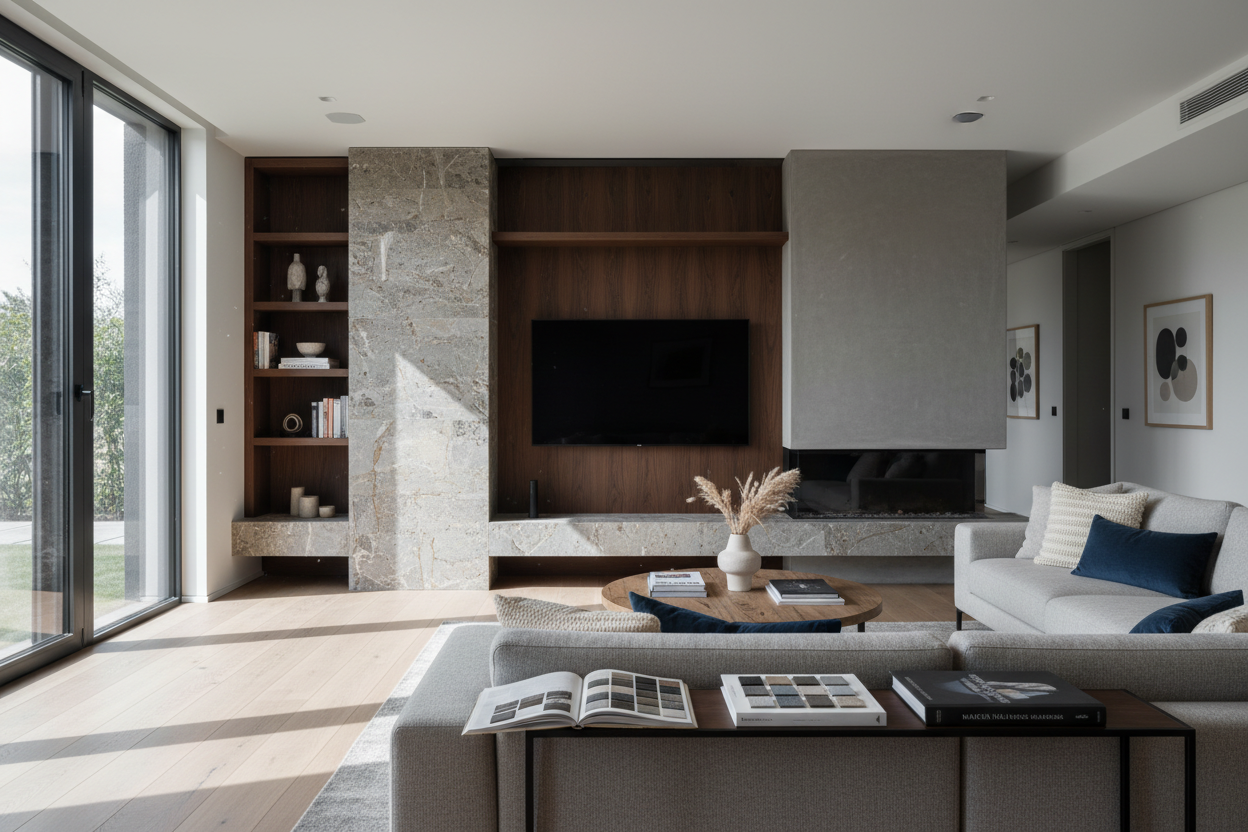
There is a specific gravitas that comes with a stone media console. In my old setup, the TV felt like it was just sitting on a box. Now, the whole area feels like a curated gallery. The natural veining of the stone adds a layer of texture that even the most expensive 'walnut finish' can't replicate. It grounds the room, making the tech look like an intentional design choice rather than a cluttered necessity.
An entertainment center with stone creates a focal point that doesn't scream 'electronics.' Because the material is so substantial, it balances the large black rectangle of the TV screen. It turns the living room into a space that feels finished. I noticed that guests stopped commenting on the show we were watching and started asking where the furniture came from. It’s an immediate upgrade in perceived value.
Solid Rock vs. A TV Stand With a Stone Top
When you start looking, you’ll realize there are two main camps: the solid natural stone tv stand and the tv stand with stone top. A solid stone piece is a literal slab of history. It’s gorgeous, but it’s also a logistical nightmare. It has no give, no 'oops' factor, and usually zero hidden cable management because drilling through four inches of granite is a specialist’s job.
On the other hand, a stone top media console gives you the best of both worlds. You get that cold, hard, beautiful surface for the TV to sit on, but the body of the unit is often wood or metal, allowing for drawers and wire cutouts. I considered a floating tv stand wall mounted media console for that airy, modern look, but I missed the tactile weight of stone. If you have a lot of peripherals—consoles, routers, players—the hybrid stone top tv stand is almost always the smarter choice for your sanity.
Real Talk: The Moving Day Logistics
Let’s be honest: a stone tv console or a full stone entertainment center is a beast. My travertine unit arrived in a crate that looked like it held a dinosaur fossil. You cannot 'pivot' a stone entertainment wall by yourself. If you live in a walk-up apartment, you need to factor the cost of professional movers into your budget immediately. This isn't a 'pizza and beer for friends' kind of move; this is a 'call the guys with the back braces' situation.
I also recommend checking your floor. If you're putting a massive stone wall entertainment center in an old house with questionable floor joists, you might want to do some math. I’m not saying it will fall through to the basement, but these pieces are significantly heavier than their wooden counterparts. It’s the price you pay for furniture that won’t budge if a dog—or a toddler—runs into it at full speed.
How to Style Stone So It Doesn't Look Like a Tomb
The danger of a stone media console is that it can feel cold or clinical if you don't dress it right. To avoid the 'mausoleum' vibe, you have to play with contrast. I use stacks of oversized linen-bound books and trailing plants like Pothos to soften the sharp edges of the stone. The greenery against the natural stone creates a much more organic, lived-in feel.
Lighting is also your best friend here. A small, warm-toned lamp on one end of the stone top media console creates a beautiful glow that reflects off the surface. If the stone feels too modern for your taste, try mixing in elements from a rustic entertainment center with shelves nearby. Wood and stone are a classic pairing for a reason—the warmth of the timber balances the coolness of the rock, making the whole room feel cozy instead of like a high-end lobby.
FAQ
Is stone furniture hard to clean?
Not really, but you have to be careful with acids. A damp cloth is usually all you need. If you have a marble top, avoid leaving spilled wine or citrus juice on it, as it can etch the surface. Use coasters just like you would with wood, but for different reasons.
Will a stone TV stand crack?
Natural stone is incredibly strong but can be brittle if hit with a heavy, sharp object on the edge. As long as it is leveled properly on your floor, it won't crack under the weight of a TV. Just don't drop a sledgehammer on it.
Is it worth the extra cost?
If you plan on keeping your furniture for more than five years, yes. It’s a 'buy once, cry once' investment. You’ll spend more upfront, but you’ll never have to deal with sagging shelves or peeling veneer ever again.

Leave a comment
This site is protected by hCaptcha and the hCaptcha Privacy Policy and Terms of Service apply.