

















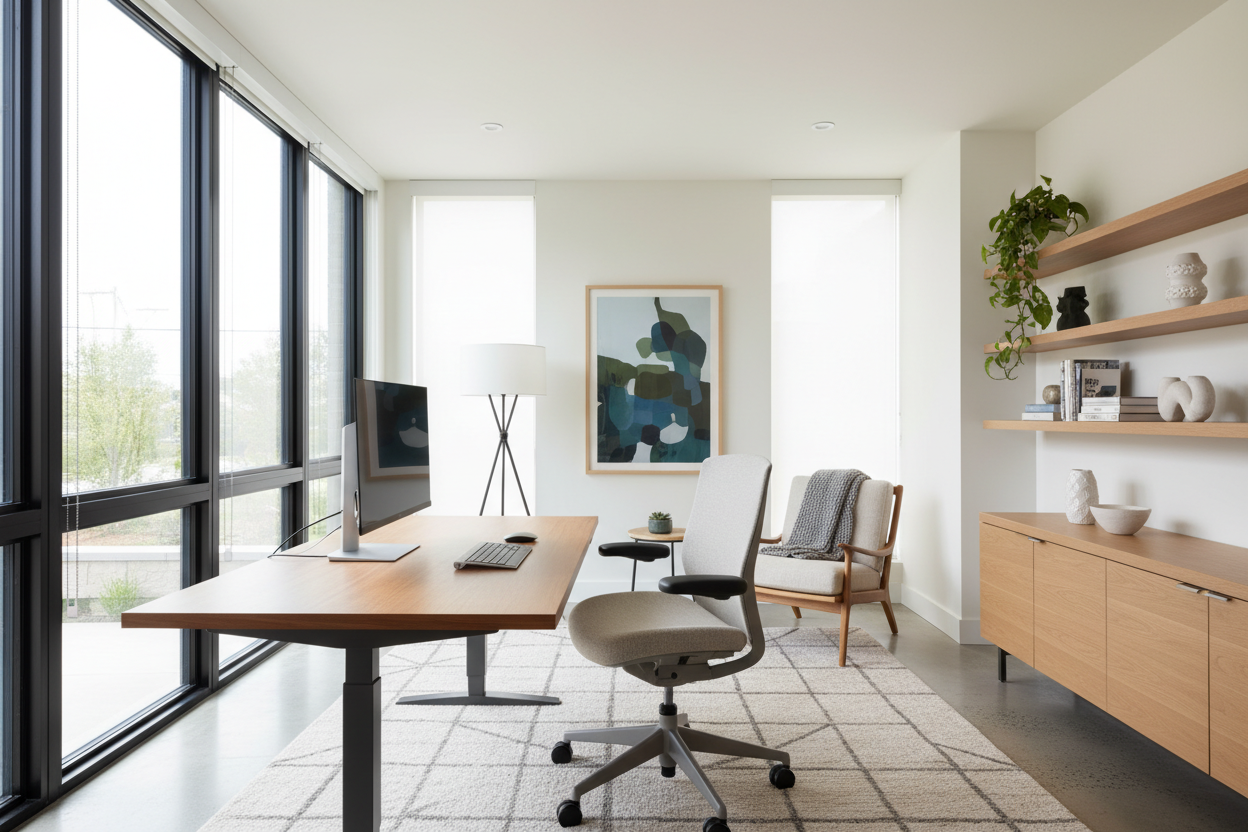
When clients approach me for a home office renovation, they often focus on the aesthetics of the desk or the color of the shelving. However, the deeper question they are grappling with is often lifestyle-based: are remote jobs good for their specific living situation? As a designer, I argue that the answer isn't found in a job description, but in your floor plan. If your environment isn't optimized for focus and ergonomics, even the most lucrative role can become a source of stress.
Quick Decision Guide: Is Your Home Ready?
Before accepting an offer, evaluate if your space can handle the transition. Here are the critical design factors that determine success:
- Spatial Zoning: Can you establish a visual and physical boundary between "living" and "working" zones?
- Ergonomic Viability: Do you have the square footage for a task chair with a 5-star base, or will you be confined to a rigid dining chair?
- Acoustic Control: Does the room feature soft textiles (rugs, drapes) to dampen echo, or is it a hard-surface echo chamber?
- Lighting Layering: Is there a mix of ambient and task lighting to prevent the dreaded 3 PM eye strain?
How Does Working Remotely Work in a Shared Space?
If you ask, "how does working remotely work" when you have roommates or family, the answer lies in acoustics and layout flow. In open-concept homes, visual privacy is paramount. I often recommend high-back acoustic sofas or open shelving units acting as room dividers. This creates a psychological barrier. If i will be working remotely in a high-traffic area, the furniture orientation is critical; facing a wall rather than the room's center can increase focus by 40%, simply by removing visual distractions from your peripheral vision.
Should I Work Remotely? Assessing the Ergonomics
Many people wonder, "is working remotely a good idea?" while sitting on a decorative accent chair. The harsh truth is that residential furniture is rarely designed for 8-hour usage. Working a remote job requires commercial-grade durability wrapped in residential aesthetics.
The Seating Dilemma
If you are debating "should i take a remote job," first look at your budget for seating. A proper task chair must offer lumbar support and seat depth adjustment. In my designs, I often steer clients toward performance fabrics that resist staining but offer the breathability of mesh, ensuring the piece looks like part of the home decor, not a cubicle transplant.
Is Remote Work Right for Me and My Layout?
To determine "is remote work right for me," you must analyze your tolerance for visual clutter. In a corporate office, the cleaning crew handles the mess. At home, cable management becomes a design imperative. If you are prone to anxiety from clutter, working a remote job without a dedicated storage strategy (like a credenza with integrated grommets) can be detrimental to your mental health.
What Is It Like to Work Remotely: The Lighting Factor
Clients often ask what is it like to work remotely long-term. My answer? It depends on your lighting. Poor lighting is the silent killer of productivity. Relying solely on overhead recessed cans creates harsh shadows. A successful setup requires 'layered lighting'—a combination of natural daylight (positioned perpendicular to your screen to avoid glare) and a dedicated task lamp with adjustable color temperature.
My Personal Take on are remote jobs good
Lessons from My Own Projects: I recently redesigned a 'cloffice' (closet-office) for a client who was convinced that working from home was destroying her back and her mood. She kept asking, "do you work remotely, and does it hurt this much?" The issue wasn't the job; it was the depth of her improvised desk.
She was using a console table that was only 15 inches deep. This forced her to sit too close to the monitor, straining her eyes, and left no room for her forearms to rest, causing shoulder tension. We swapped it for a custom 24-inch deep floating surface and installed a monitor arm to clear desk space. The difference was night and day. I also noticed that on her previous laminate surface, the friction from her wrists had actually worn down the finish—a detail you don't think about until you see it. We used a solid walnut top for the new desk; it’s warmer to the touch and develops a patina rather than looking worn out. Design isn't just about looks; it's about physical sustainability.
Conclusion
So, should i work remotely? If you can curate a space that respects the principles of ergonomics, lighting, and zoning, the answer is a resounding yes. Your environment dictates your experience. Treat your home office furniture not as decor, but as an essential tool for your career longevity.
Frequently Asked Questions
1. How much space do I actually need for a functional home office?
At a minimum, you need a footprint of about 5x5 feet. This allows for a standard 48-inch desk and enough clearance (about 30-36 inches) behind you to slide your chair back without hitting a wall or bookshelf.
2. Is it better to float the desk or push it against the wall?
While floating a desk (placing it in the center of the room) looks commanding and luxurious, it requires floor outlets to manage cables. For most remote workers, facing a wall or window is more practical for cable management and space conservation.
3. Can I use a dining chair for remote work if I add a cushion?
I strongly advise against this for full-time work. Dining chairs lack the 5-point stability, height adjustment, and lumbar curvature necessary to support your spine for 40 hours a week. Long-term use often leads to chronic posture issues.

Leave a comment
This site is protected by hCaptcha and the hCaptcha Privacy Policy and Terms of Service apply.