

















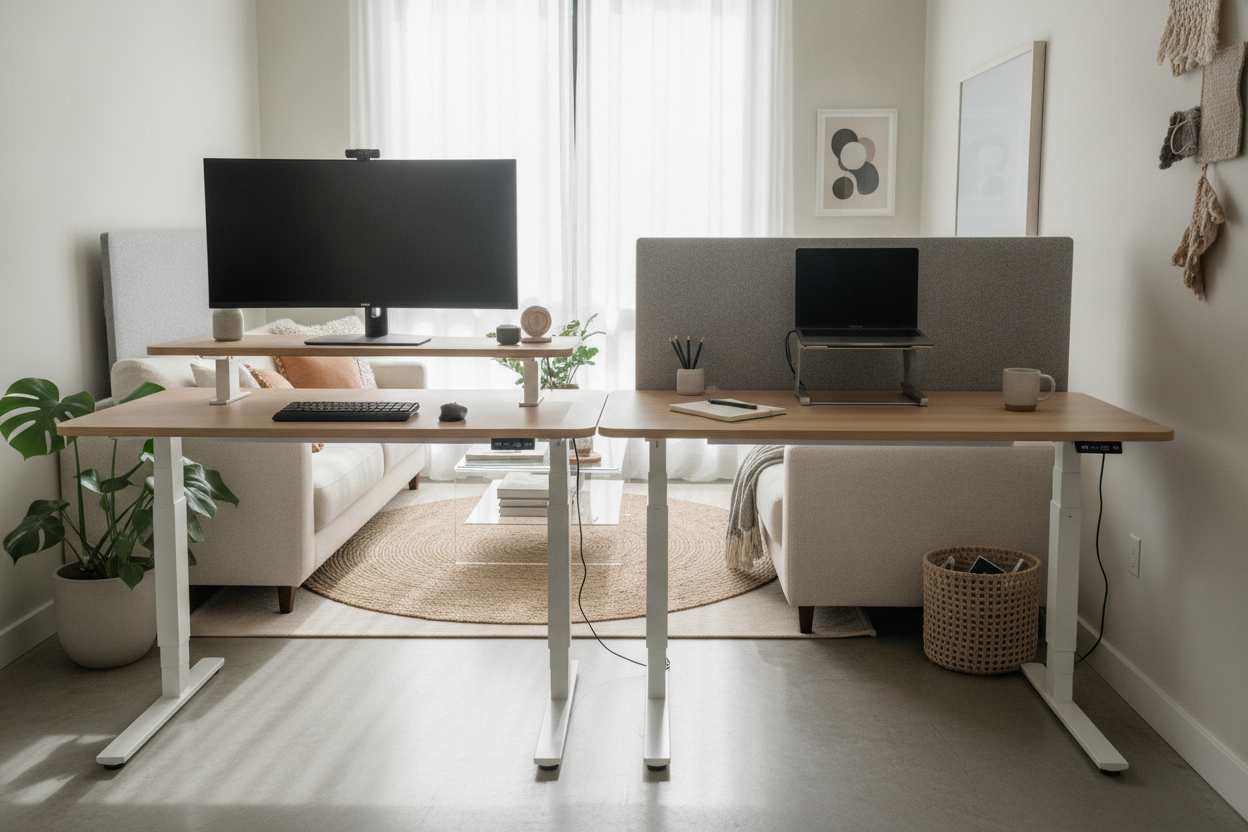
I have been there more times than I care to admit. It is 1:45 AM, I am on my third cup of decaf, and my lower back feels like it has been folded into an origami crane. I desperately need to stand up, but my partner is asleep exactly eight feet away in our studio apartment. I look at my desk, then at her, then back at the desk. I know that if I hit the 'up' button on my electric adjustable desks, the ensuing whine might sound like a jet engine in the dead silence of the night. This is the social cost of ergonomics that nobody mentions in the glossy office furniture brochures.
- Dual-motor systems are significantly quieter and smoother than single-motor budget options.
- Physical contact with walls amplifies motor noise through vibration—always leave a two-inch gap.
- Heavy-duty steel frames act as natural sound dampeners compared to thin aluminum.
- Memory presets reduce noise duration because the desk moves to the exact height without manual jittering.
The 2 AM Wake-Up Call: Why Motor Noise Actually Matters
When you are shopping for a desk at 2 PM in a bustling showroom or scrolling through reviews in a noisy coffee shop, 50 decibels sounds like nothing. The marketing copy says 'whisper quiet,' and you believe it. But decibels are logarithmic, and room acoustics are cruel. In a shared bedroom or a small apartment at midnight, a 50dB motor sounds like a blender running in a library. It is not just the volume; it is the frequency. Most budget electric rising desks emit a high-pitched mechanical whine that cuts right through white noise machines.
I spent three months hesitating to use my standing feature because I didn't want to start a fight. That is the irony of a sit-stand setup: if it is too loud to use whenever you need it, you just end up with a very expensive, very heavy sitting desk. You start calculating the risk-to-reward ratio of spinal health versus waking up a cranky spouse. If you are a night owl or work in a shared nursery/office hybrid, the motor's acoustic profile isn't a 'nice-to-have'—it is the most important spec on the sheet. I have tested frames that sounded like grinding gears and others that hummed like a luxury electric car. The difference usually comes down to how much the manufacturer spent on the housing around the motor.
Single vs. Dual Motors (And Why Cheap Desks Scream)
If you see an electric adjustable height standing desk for under $200, it almost certainly has a single motor. One motor has to do all the heavy lifting, literally. It uses a hex rod to transfer power to the other leg, which creates friction, vibration, and—you guessed it—noise. This single motor is usually working at its absolute limit to lift a desktop, a monitor arm, and your oversized coffee mug. When a motor is strained, it screams. It is the sound of a tiny engine begging for mercy.
I learned this the hard way with a cheap adjustable desk on Amazon that I bought during a flash sale. Every time I adjusted the height, the rod would rattle inside the frame like a spray paint can. It was embarrassing during Zoom calls and infuriating at night. Dual-motor systems, on the other hand, tuck a motor into the top of each leg. They are synchronized by a control box, meaning they share the load. Because neither motor is working at 100% capacity, they operate at a much lower, more pleasant frequency. It is a smooth, bass-heavy hum rather than a dental drill screech. If you share a wall or a room, dual motors are the non-negotiable price of entry for domestic peace.
The Wall Echo Effect Is Making Your Desk Louder
Here is a mistake I made for a year: I shoved my desk flush against the wall to maximize floor space in my tiny living room. I couldn't figure out why my neighbor downstairs complained about the noise when I moved my desk at noon. It turns out that shoving your desk against a shared wall turns your entire wall into a giant speaker. The vibrations from the motor travel through the desk frame, into the drywall, and use the wall's hollow cavity to amplify the sound.
This is especially true for desks electric adjustable height models that use thin-walled metal legs. To fix this, you need a 'buffer zone.' Pull the desk out just two inches. This prevents the physical transmission of vibration. If you really want to be a hero, put the desk on a thick rug or use rubber vibration-dampening pads under the feet. I noticed a 6dB drop in perceived noise just by moving the desk away from the wall and putting it on a low-pile rug. It stops the floor and walls from acting as a resonator for the motor's hum.
The Features That Actually Keep Things Quiet
When you are digging through specs for electric height adjustable desks, look at the frame weight. It sounds counterintuitive, but a heavier desk is a quieter desk. A frame made of 3mm thick steel has enough mass to absorb the high-frequency vibrations of the motor. Cheap aluminum frames are light, which is great for shipping, but they vibrate like a tuning fork the second you hit the 'up' button. I always look for a 'lifting capacity' of at least 250 lbs, even if I only have 50 lbs of gear. A higher capacity means the motors are beefier and won't struggle—and struggle is where noise lives.
Another 'quiet' feature is the controller. An electric lift system desk with memory presets is a godsend for shared spaces. Why? Because you don't have to stand there holding the button for 15 seconds, listening to the motor and wondering if your partner is about to wake up. You tap the preset, walk into the kitchen to grab water, and by the time you are back, the desk is in position. It removes the 'active' monitoring of the noise, which somehow makes it feel less intrusive. Plus, high-end controllers have 'soft start/stop' features that prevent the desk from jerking and clanking when it reaches its destination.
The Setup That Finally Let My Partner Sleep
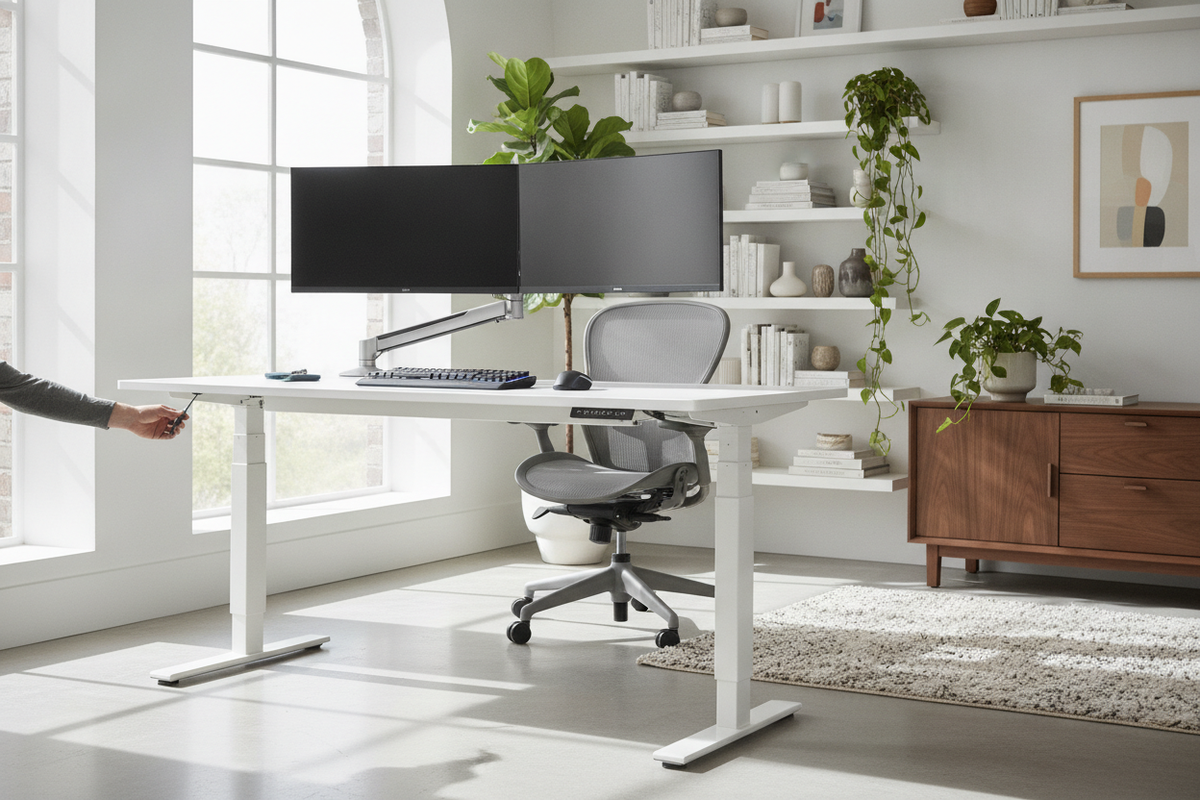
After cycling through three different frames, I finally invested in a modern electric height adjustable desk that actually prioritized motor housing insulation. The motors are fully enclosed in the leg headers, which acts like a muffler on a car. It was a revelation. I can now transition from sitting to standing at 2 AM while my partner sleeps peacefully just a few feet away. The sound is more of a 'whoosh' than a 'grind.'
My current setup involves that heavy-duty frame, a two-inch gap from the wall, and a set of memory presets that I’ve calibrated for my exact ergonomic needs. I also added a bit of cable management—loose cables hitting the frame during movement can create an annoying tapping sound that adds to the mechanical noise. If you are on the fence, don't cheap out on the motor. Your back, and your relationship, will thank you for the extra $100 spent on a quiet, dual-motor system.
FAQ
Will a desk mat make my desk quieter?
A desk mat won't quiet the motor itself, but it will stop your monitors, speakers, and pens from rattling against the desktop while it moves. That 'micro-rattle' is often more annoying than the motor hum.
How do I know if a motor is failing or just loud?
If the sound is consistent, it's probably just a cheap motor. If you hear rhythmic clicking, popping, or a sudden change in pitch, that is a sign of a gear misalignment or a motor reaching its end of life.
Are manual crank desks better for noise?
Technically, yes, they can be silent, but they are a pain to use. Most people find that the effort of cranking 40+ times means they never actually use the standing feature. A high-quality electric motor is a better long-term investment.

Leave a comment
This site is protected by hCaptcha and the hCaptcha Privacy Policy and Terms of Service apply.