

















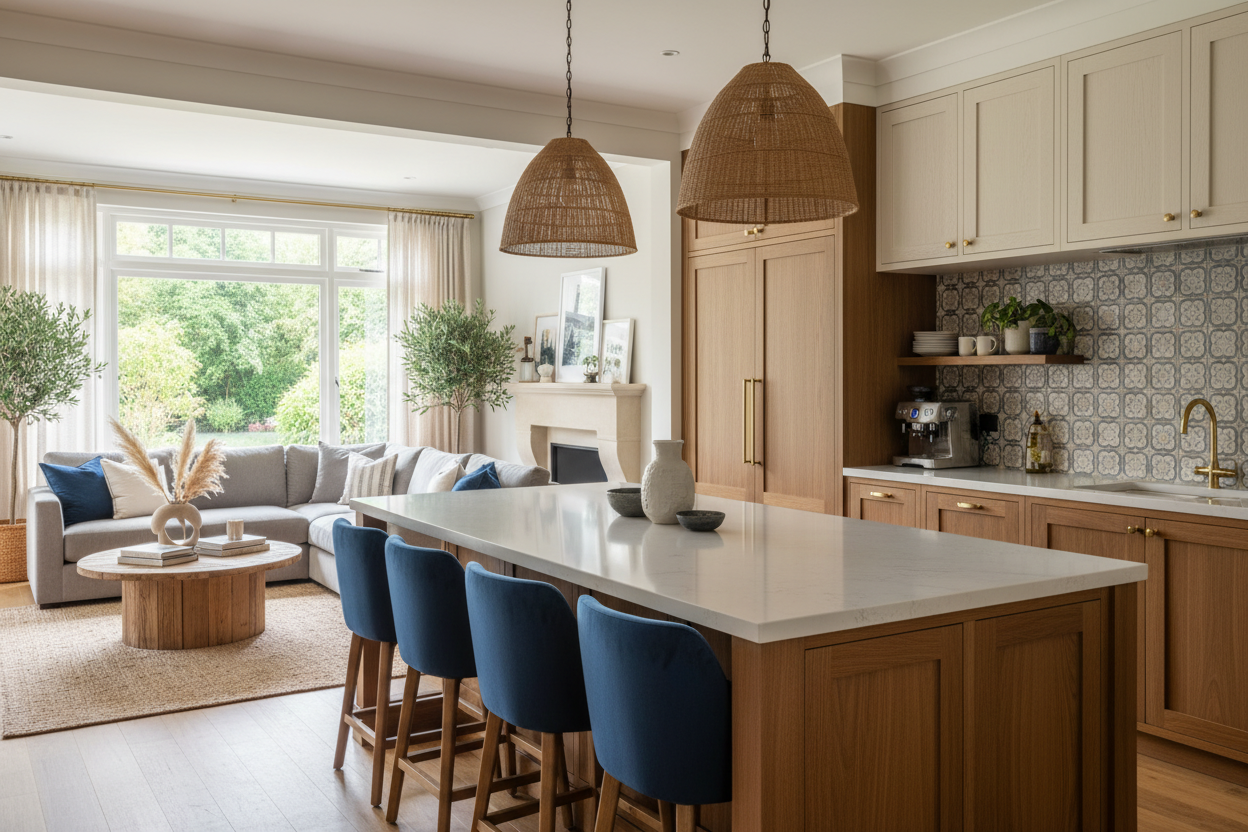
I remember sitting at my kitchen table, staring at a quote for $12,000 just for the installation labor. I had already dropped a small fortune on the actual boxes, and seeing that additional five-figure line item felt like a personal insult. My first instinct was the same as yours: I have a level, a drill, and a surprisingly high tolerance for frustration. I could just do the cabinetry services myself, right?
The reality is that professional installation is the most expensive 'invisible' cost in a remodel. You aren't paying for someone to turn screws; you're paying for the twenty years of mistakes they've already made on someone else's house. After watching a pro turn my wonky, 1920s-era walls into a perfectly flush kitchen, I realized that my DIY ambitions would have ended in a crooked mess of shims and regret.
Quick Takeaways
- Professional installers handle 'scribing,' which makes cabinets look built-in rather than just shoved against a wall.
- A single mistake in drilling hardware holes can ruin a $400 door instantly.
- Warranties on high-end cabinets are often void if they aren't installed by a certified professional.
- Freestanding furniture is the best way to save five figures if you don't need wall-to-wall built-ins.
The Sticker Shock is Real (But So Is the Labor)
When you see a bid for professional cabinetry services, the number usually looks like a typo. You start doing the math: 'If it takes them three days, they're making how much per hour?' It’s tempting to think you’re being fleeced. I spent a week convinced I could buy a pneumatic nail gun and a laser level and come out ahead. But cabinet installation isn't just about hanging boxes; it's about structural integrity and physics.
Think about the weight. A standard 36-inch wall cabinet can weigh 60 pounds empty. Load it up with your heavy stoneware and those heirloom cast iron pans, and you’ve got 150 pounds of gravity fighting against a few screws. If you miss a stud or use the wrong fasteners, that entire unit is coming down at 2 AM. A professional knows exactly how to anchor into your specific wall type, whether it’s crumbling lath and plaster or modern metal studs.
Beyond the safety aspect, there's the aesthetic 'fit and finish.' Professionals spend half their time on things you’ll never see, like blocking behind the drywall and reinforcing the subfloor. If you wing it, you might get the boxes on the wall, but your doors will never hang quite right, and your crown molding will have gaps big enough to hide a credit card in.
What You're Actually Paying For: The Invisible Details
The real value of a cabinet specialist shows up in the 'scribing.' No wall is perfectly flat, and no floor is perfectly level. If you just slap a cabinet against a wall, you'll see a tapering gap where the house leans. A pro takes a compass, marks the curve of your wall onto a filler piece, and shaves it down so the wood meets the wall like they grew together. It is a tedious, dusty, and incredibly difficult skill to master.
Then there’s the integration. You might be finding the perfect kitchen pantry cabinet near you to save on shipping, but getting that standalone unit to look like it was born in your kitchen requires a kitchen cabinet specialist. They deal with the 'fillers'—those narrow strips of wood that bridge the gap between the cabinet and the wall. If those aren't cut to the exact millimeter, the whole run of cabinets looks 'off' in a way you can't quite put your finger on, but you'll notice every single morning.
They also handle the alignment of heavy upper units. Getting three or four cabinets to line up perfectly across their top and bottom edges while also being perfectly plumb (vertical) and level (horizontal) is a three-dimensional puzzle. If the first cabinet is off by even 1/16th of an inch, by the time you get to the end of the wall, you'll be off by an inch. Pros have the jacks and the patience to get it right the first time.
When You Can Skip the Pros and Go Freestanding
Here is my honest opinion: you do not always need a contractor. If you are looking to add storage to a dining room or a large hallway, paying for custom built-ins and professional installation is often a waste of money. You are paying a massive premium for the 'built-in' look when a high-quality piece of furniture does the same job for 20% of the cost. No one needs a custom-installed lower cabinet for their placemats.
Instead of hiring a team, consider choosing the perfect sideboard or buffet cabinet for those auxiliary spaces. These pieces provide the same storage depth as a standard kitchen base cabinet (usually 24 inches) but come with finished sides and legs. They don't require you to rip up your baseboards or screw into your flooring, which is a huge win if you're a renter or just want to keep your options open for future layouts.
For instance, a freestanding buffet cabinet with storage gives you that coffee station or bar area you've been wanting without the $2,000 installation fee. You unbox it, maybe attach a couple of anti-tip brackets to the wall (which anyone can do in five minutes), and you're done. Save the professional cabinetry services for the heavy-duty kitchen work where water lines and heavy appliances are involved.
How to Interview a Kitchen Cabinet Specialist (Without Sounding Clueless)
When you start calling pros, don't just ask for a quote. You need to know exactly what is included in their 'labor' fee. Some installers will put the boxes on the wall but refuse to touch the decorative hardware. I once hired a guy who installed the cabinets perfectly but told me drilling for handles 'wasn't his job.' I spent my Saturday afternoon terrified I’d ruin my brand-new kitchen with a dull drill bit.
Ask specifically about specialty materials. If you’ve ordered a black cabinet with glass doors, you need to know they have experience handling fragile inserts and finished interiors. Ask if they use a 'story pole' for layout and how they handle wonky floors. If they say 'we just use shims,' that's fine. If they say 'your floors look straight enough,' hang up the phone. No floor is straight enough.
Finally, ask about their warranty. A reputable specialist should guarantee their work for at least a year. Houses settle, especially after you add the weight of stone countertops. You want someone who will come back in six months to re-adjust a drawer slide that has started to stick because the cabinet shifted a hair under the weight of your granite.
The Verdict: When to Swipe the Credit Card
I’ve DIYed a lot of things. I’ve tiled backsplashes, laid LVP flooring, and painted more trim than I care to admit. But cabinetry is where I draw the line. Unless you are an experienced woodworker with a shop full of clamps and a very patient spouse, paying for professional cabinetry services is the smartest money you will spend on a remodel. It is the literal foundation of your kitchen.
If your cabinets aren't perfectly level, your expensive quartz countertops will eventually crack from the uneven pressure. If your uppers aren't anchored correctly, they are a safety hazard. The markup feels high because you’re paying for the peace of mind that your kitchen won't literally fall apart in five years. Buy the freestanding furniture for the dining room, but hire the pro for the kitchen. Your sanity (and your resale value) will thank you.
My Biggest Cabinet Mistake
A few years ago, I tried to save $800 by installing a small laundry room run myself. I didn't account for the fact that the floor sloped toward a central drain. By the time I got the third cabinet in, the 'level' line was two inches off the floor on one side. I had to rip everything out, which scarred the drywall so badly I had to hire a taper to fix it. I ended up spending more on the fix than I would have on the original pro. Lesson learned: level isn't a suggestion; it's a law.
Cabinetry FAQ
Do I need to buy the hardware before the installer arrives?
Yes. Your installer needs to know the 'center-to-center' measurements of your pulls to drill the holes correctly. Having them on-site ensures they can check the clearance for drawers and corner units before they commit to a hole.
Should I paint the walls before or after cabinet installation?
Prime and do one coat of paint before. It's much easier to paint a blank wall than to cut in around new cabinets. However, save your final 'finish' coat for after the installation is done, as the installers will inevitably scuff the walls during the process.
Can a cabinet specialist also move plumbing?
Usually, no. Most cabinetry specialists are strictly woodworkers. You will need a licensed plumber to disconnect and reconnect your sink and dishwasher. Don't assume your cabinet guy is a 'jack of all trades'—it's better to have a specialist for each specific task.



Leave a comment
This site is protected by hCaptcha and the hCaptcha Privacy Policy and Terms of Service apply.