

















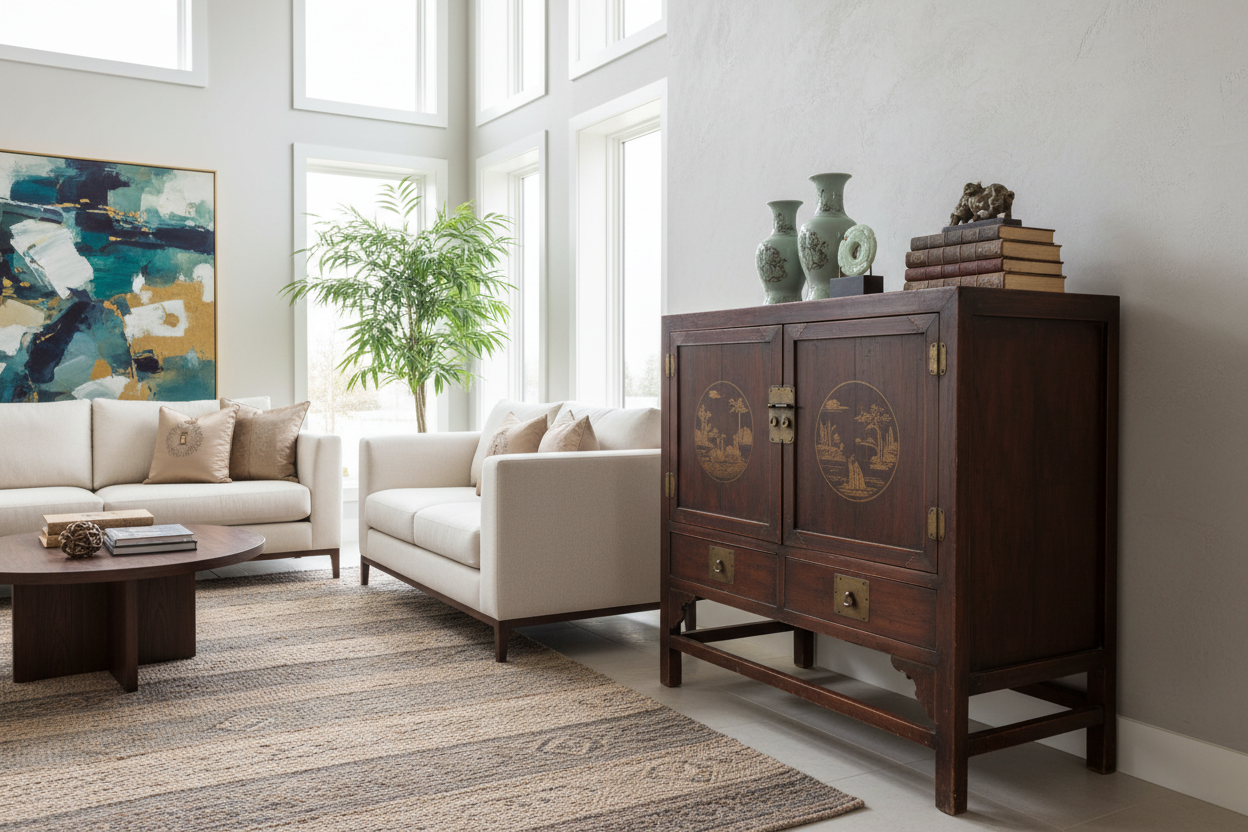
I remember walking into a client's new home last year—a beautiful Craftsman in Seattle. They had just moved from a modern condo and wanted to add soul. In the corner of their dining room sat a lonely, generic sideboard. 'We need something with a story,' they said. That's when I suggested an antique Chinese cabinet. Not as a replacement, but as a companion piece. It became the anchor of their entire first floor, holding everything from linens to their grandmother's porcelain. That's the magic of these pieces: they're not just furniture; they're functional art with centuries of craftsmanship.
Quick Takeaways
- Look for traditional joinery like mortise-and-tenon, not nails or staples, to verify authenticity.
- Standard antique Chinese cabinet dimensions range from 60 to 72 inches wide, 18 to 24 inches deep, and 30 to 36 inches tall—measure your space first.
- Place them in unexpected spots like entryways or home offices, not just dining rooms, for maximum impact.
- Style with a mix of modern and cultural objects; avoid creating a theme-park look.
- Maintain with a soft, dry cloth only; never use commercial polishes that can damage the original patina.
Why an Antique Chinese Cabinet Might Be Your Next Statement Piece
If you're tired of furniture that feels mass-produced, an antique Chinese cabinet offers something different. I've used them in over two dozen projects, from a loft in Vancouver to a farmhouse in Ontario. They work because they balance three things beautifully: cultural authenticity, functional versatility, and visual warmth. Unlike a plain storage unit, a carved elmwood cabinet from the late Qing dynasty tells a story. The motifs—often dragons, phoenixes, or floral patterns—aren't just decoration; they're symbolic. Functionally, they're incredibly adaptable. I've seen them used as media consoles (with some internal adjustments), bar cabinets in living rooms, or even statement pieces in bedrooms to store bedding. Their scale is often manageable; many small antique Chinese cabinets are around 48 inches wide, fitting nicely in a hallway or as a bedside alternative. They add texture and depth that flat-pack furniture simply can't match.
What Makes an Antique Chinese Cabinet Authentic
When clients ask me to source a genuine piece, I look for specific markers. First, the wood. Traditional cabinets were made from hardwoods like elm (yumu), huanghuali, or zitan. Elm is common and has a distinctive, coarse grain. The joinery is crucial. Authentic pieces use mortise-and-tenon or dovetail joints, often without glue. If you see nails or, worse, modern staples, it's likely a reproduction or heavily altered. Carving should be crisp but show gentle wear on high points—not sanded smooth. Hardware is another tell. Original brass or iron fittings will have a soft, uneven patina; shiny new handles are a red flag. The finish should have a deep, mellow glow, not a thick, polyurethane shine. Assessing condition is key, as I discussed in my guide on Second Hand China Cabinet for Sale — What Designers Actually Look For in Vintage Finds. Check the back panel and interior shelves; they should be made of the same period-appropriate wood, not plywood. A true antique will have minor imperfections—small cracks, color variations—that add to its character.
Where to Place Your Antique Chinese Cabinet (Beyond the Dining Room)
Everyone thinks 'dining room' first, but that's just the start. In a recent project for a young family in Toronto, we placed a vintage oriental cabinet in their entryway. At 24 inches deep and 36 inches tall, it didn't block the 42-inch-wide hallway. It became a drop zone for keys and a display for a single ceramic vase. In living rooms, I often use them as media consoles. Ensure there's at least 4 inches of clearance behind for cables and ventilation. In a home office, a small Chinese cabinet, around 40 inches wide, can store files and add sophistication. Bedrooms are another great spot. I used one as a lingerie chest beside a king bed, leaving a 24-inch walkway. The key is proportion. For a room that's 12x14 feet, a cabinet up to 60 inches wide works without overwhelming. If you love the carved look but need something more readily available, consider a piece like the Vintage Vibe Accent Cabinet With 3 Carved Decorative Panels, which offers a similar aesthetic with modern construction.
How to Style Your Antique Chinese Cabinet for Modern Living
Styling is where you make it feel like 'you,' not a museum exhibit. Start with the top surface. I recommend the rule of three: group items in odd numbers. For example, a modern table lamp (with a clean linen shade), a stack of three art books, and a single, sculptural object like a smooth stone or a contemporary ceramic bowl. This creates balance. Inside, if it has shelves, mix uses. Don't fill it only with Asian antiques. I might place a set of modern glassware next to a few vintage books and a small plant. Lighting matters. If the cabinet has glass doors, add LED strip lighting inside (battery-operated to avoid drilling) to highlight your displays. For color, let the wood be the star. Paint the wall behind a neutral like a soft gray or warm white to make the cabinet pop. When mixing with contemporary furniture, keep lines clean. A sleek, low-profile sofa (say, 84 inches long) opposite a carved cabinet creates a dynamic contrast. For more on display techniques, see my thoughts on Chinese Display Cabinet — What Designers Actually Look For Before You Buy. If you prefer a darker, more unified look, a Black Cabinet With Glass Doors can offer similar display functionality in a different style.
The Care and Maintenance Your Antique Chinese Cabinet Deserves
These pieces have survived decades, if not centuries, so treat them gently. Dust weekly with a soft, dry microfiber cloth. Never use spray polish or wax; they can clog the wood's pores and damage the patina. For sticky spots, barely dampen a corner of the cloth with water, wipe, and immediately dry. Humidity is the enemy. Aim for 40-50% relative humidity. In dry climates, a small humidifier in the room helps; in humid areas, a dehumidifier prevents swelling. Keep it out of direct sunlight. UV rays will fade the wood unevenly. If placed near a window, use UV-filtering blinds or curtains. For minor scratches, I use a tiny amount of beeswax rubbed in with a finger, then buff. Major repairs—like a loose joint—should go to a professional who specializes in antique Asian furniture. Don't attempt regluing yourself; traditional joinery is designed to move slightly with humidity changes.
Personal Experience: The One That Got Away (And What I Learned)
Early in my career, I found a stunning antique Chinese kitchen cabinet at an estate sale. It was ornate, with intricate mother-of-pearl inlay, and priced reasonably. I got excited and didn't inspect it closely enough. When it was delivered to my client's home, we discovered the back panel was completely replaced with particleboard, and the interior smelled strongly of mildew—a sign of long-term moisture damage. The piece was structurally compromised. I had to refund the client and lose the find. The lesson? Always, always do a thorough inspection in person. Check every surface, open every drawer, and smell the interior. Authenticity isn't just about looks; it's about integrity. Now, I bring a small flashlight and a moisture meter to every viewing.
FAQ
How can I tell if my antique Chinese cabinet is really old?
Look at the joinery, back panel, and wear patterns. Authentic antiques use traditional wood joinery, have a back made of similar aged wood (often with tool marks), and show wear in logical places—like around handles and on corners. Reproductions often have perfectly uniform 'distressing.'
Are antique Chinese cabinets safe to use in a home with kids?
Yes, with precautions. Ensure it's stable (not wobbly). You might want to secure it to the wall with a furniture strap, especially if it's tall. Check for any loose hardware or sharp carving edges that could be a hazard. The finishes are typically non-toxic, but avoid placing breakable items on lower shelves if toddlers are around.
What's a fair price for a small antique Chinese cabinet?
Prices vary wildly based on age, condition, wood, and carving quality. A small, simple elm cabinet from the early 20th century might range from $800 to $2,500. A more elaborate, older huanghuali piece could be $5,000+. Always get provenance if possible and consider getting an appraisal for pieces over $1,000.
Can I refinish or paint an antique Chinese cabinet?
I strongly advise against it. Refinishing or painting drastically reduces the value and destroys the historical patina. If the finish is damaged, consult a conservation specialist for reversible cleaning methods. Embrace the aged look—it's part of the charm.


Leave a comment
This site is protected by hCaptcha and the hCaptcha Privacy Policy and Terms of Service apply.