

















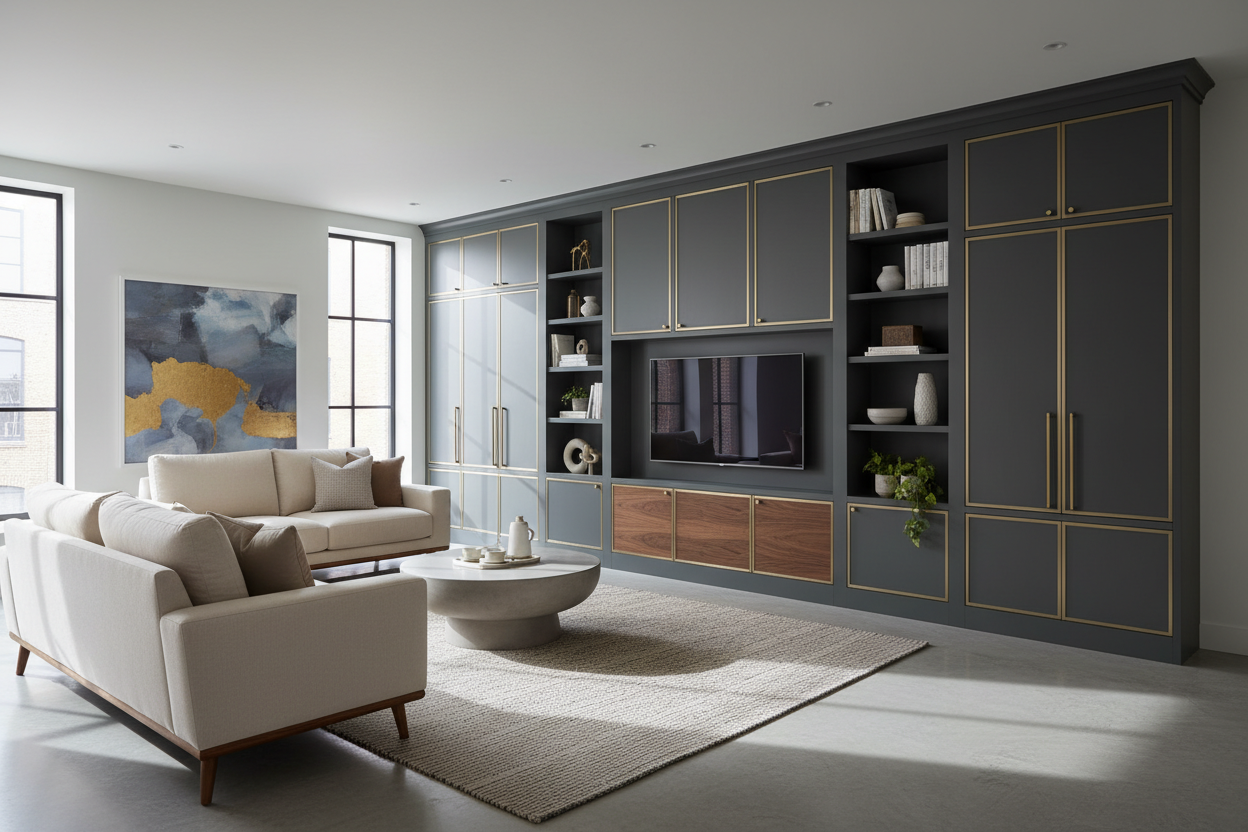
One of the most persistent challenges in residential design is balancing the need for substantial storage with the desire for a sophisticated, airy aesthetic. Custom joinery is often the gold standard, but budget constraints frequently make that impossible. This is where ikea lounge wall units bridge the gap. When curated and installed correctly, these modular systems can mimic the look of bespoke millwork without the five-figure price tag.
Key Features to Consider Before Buying
- Modularity & Scale: Ensure the unit's dimensions allow for 'negative space' around the edges to avoid overwhelming the room.
- Finish Durability: High-gloss finishes reflect light but show fingerprints; matte foils are more forgiving but can feel flatter.
- Weight Capacity: Check the max load per shelf, especially if you plan to mount a TV or store heavy art books.
- Hardware Compatibility: Determine if the doors allow for push-open mechanisms or if they require handles, which dictates the final style.
Elevating the Standard: Material and Finish
When selecting ikea wall units for living room applications, the finish dictates the perceived value of the piece. While the white foil finishes are standard, they often read as 'flat' under harsh lighting. As a designer, I often steer clients toward textured finishes—like the dark wood veneers available in the BESTÅ line—or the matte variations that absorb light rather than reflecting it cheaply.
If you are committed to a specific color palette, consider the paintability of the unit. While standard IKEA surfaces are difficult to paint directly, applying a high-quality shellac-based primer allows you to color-drench the cabinetry to match your walls, instantly creating a built-in appearance.
Space Planning and Visual Balance
The layout of your ikea wall cabinets living room setup is critical. A common amateur mistake is creating a 'wall of wood' that feels heavy and imposing. To avoid this, utilize a mix of open and closed storage.
The Rule of Thirds in Shelving
Design your layout so that one-third of the unit remains open for display (books, sculptural objects, organic textures) while the remaining two-thirds are closed cabinetry for hiding cables, routers, and general clutter. This ratio maintains visual interest without creating chaos.
Floating vs. Floor-Standing
For smaller footprints, wall-mounted units are superior. By exposing the floor underneath the cabinet, you trick the eye into perceiving the room as larger. However, ensure your wall blocking is sufficient to hold the weight; standard drywall anchors are rarely enough for fully loaded ikea wall units living room setups.
My Personal Take on IKEA Lounge Wall Units
In my years of fitting out apartments, I have developed a love-hate relationship with these systems. Specifically, let's talk about the BESTÅ suspension rail. On paper, it is brilliant. In reality, if your walls are not perfectly plumb (and they never are), the cabinets will gap.
I remember a project in a pre-war building where we installed a floating unit. Because the wall bowed slightly, the doors wouldn't align, no matter how much we tweaked the hinges. The 'unpolished' fix? We had to shim the rail extensively with thin architectural washers to force it straight. Also, the back panels are notoriously flimsy fiberboard. I now automatically reinforce them with small L-brackets or cut holes for outlets before assembly to avoid tearing the material. It’s these small, invisible adjustments that stop the unit from rattling every time you close a door.
Conclusion
You do not need an unlimited budget to achieve a curated home. By paying attention to proportion, upgrading the hardware, and treating the installation with the precision of custom carpentry, ikea lounge wall units can serve as the architectural anchor of your living space. It is about vision, not just volume.
Frequently Asked Questions
Can I mount a heavy TV on a floating IKEA wall unit?
I generally advise against mounting heavy televisions directly onto the wall cabinets themselves. Instead, mount the TV to the structural wall studs above or within the unit's layout, allowing the cabinet to frame the screen rather than support its weight.
How do I make IKEA units look like custom built-ins?
The secret is 'scribing.' Use filler panels to close the gaps between the unit and the walls or ceiling. Add a continuous top shelf or custom toe-kick across multiple units to unify them into a single architectural element.
Which series is best for narrow living rooms?
The EKET series is excellent for tight spaces due to its shallower depth options (35cm vs the standard 40cm+). It allows for vertical storage without encroaching on the traffic flow of the room.


Leave a comment
This site is protected by hCaptcha and the hCaptcha Privacy Policy and Terms of Service apply.