

















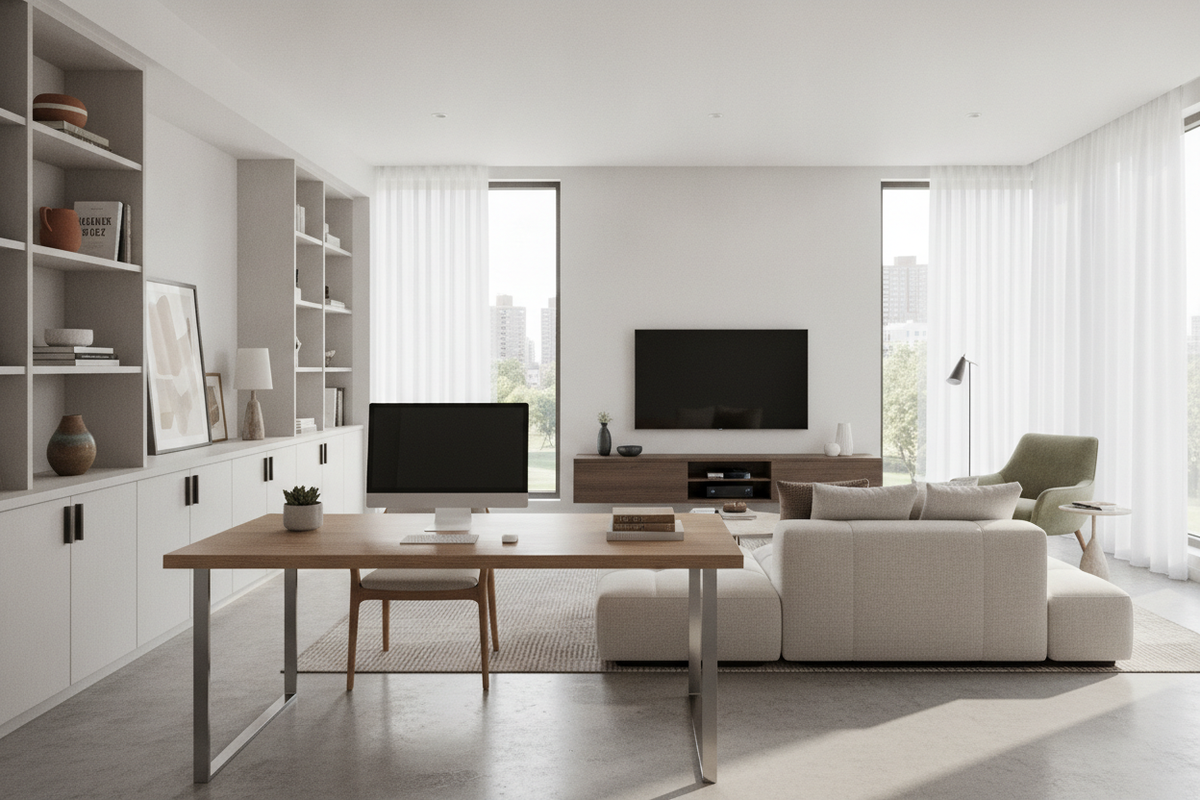
Selecting the right workstation often feels like a balancing act between having enough surface area for daily tasks and preventing furniture from dominating a room. A 5 foot desk represents a sweet spot in home office architecture. Measuring approximately sixty inches in width, this footprint sits directly between compact writing consoles and sprawling executive workstations, offering ample breathing room for technology, paperwork, and creative accessories.
Understanding how a 5 ft desk integrates into your layout ensures your workspace remains comfortable, durable, and organized throughout long working days.
The 5 Foot Desk Footprint: Dimension Profiles and Surface Zoning
A 5 foot wide desk provides a substantial tabletop span that allows for clear functional zoning. Rather than forcing your computer peripherals, writing utensils, and ambient items into a single crowded cluster, a 5 ft long desk accommodates dedicated sectors across its surface.
- Primary task zone: The central area accommodates a primary keyboard, mousepad, and comfortable forearm resting room.
- Secondary digital zone: Flanking sections hold laptop docks, secondary displays, or desktop speakers without intruding on the central keyboard space.
- Analog workspace: The outer left or right edge remains open for notepads, printed documents, or reading lamps.
When browsing a broader computer desk collection, you will notice that this dimensional tier offers genuine versatility for multitasking. Whether you identify the piece as a 5ft desk, writing table, or general study station, the proportional layout helps keep surfaces clutter-free by design.
Room Fit and Spatial Flow: Positioning a 5 Ft Office Desk
Integrating a 5 foot office desk into a floor plan requires paying attention to circulation corridors and physical clearances. Because sixty inches represents a noticeable span along any wall, placement influences the visual balance of the entire room.
Consider these architectural clearances when positioning a 5 ft office desk:
- Walkway buffers: Allow comfortable clearance behind the seated position so passing through the room remains effortless even when an office chair is extended.
- Door and closet swing paths: Ensure adjacent closet doors, room entryways, or low drawers clear the desk corners smoothly without physical conflict.
- Window alignment: Placing a desk perpendicular to natural light sources reduces harsh screen glare while maintaining an inviting daytime environment.
For rooms with unconventional floor plans, tight alcoves, or conflicting pathways, exploring an office computer desk product featuring an angled corner profile can sometimes recapture floor space that a straight wall-aligned frame might consume.
Storage Architecture: Open Legroom vs. a 5 Foot Desk with Drawers
One of the primary decisions when selecting a five-foot silhouette is deciding between an open-frame table and a 5 foot desk with drawers. Both designs deliver distinct ergonomic and aesthetic benefits depending on how you handle daily supplies.
An open metal or wood frame creates an airy visual aesthetic, making smaller rooms feel larger. It also provides unrestricted horizontal leg movement, accommodating wide chair bases and footrests easily. However, an open surface relies entirely on desktop accessories or external organizers to prevent clutter from accumulating over time.
Conversely, a 5 ft desk with drawers incorporates pedestal storage or shallow lap drawers beneath the surface. This design keeps notebooks, charging cables, pens, and files hidden away, maintaining a tidy tabletop. When deciding whether integrated cabinetry fits your routine, reviewing a practical desk office drawers guide can clarify how much everyday storage your daily workflow genuinely requires.
Multi-Monitor Setups and Weight Support Across a 5 Foot Span
For technical professionals, editors, and remote workers, a 5 foot computer desk often functions as the foundation for multi-display arrangements. Across a sixty-inch tabletop, users can comfortably position dual monitors side by side while maintaining natural focal points and healthy viewing distances.
Because a broader span carries substantial hardware, framing structure plays a critical role in long-term satisfaction:
- Under-desktop reinforcement: Quality five-foot desks typically feature longitudinal steel support rails or thick apron panels to prevent central sagging across the extended bridge.
- Surface depth considerations: Pairing a wide desk with adequate depth ensures your display panels sit far enough back to leave comfortable wrist and keyboard space forward of the screens.
- Mounting compatibility: Desks with solid edge overhangs allow monitor arms and desk lamps to clamp securely without interfering with frame beams.
If your digital setup requires more than two large screens, oversized desktop audio gear, or standalone printer stations, a dedicated large-format workstation like a wide computer desk product may provide the expanded footprint needed for complex equipment.
Materials, Assembly Stability, and Cable Routing
A dependable 5 ft computer desk relies on balanced materials to ensure steady performance during daily typing and writing. Heavy-gauge metal legs, engineered wood surfaces with durable laminate finishes, and solid corner brackets all contribute to a rigid, wobble-resistant workstation.
Cable management is equally crucial on an expanded 5 desk build. With greater physical distance between wall outlets and desktop equipment, look for designs that include built-in cable grommets, modesty panel channels, or under-desk trays. Keeping power strips and cord bundles neatly tucked away beneath the frame preserves the clean aesthetic lines of the room and protects plugs from accidental snagging.
Selecting Your Ideal 5 Ft Desk Configuration
Choosing the best 5 foot desk ultimately depends on identifying your primary daily tasks and room conditions:
- Choose an open-leg 5 ft desk if you prioritize visual lightness, have a compact room, or use a wide ergonomic task chair that requires generous lateral movement.
- Choose a 5 foot desk with drawers if your daily focus involves paper documents, study materials, and diverse stationery that need designated, out-of-sight homes.
- Choose a reinforced 5 foot computer desk if your setup includes dual display monitors, heavy peripheral gear, and clamping accessories that demand structural rigidity.
By evaluating your available floor clearance, equipment footprint, and storage habits, a five-foot desk provides a well-proportioned foundation that supports productive work without overpowering your interior living space.

Leave a comment
This site is protected by hCaptcha and the hCaptcha Privacy Policy and Terms of Service apply.