

















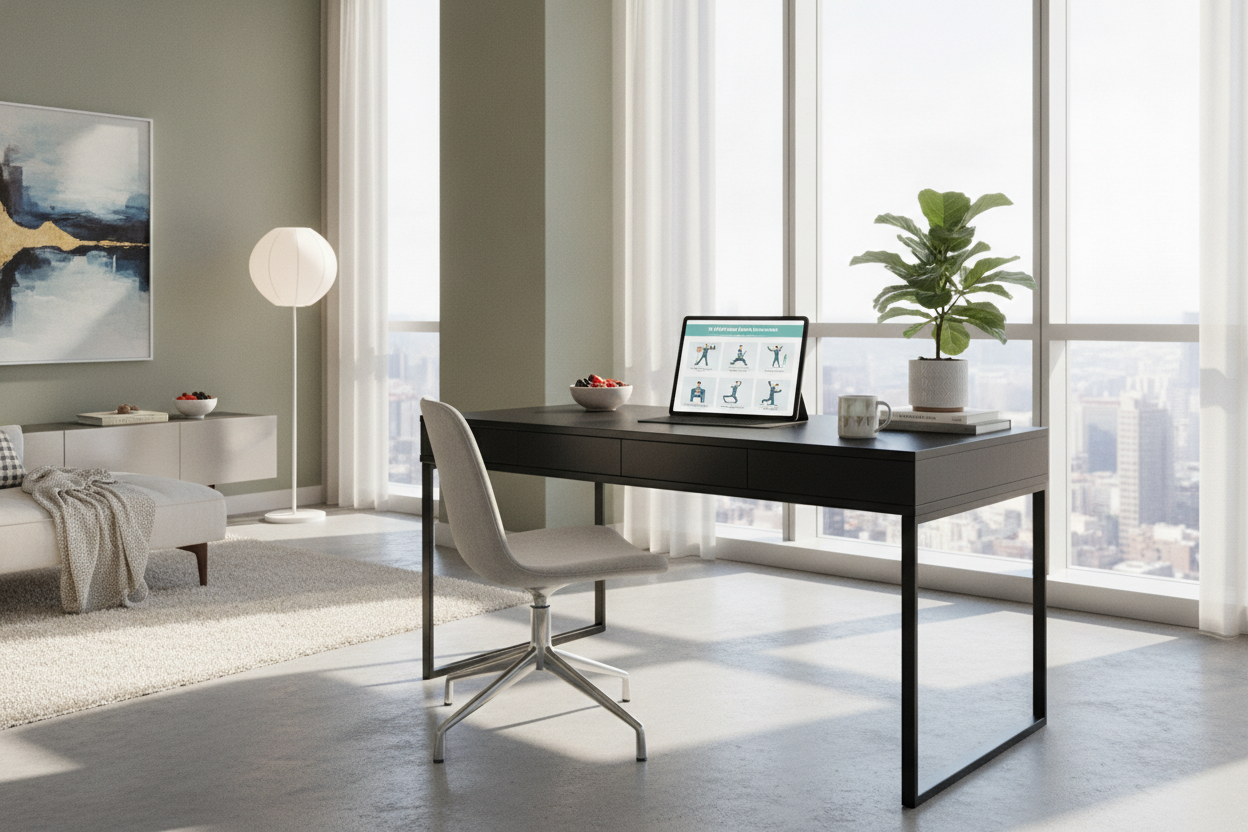
Introduction: The Importance of Moving At Your Desk
In the modern professional landscape, the boundary between our living spaces and our workspaces has blurred. While the convenience of a home office is undeniable, the physical toll of remaining stationary for extended periods is a growing concern for many. Prolonged sitting can lead to a variety of discomforts, ranging from tight hip flexors to a stiff neck. However, staying active does not necessarily require a trip to the gym or a dedicated hour of high-intensity training. By integrating at your desk exercises into your daily routine, you can maintain mobility, boost your energy levels, and improve your overall focus without ever leaving your workstation.
How Your Desk Setup Impacts Your Workout
Before you begin any at desk workout, it is essential to consider the environment in which you are moving. Your furniture is not just a surface for your computer; it is the foundation of your physical workspace. The effectiveness and safety of workouts at your desk are heavily influenced by the dimensions, stability, and room fit of your furniture.
Dimensions and Room Fit
When planning to exercise at your desk, the available clearance is paramount. Desk dimensions determine whether you have the necessary legroom to perform leg extensions or the lateral space to swivel your chair without striking nearby cabinets. A cramped workspace can discourage movement, while a well-proportioned desk provides the freedom to stretch. Consider how your desk fits within the room; ensuring there is enough space behind your chair for standing movements is a key aspect of a movement-friendly layout.
Stability and Sturdy Materials
Safety should always be your primary concern. If you intend to use your desk for balance or as a support for weight-bearing movements like desk push-ups, the quality of assembly and the sturdiness of the materials are critical. A desk made from high-quality, dense materials with a wide base will offer the stability needed to support your weight. Always ensure that your desk is properly assembled according to the manufacturer's instructions and that all bolts are tightened to prevent wobbling during your routine.
Upper Body & Neck Stretches (Seated)
1. Neck Rolls and Tilts: Screen time often leads to tension where the head is tilted forward, straining the cervical spine. To counteract this, sit tall and slowly drop your chin toward your chest. Gently roll your head from side to side, feeling the stretch along the sides of your neck. You can also perform side tilts by bringing your right ear toward your right shoulder, holding for several deep breaths, and then switching sides.
2. Shoulder Shrugs and Chest Openers: Hunching over a keyboard can cause the chest muscles to tighten and the shoulders to round forward. For shoulder shrugs, lift your shoulders toward your ears as high as possible, hold briefly, and then drop them down with a heavy exhale. Follow this with a chest opener: reach your arms behind your back, interlace your fingers, and gently lift your hands while pulling your shoulder blades together.
3. Seated Spinal Twist: This movement helps maintain spinal mobility while seated at your desk. While sitting, place your right hand on the outside of your left knee and your left hand on the back of your chair. Gently twist your torso to the left, looking over your shoulder. Personally, I find that a quick spinal twist after a long afternoon of typing helps reset my focus for the final hours of the day. Repeat the movement on the opposite side to ensure balance.
Core & Lower Body Movements (Under the Desk)
4. Seated Leg Extensions: Utilizing the legroom beneath your desk is a great way to engage your quadriceps. While sitting, straighten one leg out in front of you under the desk. Hold the position for a few breaths, engaging the thigh muscle, and then lower it slowly. Alternate legs to keep the blood flowing and the muscles active.
5. Desk Chair Swivels: If your desk dimensions allow for a full range of motion, use your swivel chair to engage your core. Sit upright with your feet hovering just off the floor. Grasp the edge of your desk lightly and use your core muscles to swivel the chair from side to side. This small movement can help wake up your midsection during a long shift.
6. Seated Calf Raises: This is a subtle yet effective way to encourage circulation in the lower extremities. While seated with your feet flat on the floor, lift your heels as high as possible, pivoting on the balls of your feet. Squeeze your calf muscles at the top before lowering your heels back down. This can be done repeatedly throughout a meeting without drawing any attention.
Standing & Desk-Supported Exercises
7. Desk Push-Ups: For those looking to build upper body strength, desk push-ups are an excellent option. Place your hands slightly wider than shoulder-width apart on the edge of a sturdy, well-assembled desk. Step your feet back until your body forms a straight line from head to heels. Lower your chest toward the desk and then push back up. Ensure your desk is heavy or pushed against a wall to prevent it from sliding.
8. Standing Glute Kickbacks: Stand facing your desk and place your hands on the edge for balance. Keeping your leg straight, lift one foot behind you, squeezing the glute muscle at the top of the movement. Lower it back down and repeat. This exercise is particularly helpful for counteracting the effects of sitting on the gluteal muscles all day.
9. Invisible Chair / Wall Sit: If your room fit allows for access to a nearby wall, the wall sit is a powerful lower-body exercise. Lean your back against the wall and slide down until your knees are at a right angle, as if sitting in an invisible chair. Hold this position as long as is comfortable, feeling the engagement in your quads and glutes.
10. The 'Reach for the Ceiling' Stretch: This is a full-body elongation designed to reset your posture. Stand up and reach both arms toward the ceiling, interlacing your fingers with your palms facing upward. Stretch as tall as you can, perhaps even rising onto your toes. This simple action helps decompress the spine and opens up the entire body.
Creating a Movement-Friendly Home Office
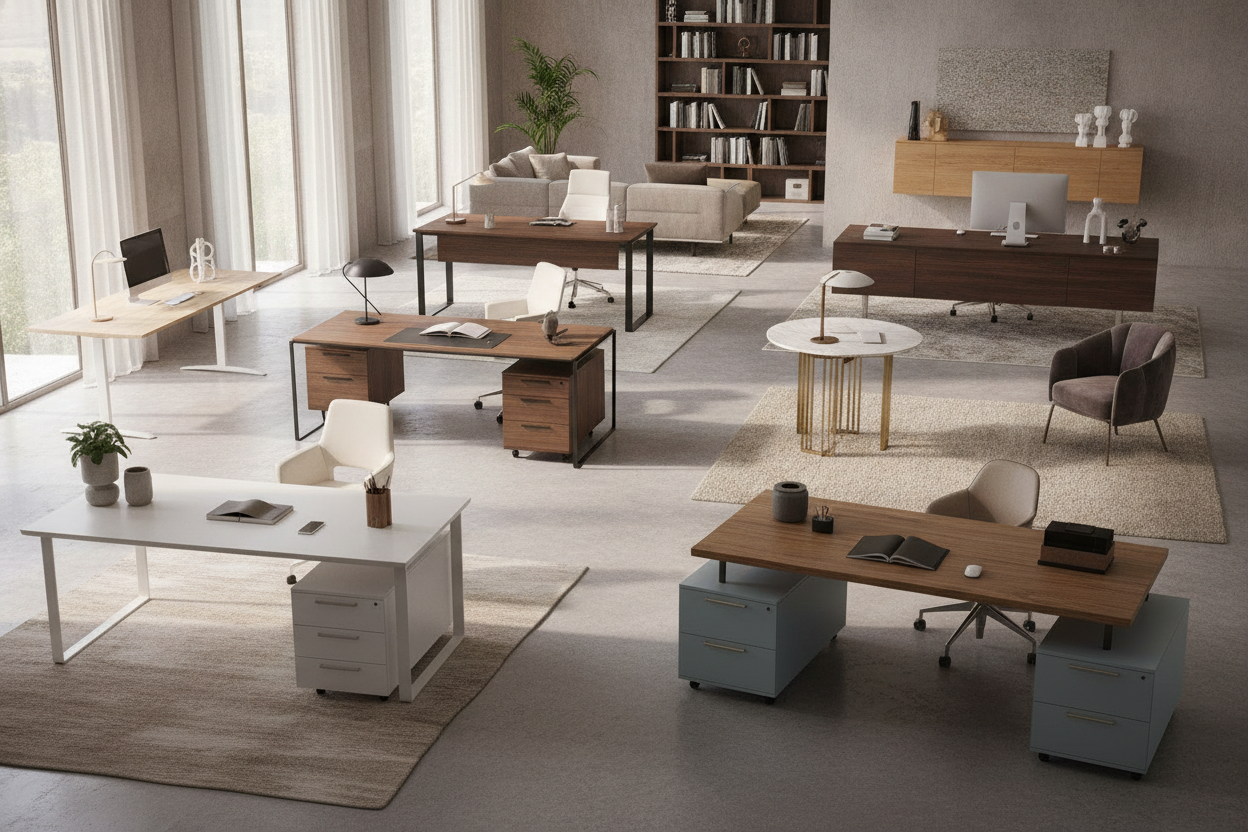
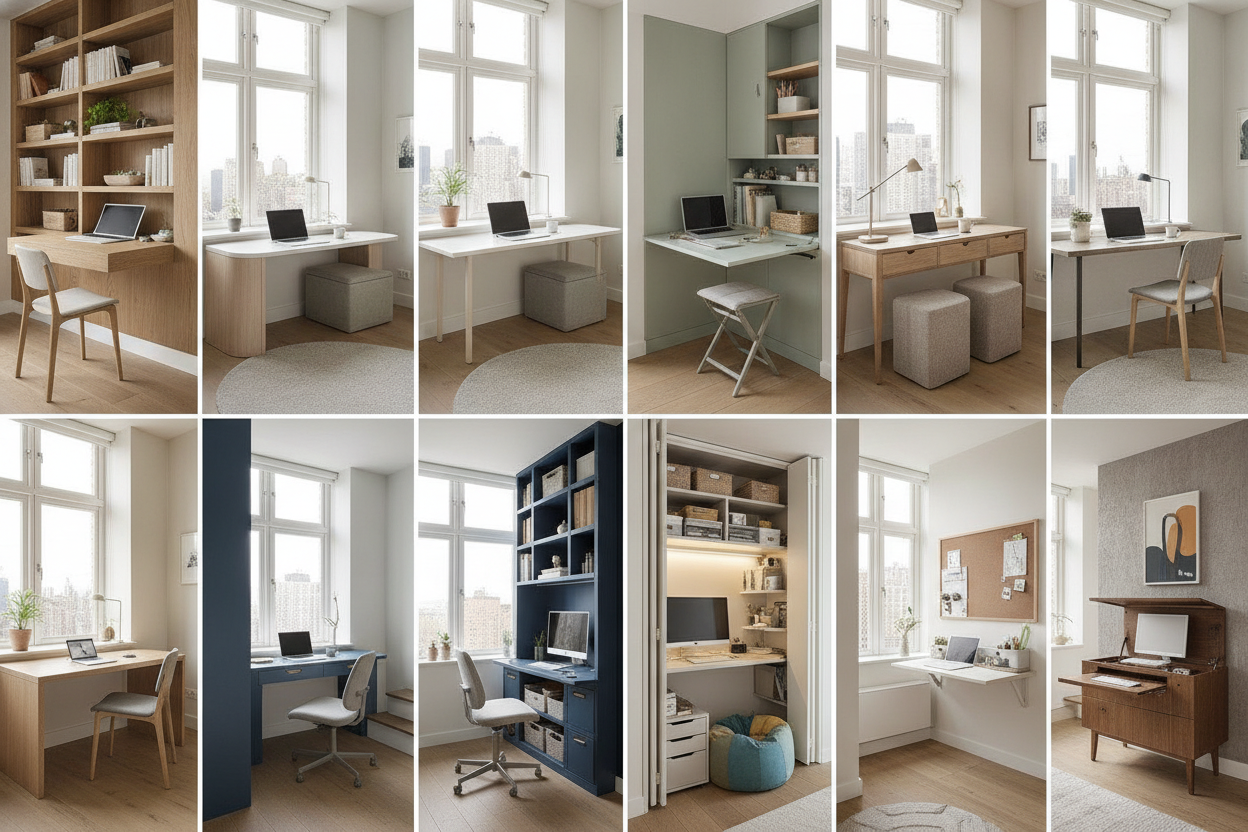
Designing a workspace that encourages activity starts with choosing the right furniture. When selecting new home office desks, consider how the piece will serve your physical needs. Look for desks with dimensions that accommodate your height and provide ample space for movement.
Organization is also a key factor in safety. Utilizing smart storage solutions and managing cables effectively ensures that your floor remains clear of tripping hazards. A clutter-free environment makes it much easier to transition from a focused work task to a quick at desk workout. By prioritizing both form and function in your office layout, you create a space that supports your professional goals and your physical health.
Conclusion
Incorporating at your desk exercises into your daily routine is a practical way to combat the sedentary nature of office work. By understanding how your desk's stability and dimensions support these movements, you can create a safer and more active workday. Set a reminder for yourself to move at regular intervals, and you will likely notice a significant improvement in how you feel by the time you clock out.

Leave a comment
This site is protected by hCaptcha and the hCaptcha Privacy Policy and Terms of Service apply.